ABS sensor fault: how to compare four-wheel speeds in live data
When the ABS light is on, simply clearing the code or replacing all wheel sensors is not the correct starting point. First, determine which unit has which record; then, compare wheel speeds under the same conditions. This topic is separate from ABS hydraulic bleeding or steering angle calibration: here, how the rotation information reaches the control unit from the sensor is investigated.
Otobiltek is the business that sells the Launch CRP919E BT product linked in this guide.
The WHEEL SPEED topic was prepared using manufacturer and technical resources; the visual is a genuine catalog photo, not a claim of workshop testing.
Comparative diagnosis of wheel speeds instead of ABS bleeding or SAS reset.
Verification by vehicle, control unit, and process
When model software or technical documentation changes, the relevant process and resource are re-examined.
Decision guide
Read ABS codes separately from engine scan
A basic OBD2 engine scan does not count as accessing the ABS unit. After vehicle identification is verified, the fault memory in the ABS/ESP control unit is read. The sensor's location, code description, and fault status are recorded. If there are warnings in other modules caused by the same event, these are also preserved in the report. When considering a diagnostic tool, inquire explicitly about access to the relevant ABS unit, not just fault code reading.
Decision guide
Compare four-wheel data in the same record
Select front left, front right, rear left, and rear right wheel speeds. Verify units and data labels; photos taken at different times are not sufficient for comparison. Straight movement and turning conditions are also recorded. A single line's interruption or inconsistency can narrow down the area of investigation but does not condemn the sensor itself. This is a data collection arrangement; it is not a universal speed difference limit for all vehicles.
Decision guide
Check the ring, bearing, and wiring besides the sensor
HELLA lists cable damage, contamination, bearing play, and signal wheel damage among possible causes. If bearing, axle, or brake work was recently performed, the work history is recorded. The sensor's seating and the cable's routing are inspected. A loss of data from one wheel requires evaluating all these elements in the same area; replacing only the sensor may miss the root cause.
Decision guide
Do not apply the same electrical test to active and passive sensors
The sensor type is determined by vehicle service information. HELLA states that measuring internal resistance is not appropriate for active sensors; correct measurement methods are required for supply and signal. Do not draw definitive conclusions from the pin count or appearance. Measurement cables are connected according to the correct diagram, and electrical checks are performed by trained personnel.
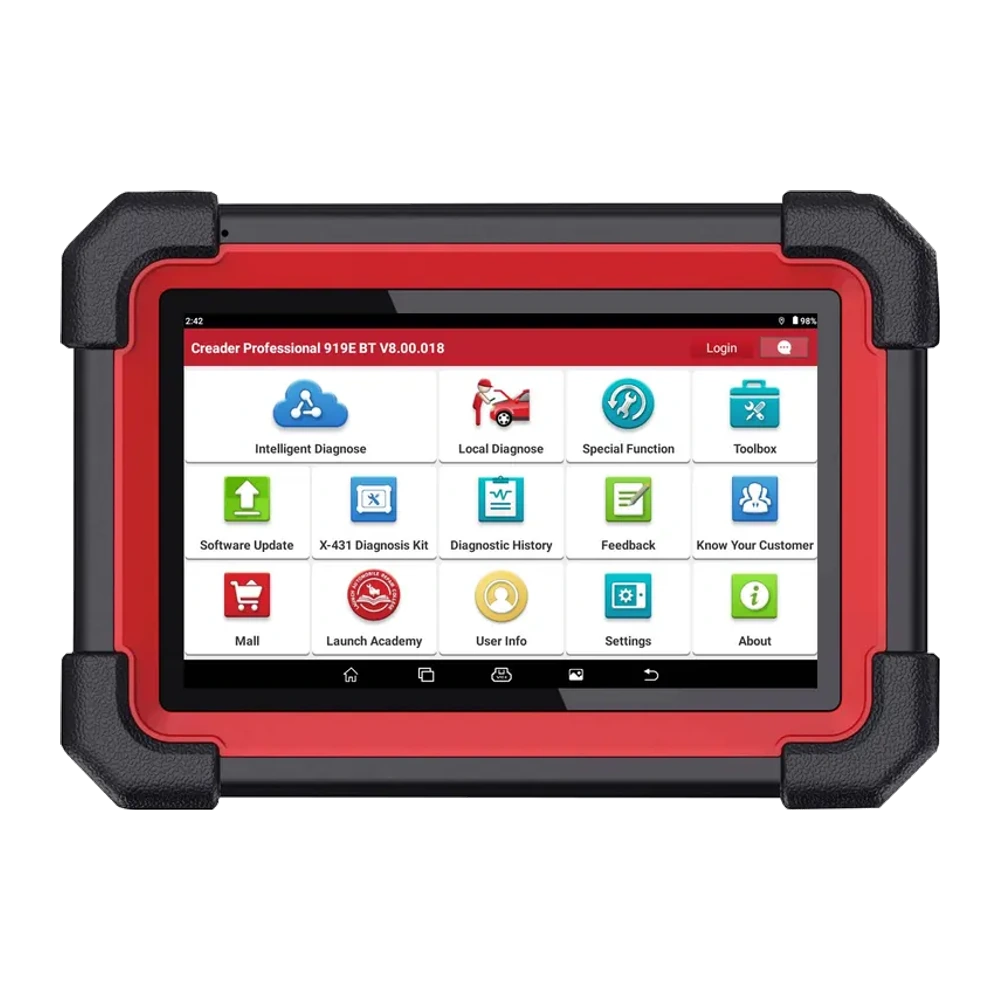
The role of the device in WHEEL SPEED checks with an actual photo of the Launch CRP919E BT; the image on the screen is not a measurement result.
Decision guide
Where do the roles of Launch and Ancel tablets end?
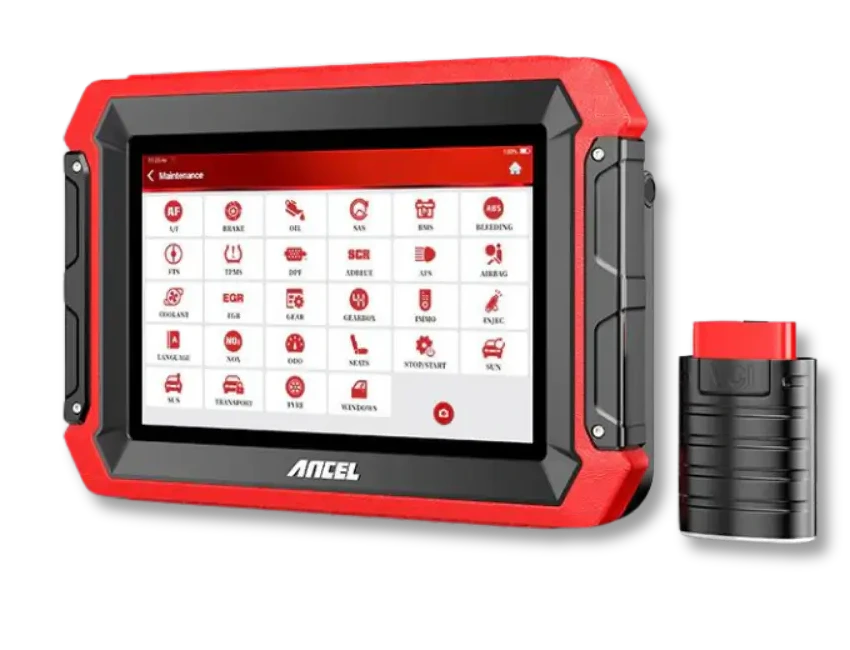
CRP919E BT and DS600 offer system diagnostic functions in manufacturer documentation. Nevertheless, the presence of four-wheel parameter, graph, or recording functions in a specific ABS unit must be verified with the vehicle and software. The tablet displays information transmitted by the ECU; it does not automatically measure voltage in the sensor cable. When independent signal testing is required, a multimeter or oscilloscope is used separately.
Decision guide
Safe conditions for test driving come first
If there are issues related to brake or driving safety, an expert evaluates the suitability of a dynamic test. The driver should not monitor the tablet screen; an appropriate recording method or a second technician is used. Hard braking is not performed on uncontrolled roads to induce the fault. Checks performed with the vehicle lifted also require appropriate equipment and manufacturer procedures; this guide is not a directive for lifting or brake repair.
Decision guide
Why is a wheel speed fault inspected independently?
Hydraulic bleeding relates to procedures in the brake circuit; SAS calibration teaches the steering reference. If the cause of wheel speed signal interruption is a cable or mechanical ring, these procedures do not fix that cause. The presence of a service function in the menu is not a justification to attempt it. The fault description should determine which measurement chain to investigate.
Decision guide
Take a new record under the same conditions in the final check
In the first measurement after repair, the parameters used are re-selected. The fault memory and associated control units are checked according to the vehicle manufacturer's verification sequence. Work performed on the cable, sensor, or bearing is documented separately. Even if wheel speeds appear normal, if a persistent brake complaint exists, the decision to release the vehicle should not be based solely on the screen result.
Frequently Asked Questions
Most frequently asked questions by customers
When an ABS sensor code appears, is the sensor definitely faulty?
No. Causes such as the cable, connection, signal ring, and bearing are also investigated.
Should the four-wheel speed be exactly the same in all situations?
Operating and turning conditions are important. The permissible difference is evaluated with vehicle technical data.
Does ABS bleeding fix wheel speed sensor faults?
Hydraulic service procedures do not replace electrical or mechanical signal fault repair.
Is every ABS sensor measured with an ohmmeter?
No. Active and passive sensor types must be differentiated, and the vehicle manufacturer's measurement method must be used.