What is BMS reset and battery registration after battery replacement?
In modern vehicles, replacing a battery does not always end with removing the old one and installing a new one of the same size. The battery management system can monitor the charging strategy, battery age, energy consumption, and functions like Start-Stop. If required by the manufacturer's procedure, the type and capacity of the new battery are selected correctly, battery registration or BMS reset is performed with the appropriate device, and the charging system is measured to verify the result. Since the term 'battery registration' is used in the market for different operations, it should be clearly understood what the device menu does.
Which check answers which question during battery replacement?
Check
Question answered
Required tool
Misinterpretation
Battery test
Can the battery store energy?
Suitable battery tester
Not the same as alternator check
Charging system test
Is the vehicle charging the battery correctly?
Measurement/test equipment
A single idle voltage may not be sufficient
Battery registration
Has the system been notified that a new battery has been installed?
Comprehensive diagnostic tool for the vehicle
Not every vehicle requires the same information
BMS reset
Learned age/energy data reset?
Device compliant with manufacturer procedure
Not the same as clearing fault code
Coding
Battery type or capacity changed?
Coding scope and technical documentation
Not to be confused with registration
Decision guide
What does BMS monitor and why does it care about battery replacement?
BMS, depending on context, refers to battery management functions called “Battery Management System”. In the 12-volt system of internal combustion and mild hybrid vehicles, data such as current, voltage, temperature, and estimated state of charge of the battery can be monitored. With this information, the vehicle can manage alternator load, energy consumers, and Start-Stop behavior. As the system architecture varies by manufacturer, the values measured and recorded by the BMS are not the same in every vehicle.
In vehicles with a smart sensor near the battery's negative terminal, the sensor can monitor the current entering and leaving the battery. The control unit attempts to model the battery's aging and charge acceptance behavior over time. If the learned information of the old battery is left in the system when a new battery is installed, the charging strategy may not match the new part correctly. Therefore, some manufacturers require only a “battery replaced” registration, some require battery type and capacity selection, and some require additional adaptation.
BMS does not definitively prove the physical health of the battery on its own. The estimated state of charge or age value within the vehicle does not replace an external battery test. Similarly, a battery test that yields good results does not indicate that the alternator, DC/DC converter, cable connections, parasitic current, or energy management software are functioning correctly. The correct service flow separates these checks.
When the “BMS reset” menu is encountered, the function's description should be read. Some devices give a short generic name to a service function; the operation performed in the background may be registering a battery change, resetting sensor learning, or writing new values to a specific control unit. Presenting the menu name as the same operation in all vehicles is technically misleading.
Visual summaryThree operations, three different questions
01
Battery testCan the battery store energy?
02
Charging testIs the vehicle managing the battery correctly?
03
BMS registrationIs the new battery information processed into the system?
Battery health, vehicle's charging behavior, and registration of the new battery into the system are not interchangeable.
Decision guide
The difference between battery registration, BMS reset, and coding
Battery registration is mostly informing the control unit that a new battery has been installed. BMS reset can refer to restarting learned age or energy data according to the manufacturer's procedure. Coding refers to adjusting the vehicle configuration when the installed battery's technology or capacity changes. Although these terms are used interchangeably in daily conversation, they are not the same on the service screen.
When a new battery of the same type and capacity as the old battery is installed, some vehicles only require the registration process. If switching from AGM to EFB, EFB to AGM, or to a significantly different capacity, whether the vehicle manufacturer permits it and the need for coding are checked separately. Not every battery that physically fits into its place is the correct match in terms of charging strategy.
Coding may require greater authority and responsibility than service reset. Selecting the wrong battery type or capacity can affect charging behavior. Therefore, it is not correct for the user to change the options seen on the device screen through trial and error. The vehicle identification, manufacturer's technical data, and the label of the installed battery must be verified on the same work order.
In some vehicles, registration is not required, or the system can learn the new battery within its own operating cycle. Conversely, the procedure may be mandatory in another model. Neither “registration is required in all new generation vehicles” nor “it is not required in any vehicle” is correct. Checks are performed via model year, engine, Start-Stop equipment, and energy management system.
Registration: information that a new battery has been installed
Reset: renewal of learned values
Coding: type or capacity configuration
Decision guide
Why is the selection of AGM, EFB, and standard batteries part of the process?
The correct battery must be installed before the battery registration process. AGM, EFB, and conventional lead-acid batteries have different usage and charging expectations. Replacing the manufacturer-specified technology with a lower-class battery in a vehicle with Start-Stop, regenerative charging, or high electrical consumption is not considered a correct repair, even if registration is performed with the device.
The voltage, ampere-hour capacity, starting current, technology, and physical dimensions on the battery label are read. Terminal orientation, ventilation connection, and mounting structure are checked. The manufacturer's parts catalog or service documentation is used as a basis. Selecting solely based on price or available dimensions on the shelf can lead to premature failure in the energy management system and customer complaints.
HELLA's charging system technical information explains that in AGM batteries, the electrolyte is held in a glass mat structure and that modern Start-Stop systems have different service requirements. This technical difference shows why simply selecting “battery capacity” on the device screen may not be sufficient. Battery technology must be compatible with the vehicle configuration.
Capacity changes are sometimes supported by the manufacturer with limited options. Automatically assuming a higher ampere-hour value is not correct; the alternator or energy management may not be configured for that capacity. Lower capacity may also be insufficient under heavy load. If a change is to be made, software support is verified along with mechanical compatibility.
Visual summaryCorrect sequence for battery replacement
01
Identify the current batteryType, capacity, and physical dimensions
02
Preserve electrical powerSafe removal and power support if necessary
03
Select the correct operationRegistration, coding, or reset
04
Measure the resultFault code, voltage, and charging behavior
If a capacity or technology change is to be made, the options permitted by the vehicle manufacturer are used as a basis.
Decision guide
Diagnostics to be performed before replacing the battery
Slow engine cranking or the Start-Stop function not engaging does not directly mean the battery is faulty. The technician checks the battery's resting state, terminal and ground connections, cranking voltage, charging system, parasitic draw, and recorded energy management fault codes. The battery tester result is placed in the same context as the vehicle's usage history and complaint.
Before testing, the battery's surface charge, whether it was recently charged, and the vehicle's standby time can affect the result. The battery type must be selected correctly on the tester. If the CCA standard and the value on the label are entered incorrectly, the result loses its reliability. Outputs such as “Good,” “Charge and retest,” or “Replace” are reported not in isolation but with the measurement conditions.
In vehicles with smart alternators in the charging system, voltage may not remain constant. Expecting a classic upper voltage when accelerating may lead to misinterpreting modern energy management. Supported parameters such as alternator load, battery current, target, and actual voltage are read from the device; the manufacturer's test method is followed. Voltage drop across cables and loose connections are checked separately.
If parasitic draw is suspected, measuring before the vehicle enters sleep mode can yield incorrect results. The shutdown times of control units, door and hood lock status, aftermarket devices, and faults keeping the communication network awake are evaluated. Installing a new battery may temporarily mask this problem; the same complaint may return after a few days.
Test with the correct battery type
Charging system check
Terminal and ground connections
Energy management fault scan
Parasitic draw measurement if necessary
Decision guide
Safe connection and power management during battery replacement
Battery replacement is a direct intervention in the electrical system. Ignition, key position, consumers, and the vehicle manufacturer's standby procedure are taken into account. The order of terminal removal and installation, trunk lid or electronic lock access, alarm system, and memory support requirements are determined according to vehicle documentation. A single universal procedure should not be published for all models.
If a support voltage is to be used, it is verified that the equipment provides a suitable and stable output. Connecting a simple charger haphazardly can expose control units to voltage fluctuations. The connection point for the support device may be specified by the manufacturer; the decision to connect directly to the battery terminal or to service terminals in the engine compartment is made based on the model.
The smart battery sensor is a physically sensitive component. Care must be taken not to strain the sensor or its communication line when disconnecting the negative terminal. Securing the new battery, the ventilation hose, and terminal tightness are checked. Manufacturer data is used for tightening torque; overtightening can cause problems just like a loose connection.
In hybrid or electric vehicles, 12-volt battery operations are not considered entirely independent of the high-voltage system. HELLA states that some manufacturers require the high-voltage system to be de-energized before intervening with the smart battery sensor. The standard internal combustion vehicle procedure should not be applied without considering the vehicle type and competency limits.
Visual summaryData environment determined by BMS
Technical signals
01
VoltageInstantaneous supply and charge level
02
CurrentCharge and consumption direction
03
TemperatureCondition affecting charging strategy
04
Battery historyAging and energy management record
BMS does not just look at voltage; it can use different inputs and learned values depending on the vehicle architecture.
Decision guide
How to manage the registration process with a diagnostic tool?
After the correct vehicle is identified, find the battery replacement menu within energy management, body electronics, or service functions. Compare the current and new battery information requested by the device with the label. Ensure stable voltage, reliable VCI connection, and uninterrupted tablet power during the operation. Do not enter a value not shown in the menu by guessing.
Although automatic VIN reading is useful, the model, engine, and production year must be manually verified on the screen. Different energy management systems can be found within the same chassis. Selecting the wrong variant can lead to the menu opening but sending the operation to the wrong control unit or the procedure not completing.
The device may display the old battery's serial number, capacity, or technology information. When the new registration is completed, save the success message and, if possible, the new values with a screenshot or service report. After the menu indicates “successful,” re-read the fault memory; if communication interruption or low voltage codes are present, evaluate them in context.
In some vehicles, capacity changes are made separately via the coding screen. If the service function does not perform this change automatically, the two operations should not be confused. Check the device's official vehicle coverage and current version. Contact the support team with the vehicle's make, model, year, and engine information to inquire whether battery registration and, if necessary, type or capacity coding are supported separately.
Decision guide
Post-process check and customer delivery
After the new battery is registered, check the engine starting behavior, charging system, dashboard warning lights, and energy management fault codes. The Start-Stop function not engaging immediately does not solely mean a failed registration; temperature, climate control demand, battery state of charge, and other preconditions may temporarily prevent the system from operating.
Post-operation voltage and supported live data are recorded. If the current direction from the battery sensor, estimated state of charge, and whether the system recognizes the new battery can be viewed, compare them with the technical documentation. If fault codes reappear, the presence of the new battery is not used to mask the fault; the sensor, connection, and charging system are re-examined.
In some vehicles, the clock, power windows, steering angle sensor, radio, or comfort systems may require re-learning after a power interruption. Which adaptation is needed varies by model. All warnings are checked before vehicle delivery, and the normal behavior of related systems is confirmed with a short test drive.
The brand, type, capacity, and date of the battery installed for the customer; the registration or coding performed; and the test result and warranty certificate are clearly provided. Definitive promises such as “Battery registered, no more electrical faults will occur” are not made. If there is a finding to follow regarding parasitic draw or the charging system, it is clearly stated in the delivery notes.
Visual summaryFour verifications before delivery
01
Fault scanLow voltage records are reviewed.
02
Registration statusNew battery data appears correctly.
03
Charging behaviorMeasured under manufacturer conditions.
04
User functionsClock, windows, and Start-Stop are checked.
Even if a completion message is seen in the menu, the vehicle's electrical behavior is checked separately.
Decision guide
Selection of device and service equipment for BMS work
A service wishing to offer BMS service needs the correct battery testing and power support equipment alongside the diagnostic tablet. The device should display the battery replacement record, energy management fault codes, and live data for vehicles arriving at the service; if necessary, it should support battery type or capacity coding. The scope of brands and models the service works with is evaluated rather than the number of functions.
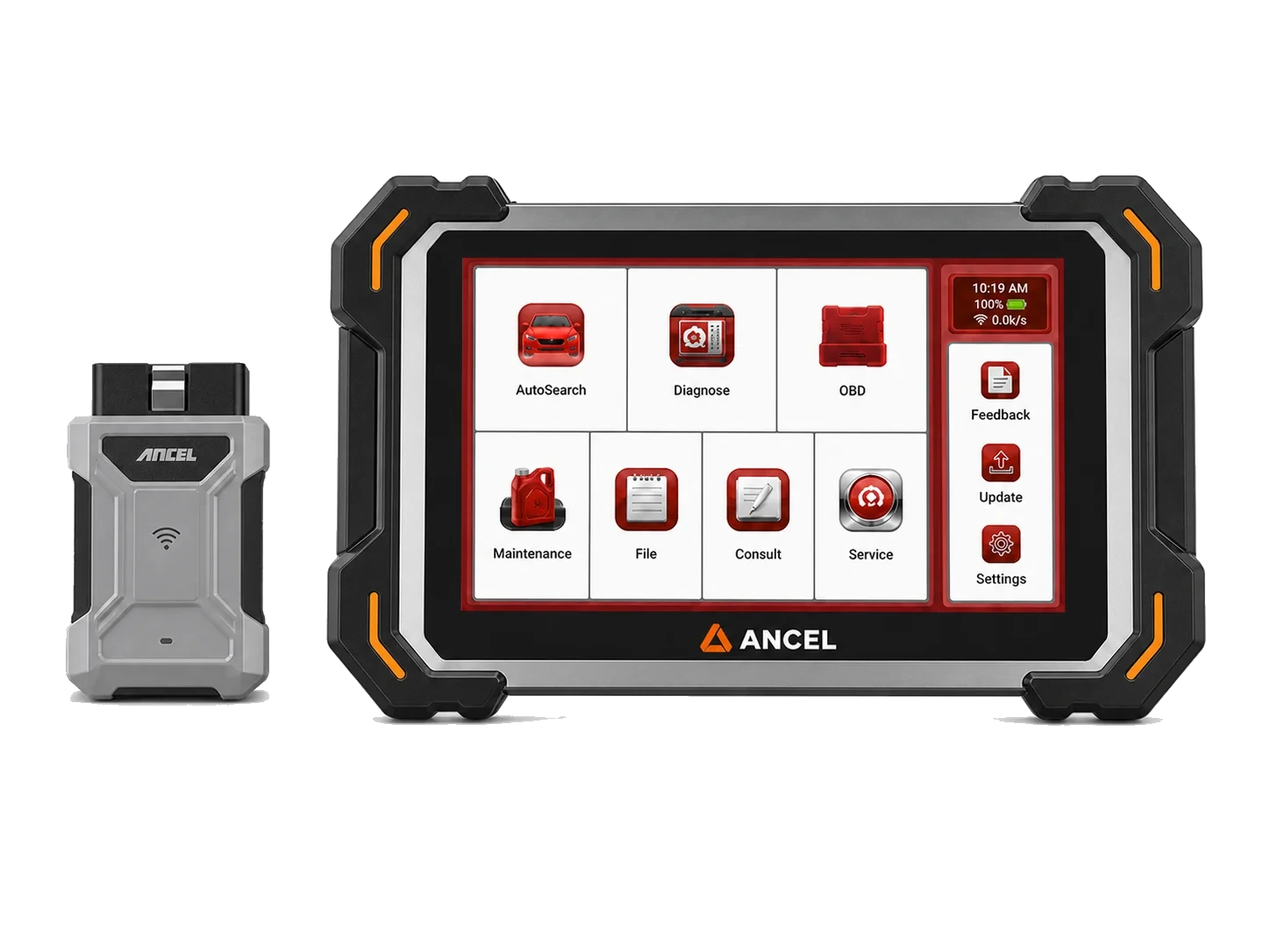
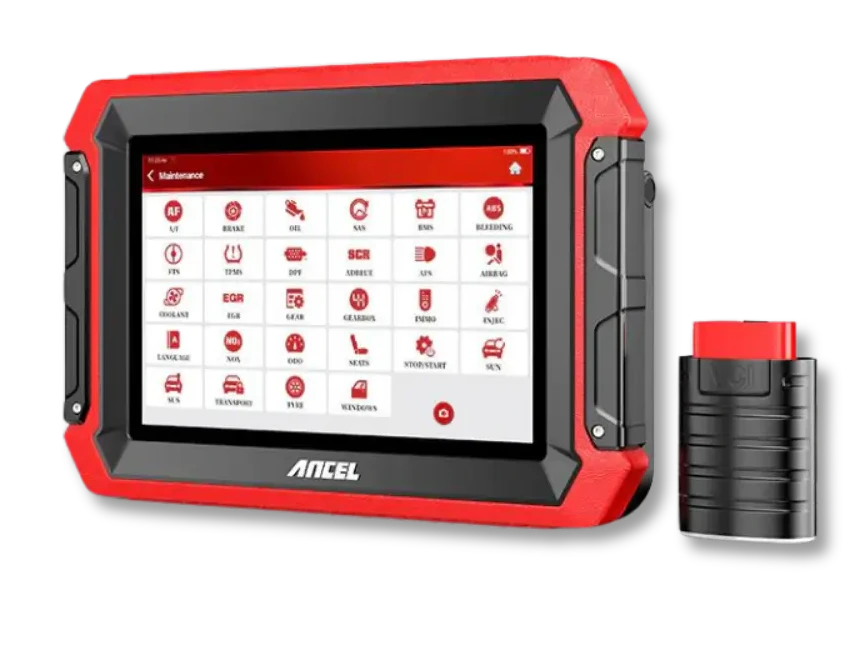
An entry-level code reader may show engine faults but may not access body or energy management ECUs. A service tablet may offer a battery registration menu; more advanced devices may include coding, topology, and measurement modules. For each feature, the relevant VCI, license, or additional module requirement is checked within the package contents.
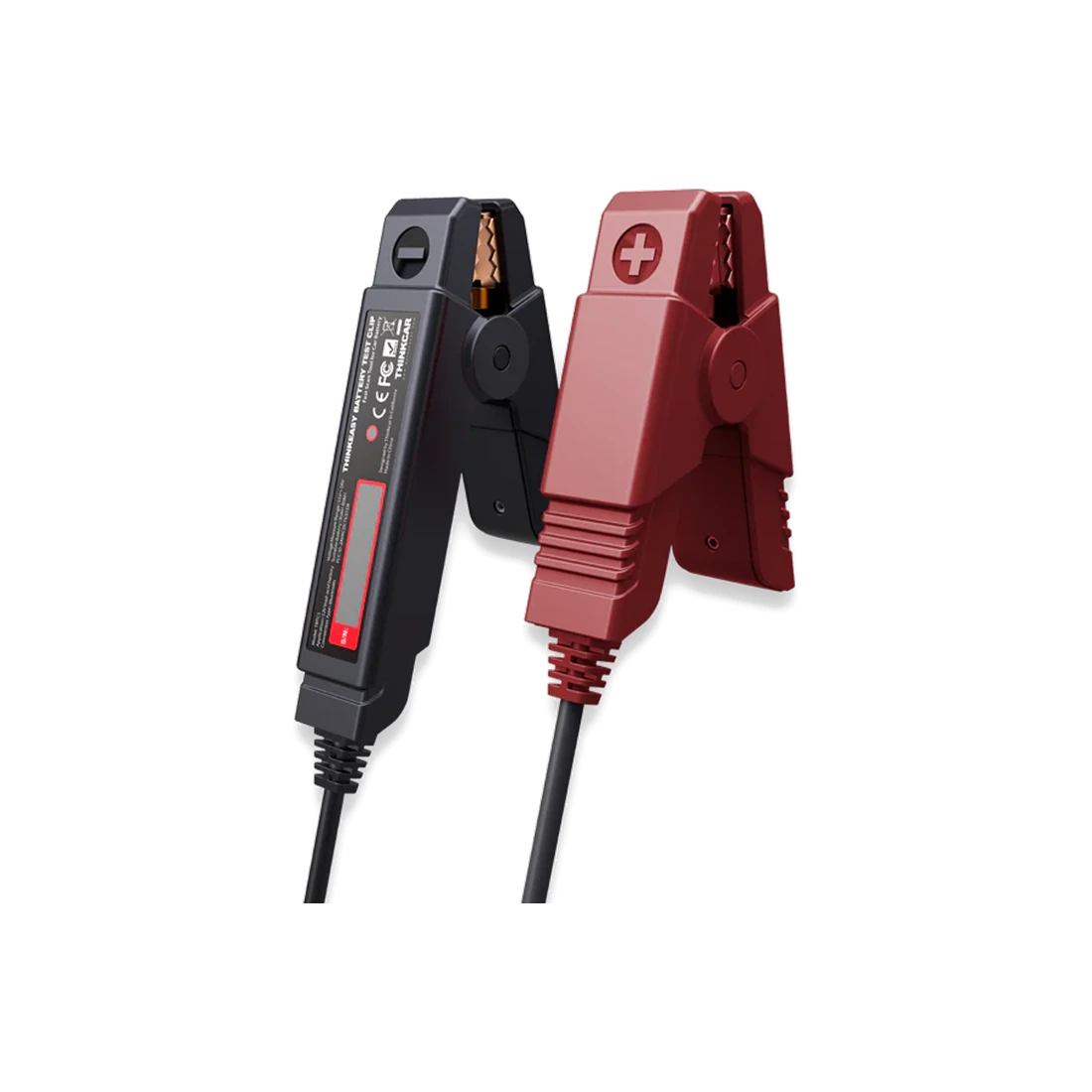
An ecosystem with a battery test clip or module can provide ease of reporting and operation through a single device. However, compatibility of the accessory with which main devices must be verified. The phrase “Bluetooth” or “smart test” alone does not prove measurement accuracy and vehicle coverage; manufacturer technical records and user manuals are taken as the basis.
When selecting a device, the most frequently seen vehicles in your service, the density of AGM/EFB batteries, the Start-Stop ratio, the need for coding, the daily test count, and reporting requirements are recorded. Battery testing and BMS registration support are compared based on these real service tasks. Price, updates, warranty, and accessories are separate purchasing criteria.
Decision guide
Common mistakes and correct procedure sequence
The most common mistake is to replace the part without measuring the weak battery complaint. The second mistake is to install a battery that appears physically suitable but is of the wrong technology or capacity. The third is mistaking registration, reset, and coding for the same process. The fourth is skipping the charging system or parasitic draw check after installing the new battery.
Deleting fault codes before the procedure makes it difficult to see which ECUs low voltage has affected. Uncontrolled power interruption during battery replacement can cause loss of comfort settings and some learned values. Incorrect use of a support power supply can pose a greater electrical risk. Each step is matched with the model-specific procedure.
The correct sequence is clear: record customer complaint, test battery and charging system, select the correct replacement battery, replace safely, perform registration/reset/coding if required by the manufacturer, and verify with fault memory and operating values. This sequence improves both the technical outcome and the clarity of the service provided to the customer.
When purchasing a device, ask about the actual tasks instead of the brand list: does it perform new battery registration on a specific model, can AGM/EFB or capacity changes be coded, are energy management live data visible, can reports be generated? This translates a general badge like “BMS supported” into a real service need.
Frequently Asked Questions
Most frequently asked questions by customers
Is registration required after every battery replacement?
No. The requirement depends on the vehicle manufacturer, model year, and energy management system. Some vehicles require registration or coding, while others learn the new battery during a drive cycle.
Are BMS reset and fault code deletion the same?
No. BMS reset or battery registration updates the energy management system with new battery information. Fault code deletion only clears recorded fault data.
Can an EFB battery be installed instead of an AGM battery?
Physical fit is not sufficient. The battery technology and capacity permitted by the vehicle manufacturer must be used; if a change is supported, the necessary coding must be performed.
Will the vehicle not start if the battery is not registered?
Some vehicles may start; however, the energy and charging strategy may not be correctly matched to the new battery. Since the outcome varies depending on the vehicle system, the manufacturer's procedure should be checked.
Which diagnostic tool should be purchased for BMS?
For vehicles in the workshop, a current service tablet should be selected that is verified to offer battery registration, energy management live data, and, if necessary, type or capacity coding.
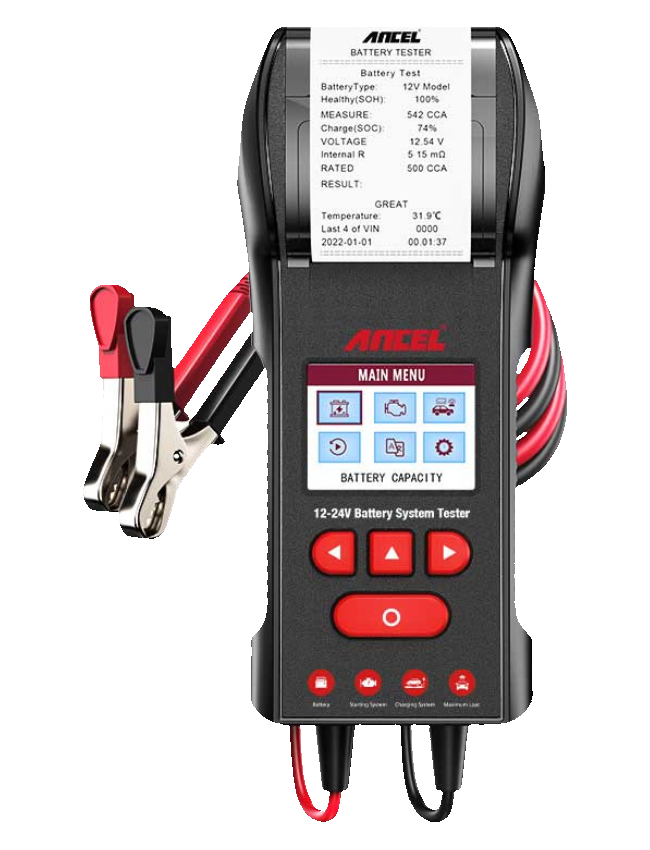
A service-type battery tester that checks battery status, starting, and charging systems in 12V and 24V lead-acid starter batteries, and provides results from its built-in thermal printer.
12V/24V battery test
Starting system check
Charging system check
≈ $1728,490 TL charged · VAT included · import duties excludedOut of stock