Decision guide
SOC: charge data is not range estimation
SOC (State of Charge) refers to the current charge status reported by the battery management system. The estimated range on the vehicle's dashboard is not the same thing. Range is also affected by driving style, speed, road conditions, outside temperature, cabin climate control, and the vehicle's energy consumption.
In one vehicle, SOC may appear as a rounded value on the driver's display and as a BMS parameter on the diagnostic screen. Record in the report which system the measurement was read from and under what conditions.
Cell voltage and temperature can change during charging and discharging. Directly comparing two screenshots taken at different charge and temperature conditions is incorrect.
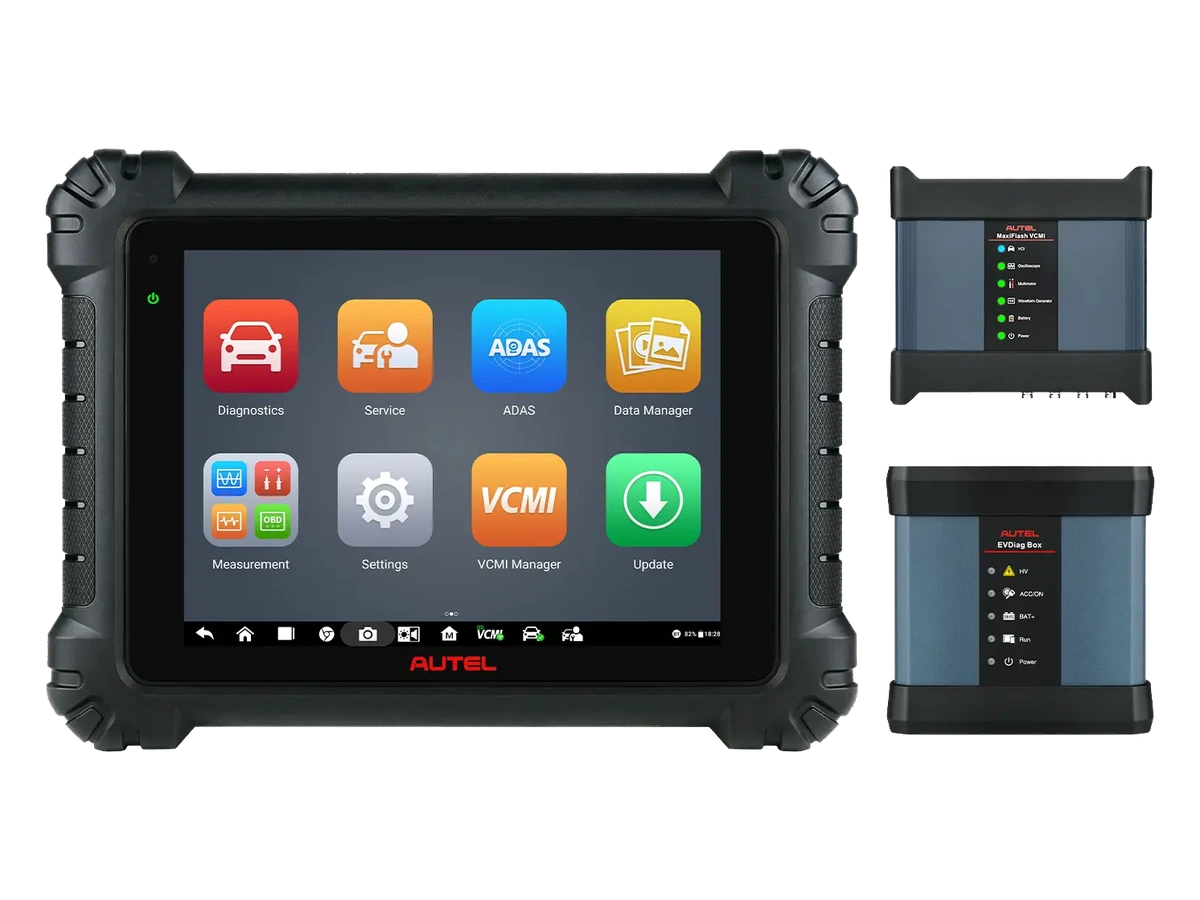
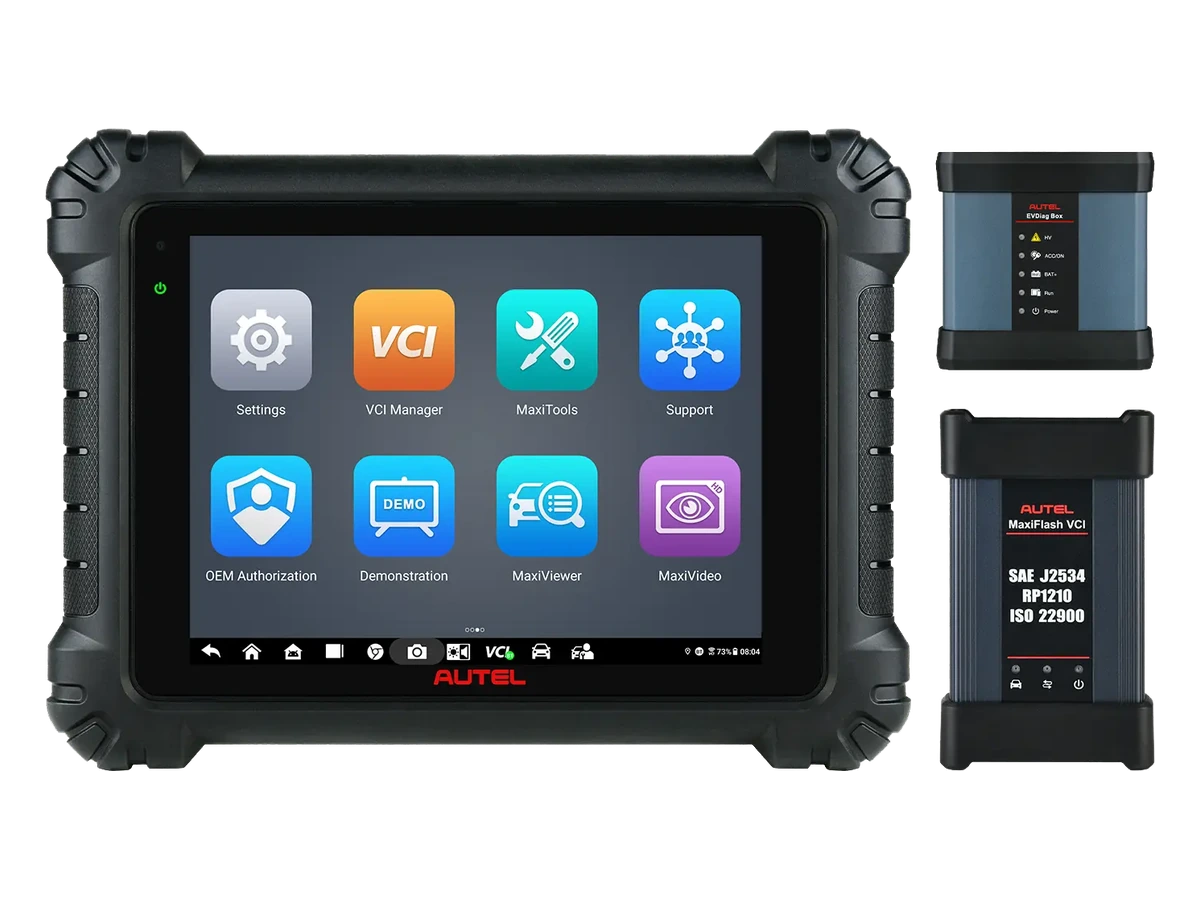
The Autel EV Diagnostics Upgrade Kit, compatible tablets, and EVDiag Box report SOC along with SOH, voltage, current, and temperature data for supported vehicles. Which fields are visible depends on the vehicle and software coverage.
Decision guide
SOH: the method of the health indicator is important
SOH (State of Health) is an indicator of the battery's health status. The value can come from the BMS's manufacturer-specific calculation or a separate test procedure. Therefore, the percentage given by two devices should not be considered to have been generated by the same measurement method; the name and conditions of the method used should be stated in the report.
Autel's official SOH Blitz page describes a separate battery reporting function. The manufacturer lists Ultra S2 EV, MS909S2 EV, and MS919S2 EV models among the devices for which this report is offered free of charge; it states that other tablets may require a one-time license or annual subscription.
The S2 EV names mentioned in the SOH Blitz model list are not the same product names as the standard MS909, MS919, or Ultra S2. Reading an SOH parameter from an EV kit and obtaining a separate SOH Blitz report are also not the same feature claim.
A single SOH value does not alone determine the remaining years of use, definitive range, or warranty coverage. It is interpreted in conjunction with the manufacturer's criteria, test conditions, vehicle records, and, if necessary, an independent capacity test.
Decision guide
How to read cell voltage and temperature difference?
Supported vehicles may display BMS cell or module voltages and battery temperature sensors. These values help find a fault direction; however, there is no universal voltage difference threshold or a single decision rule applicable to all brands.
Record the cell difference along with SOC, battery temperature, load status, and the manufacturer's specified test conditions. A short-term deviation may be related to balancing, temperature, sensor, or connection conditions.
Save the BMS fault code and live cell value simultaneously. Obtain event data before clearing codes; establish similar conditions in a re-scan after repair.
If the cell name or temperature field is not visible in the device menu, this is not proof of a physical battery problem on its own. Check the device's current vehicle and function coverage for the relevant make/model/year and BMS.
Decision guide
Scan, live data, and capacity test are not the same evidence
A BMS code indicates that a control unit has recorded an error under specific conditions. Live data provides currently reported parameters. A controlled capacity test, on the other hand, evaluates the battery's measured performance under a defined procedure. These three outputs support each other but do not replace each other.
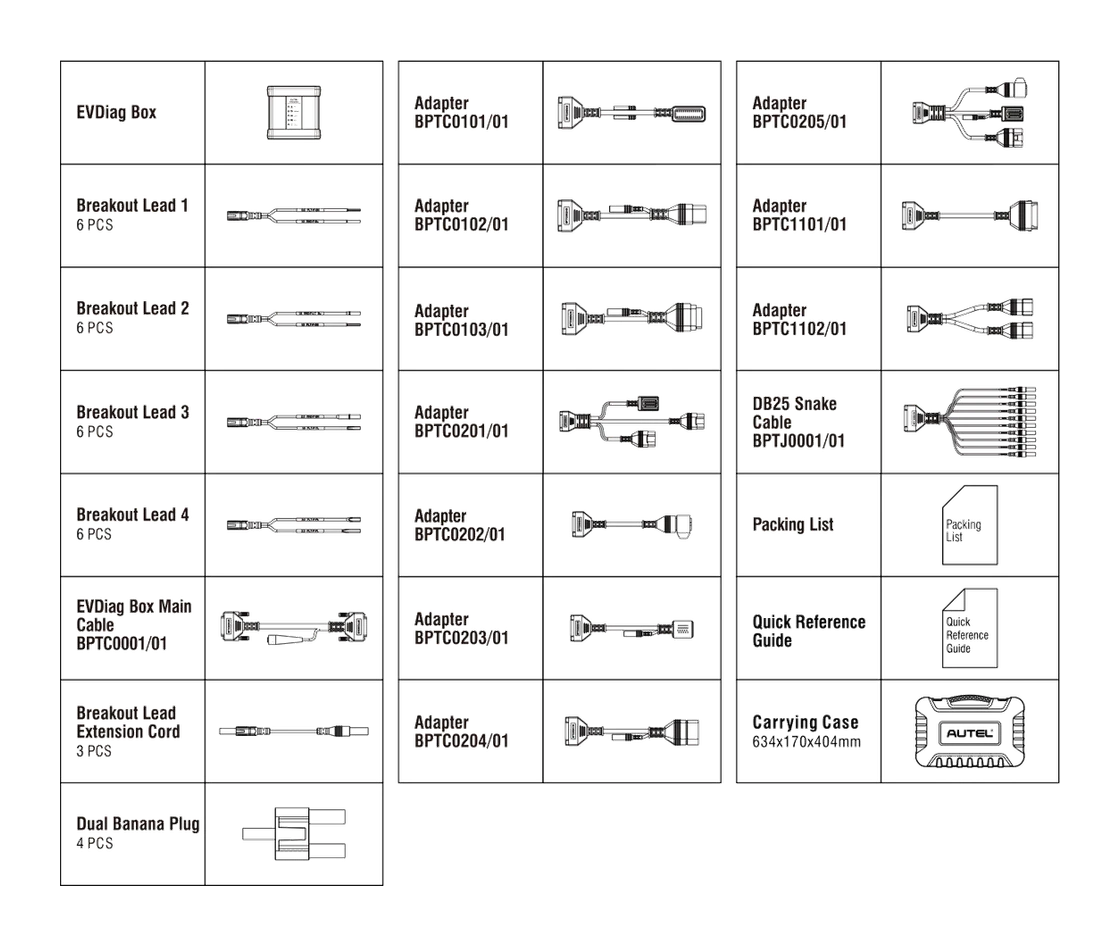
The EV Diagnostics Upgrade Kit page at Otobiltek states that the set includes the EVDiag Box and adapters for specific vehicles. Confirm the package contents to be delivered in Turkey with the package information on the product page.
Second-hand vehicle, warranty, or battery replacement decisions should not be based solely on a single diagnostic percentage. If necessary, refer to the manufacturer's test procedure or independent capacity measurement.
The report should include vehicle identification, date, SOC, battery temperature, device and function used, error codes, and measurement limits. If the data source cannot be explained, do not present the result as a definitive battery health judgment.
- Fault code: recorded error and event condition
- Live data: parameters reported by the BMS at a specific moment
- SOC/SOH report: indicator/analysis depending on device and vehicle coverage
- Capacity test: more comprehensive evaluation with defined procedures and measurement conditions
Decision guide
Distinguish high-voltage operation from the report screen
A diagnostic tablet can communicate with the battery management system; it does not make the high-voltage system safe on its own. A 'closed' or 'de-energized' status on the screen does not replace physical de-energization verification. Battery connection, measurement, and repair must be performed by trained personnel according to the tool manufacturer's procedure.
HELLA emphasizes following the vehicle manufacturer's de-energization and verification instructions for high-voltage work; using appropriate equipment, competence, and safety procedures.
Personal protective equipment, insulated measurement tools, workspace, and re-energization steps are workshop requirements independent of the device's box contents.
For vehicles with suspected accidents, water contact, high temperatures, or battery damage, a manufacturer-specific safety assessment is performed before the standard scanning procedure.
Decision guide
Write the battery report to be given to the customer in an understandable way
Instead of simply telling the customer 'battery health 87%', explain which device and method the value was obtained with, at what SOC and temperature the vehicle was, and which modules the report covers. Also, include the result limits and the recommended next measurement.
Use the phrases 'SOH reported by BMS', 'cell voltage difference', 'BMS fault code', and 'controlled capacity test' separately.
Do not conclude cell replacement or complete battery replacement from a single code. Service data, manufacturer acceptable range, and appropriate physical tests are required.
When a second technician reads the report, they should be able to understand the same test conditions. Therefore, record the date, vehicle information, software/device, and adapter set.
Frequently Asked Questions
Most frequently asked questions by customers
What is the difference between SOC and SOH?
SOC is the battery charge status reported by the BMS. SOH is a health indicator generated by the manufacturer's algorithm or a defined test method.
Does the SOH percentage indicate the battery's remaining life?
Not on its own. A specific usage year or range cannot be determined without knowing the method, test condition, manufacturer criteria, and vehicle data.
Is the SOH value read from every EV with a diagnostic device?
No. Parameter and report support can vary by make, model year, BMS, device software, license, and connection set.
If one cell voltage differs from others, is the battery faulty?
A single difference is not a definitive part diagnosis. SOC, temperature, load, balancing status, and manufacturer limits should be examined together.
Are Autel EV Diagnostics Upgrade Kit and SOH Blitz the same function?
No. The kit provides access to battery data from compatible vehicles; SOH Blitz is a separate reporting function and an Autel service with device/license conditions.