Quick comparison
Distinction between activation, coding, and retrofit
Process name, required hardware, and application method are not the same.
Decision guide
What does enabling a hidden feature mean?
"Hidden feature" is used in everyday language for personalization options that are not visible or are disabled by default in the vehicle. Single-touch turn signals, specific lighting behaviors, or menu preferences can be discussed under this heading. It is not assumed that a feature shown online for the same model is also available in your vehicle.
Availability varies with chassis family, model year, equipment level, regional package, multimedia unit, and control unit software. MBito OBD displays options offered by the app on supported vehicles. Functions not on the list are not attempted based on name similarity.
Decision guide
How does coding differ from activation?
Coding is the modification of parameters that determine how a control unit interprets the hardware and preferences in the vehicle. A simple user option may technically involve a coding step; however, not all coding is a hidden feature. Commissioning a new control unit or updating vehicle configuration is a more extensive service task.
Mercedes-Benz, within XENTRY Diagnosis Lite, defines coding and parameterization alongside professional tasks such as quick test, live data, actuator test, and guided diagnostics. User-facing personalization options and workshop coding do not carry the same level of authorization and risk.
Tasks such as control unit software installation, programming requiring security authorization, or commissioning new parts according to manufacturer procedures are outside the scope of MBito's user-type operations.
Decision guide
When is a retrofit necessary?
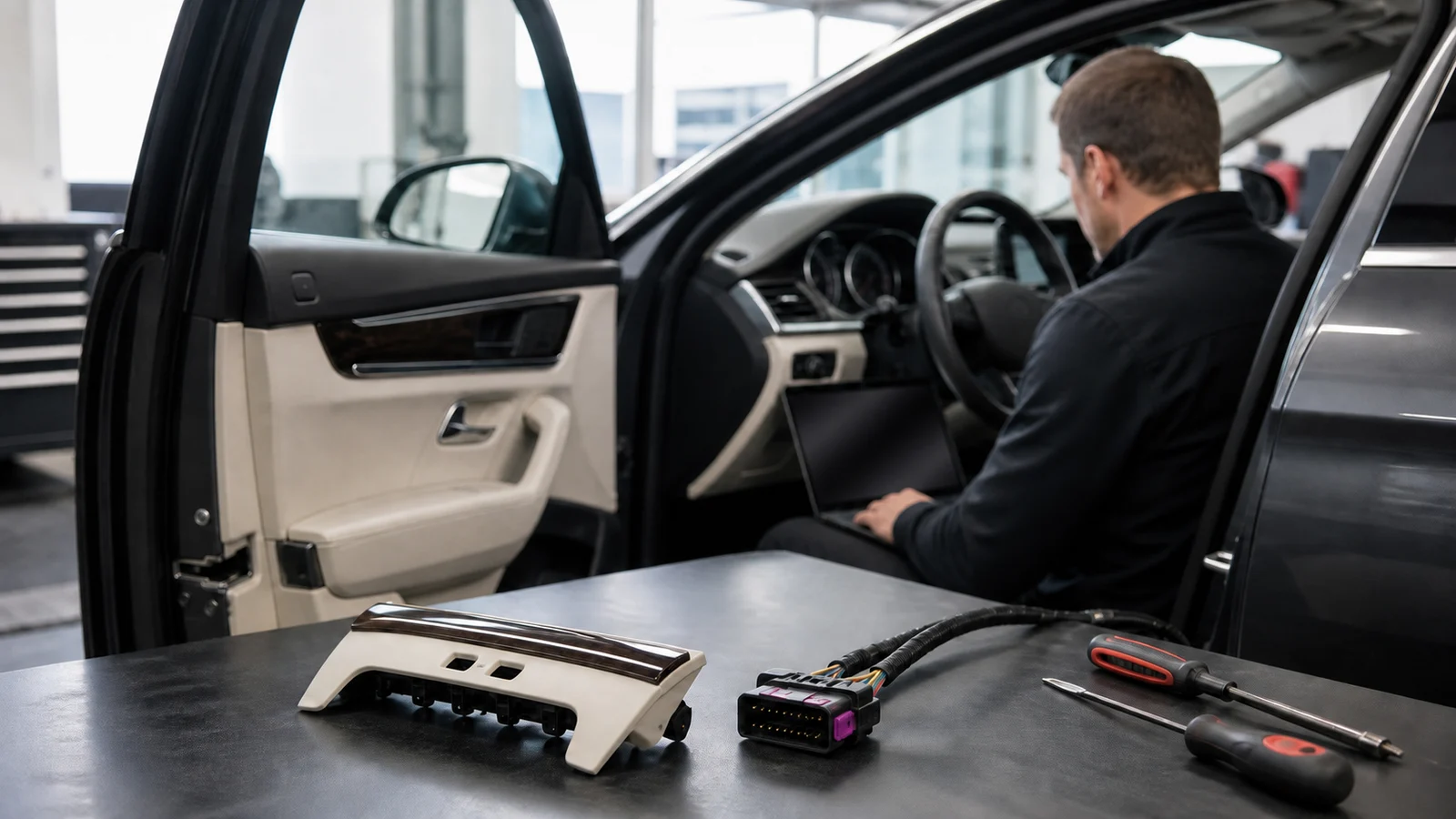
Retrofitting is the subsequent addition of hardware not originally present in the vehicle. Ambient lighting elements, different multimedia units, sensors, cameras, wiring harnesses, or control modules are examples. Simply enabling a software menu does not equip the vehicle with missing parts.
The appearance of the ambient lighting menu and the presence of the necessary lighting modules in the doors and console are separate issues. CarPlay availability may also depend on multimedia hardware, software, and required license conditions. Missing hardware is not solely resolved by coding.
After parts are added, the vehicle configuration can be updated, fault logs checked, and the function tested according to the manufacturer's procedure. Wiring, fuses, sockets, and part numbers are part of the physical installation.
Decision guide
Five checks before the process
The vehicle's chassis family, model year, and multimedia system are identified. The presence of the required sensor, camera, lighting module, or connection unit for the desired function is checked. The operation is classified as a ready option, control unit coding, or a retrofit involving part addition.
- Vehicle identification number and model year
- Physical hardware and wiring
- Control unit and software support
- Stable vehicle voltage during coding
- Menu and physical function check after the process
Decision guide
Which operations should not be performed with a user device?
Operations in areas such as brakes, airbags, immobilizer, keys, emissions control, and control unit software are not performed with a 'ready personalization' approach. Just because a setting can be technically modified does not mean it is accepted for road use or by regulations.
Operations involving cutting wires, disabling protection systems, or installing software from unknown sources are not to be confused with user-type activation. If hardware installation and professional coding are required, appropriate service equipment and manufacturer procedures are used.
Decision guide
The four most commonly confused scenarios
If the menu is visible but the physical function does not work, the required sensor, lighting module, or camera may not be present in the vehicle. If the vehicle does not recognize the part after installation, the vehicle configuration and commissioning process may be incomplete, even if the part is physically installed correctly.
Two cars that look the same from the outside may have different multimedia units, software, or regional packages. A CarPlay or screen menu enabled in one vehicle may not work in another using the same method.
Control unit software updates can reset some user settings to factory defaults. The current settings are saved before the change, and the function is rechecked after the update.
Decision guide
How to determine the process type with a short sequence
If the physical hardware for the desired function is not present in the vehicle, the matter is a retrofit, not activation. If the hardware is present, the relevant control unit and software support are checked. If the feature appears for this vehicle in the MBito app, user-type activation can be applied; if new part introduction or software tasks are required, professional coding is investigated.
The same model name is only initial information. Hardware, control unit, and software together determine the type of operation. Changes affecting safety or driving systems are not made based on a ready feature list.
Decision guide
Correct usage area for MBito OBD
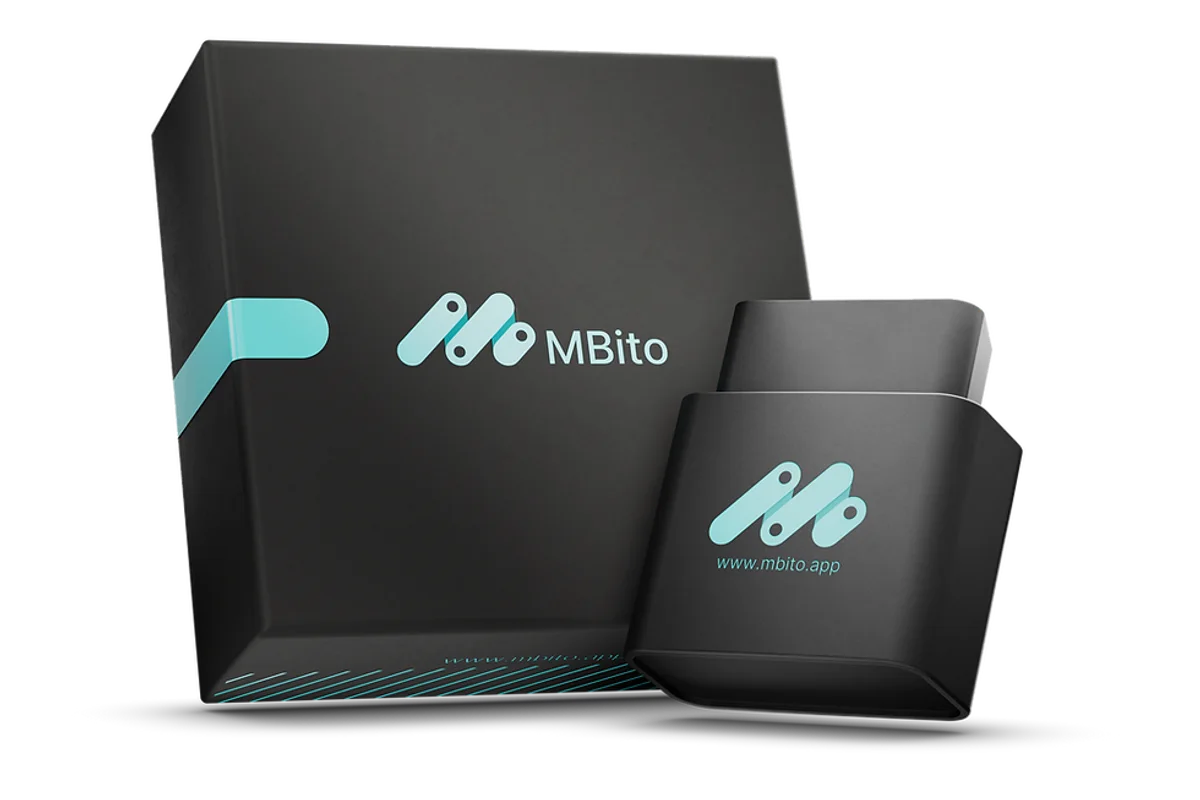
MBito OBD displays the diagnostic and personalization options offered by the app on supported Mercedes vehicles. The user can select the listed operation for their vehicle; some operations may use credits, and conditions may be visible in the app. Even if the same adapter is used on different vehicles, the feature list is not the same for every vehicle.
Before purchasing the product, the vehicle and function are checked on the MBito current list. If multi-brand system scanning, professional programming, or retrofit commissioning is required, service tablet and workshop system options are compared separately.
Frequently Asked Questions
Most frequently asked questions by customers
Are all Mercedes hidden features enabled solely by software?
No. If the vehicle lacks the sensor, control unit, multimedia hardware, or wiring required for the feature, software alone is insufficient.
Are activation and coding the same process?
Activation makes an existing and supported option available. Coding is a broader concept; it can also encompass control unit parameter changes and professional commissioning tasks.
Is coding required after a retrofit?
Many retrofit processes require coding or commissioning for the new part to be recognized and function correctly by the vehicle. The exact procedure depends on the installed part and vehicle architecture.
Why does the feature list vary for the same Mercedes model?
The model year, chassis family, equipment package, multimedia unit, and control unit software may differ. Therefore, a definitive feature list cannot be generated based on the model name alone.
Does MBito OBD perform retrofits?
No. MBito does not add physical sensors, cameras, lighting modules, or wiring. The product accesses diagnostic and personalization options offered by the app on supported vehicles.