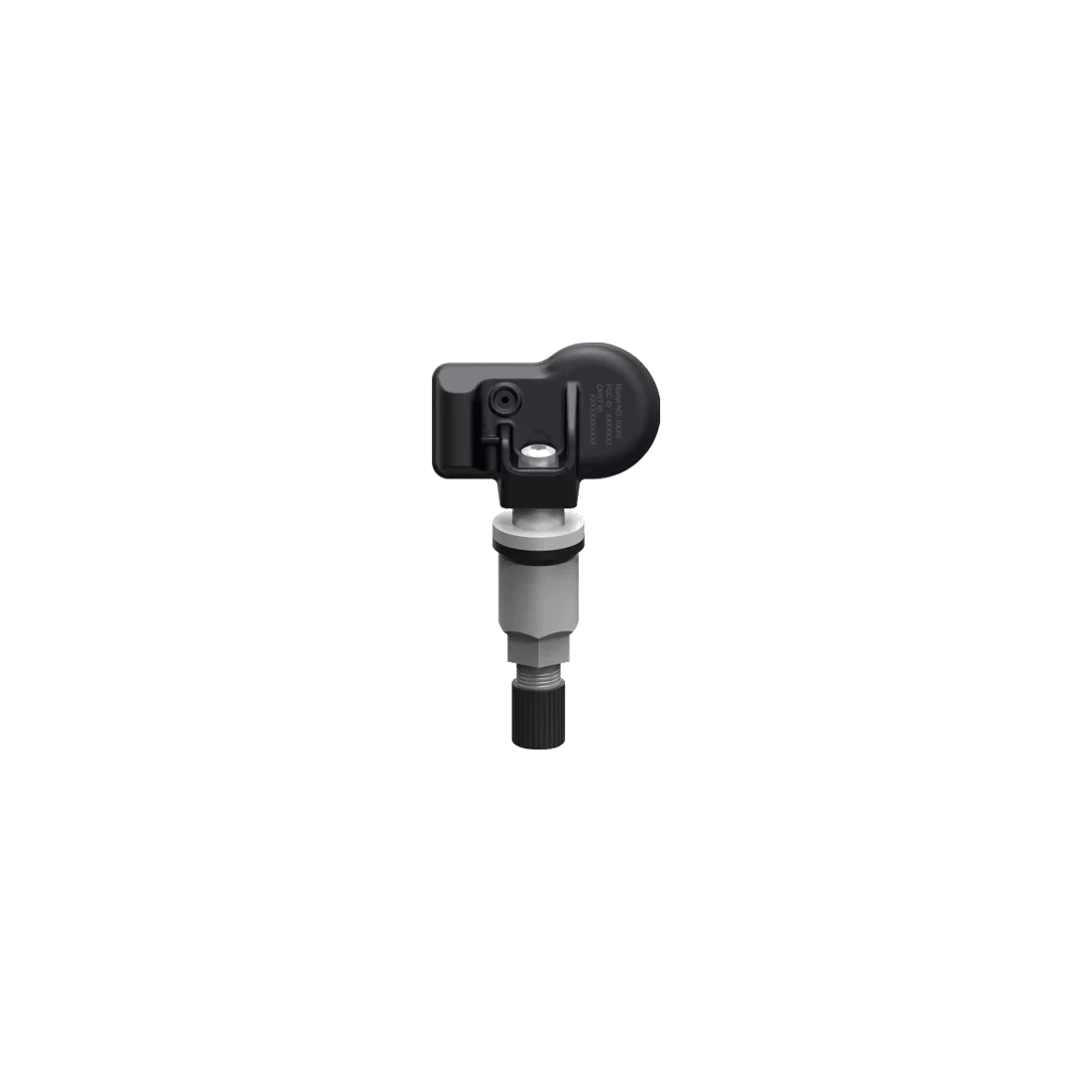
Difference between TPMS sensor programming, cloning, and relearning
A TPMS warning does not always mean the sensor is not programmed. The vehicle may have an indirect system, the direct sensor's battery may be weak, the correct protocol may not have been written to the new universal sensor, or the sensor IDs may need to be taught to the vehicle. Programming is preparing the sensor; cloning is copying the old ID to the new sensor; relearning is the vehicle recognizing the sensors. Correct service first identifies the system type and fault, then selects the necessary procedure.
Check ID, pressure, temperature, battery, and frequency
It is the first step in fault diagnosis
Programming
For a universal sensor
Writing the vehicle-compatible protocol and ID
May not be necessary for a pre-programmed sensor
Cloning
To a new sensor
Copying the old sensor ID
If the system and sensor support it
Relearning
In the vehicle's control unit
Matching sensor IDs with the vehicle
Varies according to the vehicle's method
Basic setting
Vehicle menu or diagnostic device
Accepting correct pressure as reference
Applied according to system type
Decision guide
First, differentiate between direct and indirect TPMS
An indirect system typically generates a warning about pressure loss by interpreting changes around the tire using ABS wheel speed data. There may not be a separate sensor inside the wheel transmitting pressure values. In a direct TPMS, however, each wheel has a sensor that measures pressure and temperature and transmits data to the vehicle via radio frequency. The service procedures and required equipment for these two systems differ.
In an indirect system, after the tire pressure is brought to the correct value, the starting value can be recorded via the vehicle menu or button after changing the wheel position or replacing the tire. Here, "sensor programming" is not performed, as there may not be a pressure sensor inside the wheel to be programmed. The cause of the warning may also be related to tire size, load, road conditions, or an incorrect starting setting.
In a direct system, an RF device can wake up the sensor and read data such as ID, pressure, temperature, frequency, and, if supported, battery status. HELLA states that direct systems transmit measurements from the sensor inside the wheel, and calibration or recoding may be required after sensor replacement. Simply resetting the fault light does not introduce the new sensor to the vehicle.
The appearance of separate pressure values for all four tires on the display screen may indicate a direct system, but the definitive system definition is made with the chassis number and technical documentation. Hardware or market differences may exist within the same model family. During service reception, the vehicle make, model, year, tire size, and the behavior of the warning are recorded.
Visual summaryProgramming, Cloning, and Relearning
01
ProgrammingThe appropriate protocol and ID are written to the universal sensor.
02
CloningThe old sensor ID is copied if supported.
03
RelearningThe vehicle registers the new sensor IDs.
Preparing the sensor and the vehicle recognizing the sensor ID are different processes.
Decision guide
TPMS sensor testing precedes programming
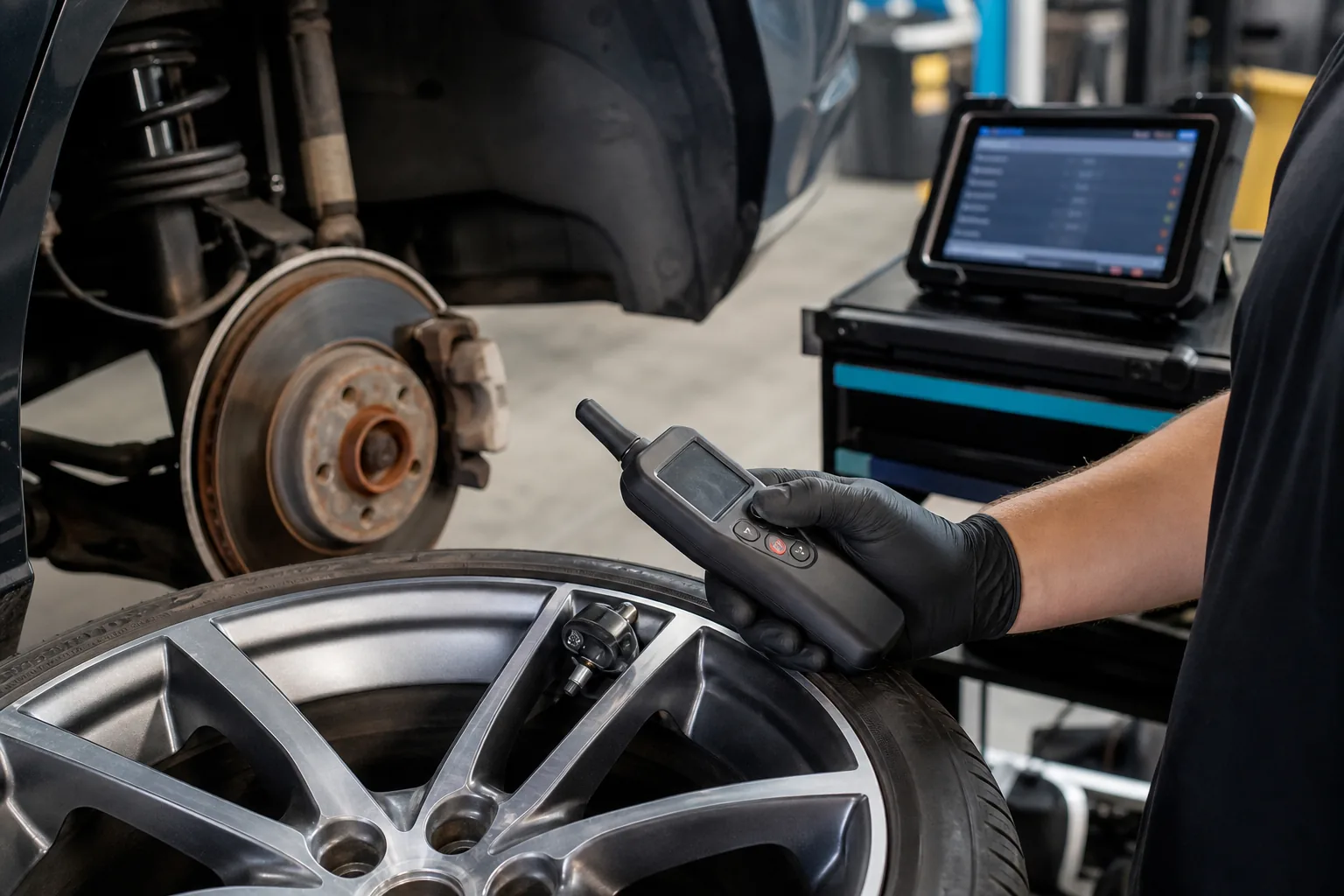
Before ordering a new sensor or starting programming, the sensors in the vehicle are tested individually. The TPMS device is held near the valve to activate the sensor and read its response. The ID, pressure, temperature, frequency, and battery status of the four sensors are compared. A sensor that gives no response and a working sensor not registered to the vehicle are not the same fault.
If the sensor responds but the display warning persists, the registered IDs in the vehicle may not match the IDs in the tires. The actual pressure value is compared with the value read by the device. Valve leaks, tire pressure, or physical damage cannot be corrected by electronic programming. Mechanical tire safety must be ensured first.
The TPMS light flashing then staying solid when the ignition is turned on can indicate a system fault in many systems; it is evaluated differently from a constant pressure warning. However, the exact meaning of the display behavior should be confirmed from the vehicle's owner's manual. The error memory and actual values are read with a diagnostic device.
HELLA's service approach recommends performing initial diagnostics and reading the fault memory before any conversion. This record answers the question of whether the problem existed before the procedure. For warnings that appear after a tire change, comparing previous sensor responses and vehicle codes reduces incorrect part replacements.
Test the four sensors individually
Record ID and frequency
Verify pressure with a manometer
Read the vehicle's fault memory
Decision guide
What does programming write to the sensor?
A universal TPMS sensor is a blank or reprogrammable part designed to support various vehicle protocols. An appropriate programming device writes the necessary protocol and sensor ID for the selected vehicle to the sensor. This process can be done before the sensor is physically installed on the wheel. Not all universal sensors from every brand work with every programming device; ecosystem compatibility must be verified.
Vehicle selection is made by brand, model, production year, and if possible, chassis split. If the wrong model is selected, the message structure or protocol may differ even if the frequency appears the same. Although 433 MHz is common in the European market, frequency alone is not proof of compatibility. Sensor part number and programmer coverage are checked together.
In the new ID creation option, a unique ID is written to the sensor. The vehicle may not recognize this ID yet, so re-learning may be required later. Some service devices can program four sensors simultaneously; however, the sensors must be marked as front-left, front-right, rear-left, and rear-right. After installation, it must be known which ID belongs to which wheel.
When programming is complete, the sensor is triggered again to verify the written ID, protocol, and pressure response. The "successful" message on the screen is not sufficient. During sensor installation, the valve type, torque, seal, and rim compatibility are applied according to the sensor manufacturer's instructions; electronic programming does not compensate for incorrect mechanical installation.
Visual summaryDifference between direct and indirect TPMS
01
Direct systemThe sensor inside the wheel transmits pressure and ID data.
02
Indirect systemInfers pressure change from wheel speeds.
Whether the vehicle has a physical pressure sensor or not changes the device and procedure to be used.
Decision guide
When is cloning useful?
Cloning is copying the ID of a working old sensor to a new sensor. Since the vehicle continues to see the same ID, the need for re-learning may be reduced in some systems. In HELLA's example, it is explained that old summer tire sensor information can be transferred to new sensors for the winter set, and re-learning may not be necessary in most cases when the ID is copied. This result depends on the vehicle and sensor system.
If the old sensor does not respond at all, you may not be able to read its ID via RF. The ID can be found on the sensor body, in previous service records, or in the vehicle's ECU; the access method varies by system. It is incorrect to guess and write the ID or use the ID of another vehicle.
Having two sensors with the same ID active around the vehicle simultaneously can cause confusion. If summer and winter sets are cloned, the storage and usage order in the vehicle should be considered. In vehicles that track wheel position with separate IDs, the effect of the cloning strategy on position display is checked.
Cloning does not solve sensor battery issues, valve leaks, or RF receiver malfunctions. Even if the new sensor responds correctly with the copied ID, if the vehicle warning persists, re-learning, the antenna/receiver system, and ECU codes are evaluated. Cloning is a facilitation method; it is not a general fault clearing procedure.
Decision guide
Why do relearn methods vary from vehicle to vehicle?
Re-learning is the process by which the vehicle's ECU accepts the wheel sensor IDs and, if necessary, matches them with their positions. Some vehicles automatically recognize sensors during driving at a certain speed and duration. Others require a vehicle menu or button sequence. Some require the IDs to be written to the ECU using an OBD-connected TPMS/diagnostic device.
Automatic learning does not mean "nothing needs to be done." Tires are brought to the correct pressure, the sensors are seen to respond correctly, and the driving conditions specified by the vehicle manufacturer are met. In HELLA's Passat B8 example, it is explained that the sensors were automatically detected during the test drive, and the process could be completed above a certain speed and within a certain time; these values are not copied to other vehicles.
In OBD learning, the device first reads the IDs from the wheel sensors sequentially and then can transfer them to the ECU via the vehicle's socket. The left-right order is important. The wrong order can confuse the display positions. Battery voltage and communication connection are maintained throughout the process; the session is not interrupted during writing.
In the manual triggering method, the wheel order can advance with horn, signal, or display feedback. Button and ignition combinations are model-specific. Random trials with procedures from other models found online are not performed. The user manual or manufacturer service information is used as the basis.
Visual summaryDiagnostic flow for TPMS malfunction
01
Determine system typeDirect or indirect
02
Wake up the sensorID, pressure, temperature, and battery
03
Scan the vehicleTPMS ECU codes and registered IDs
04
Apply the correct procedureProgramming or learning
Before turning off the warning lamp, it is determined which sensor and which stage is problematic.
Decision guide
Relationship between basic setting and tire pressure
Base setting ensures the system accepts the current and correct tire pressures as reference. If started with incorrect pressure, the system may monitor the wrong value. Therefore, all four tires are brought to the pressure corresponding to the load condition specified by the vehicle manufacturer on the door pillar, fuel cap, or in the user manual, when cold. The maximum pressure on the tire sidewall is not used as the target value.
Front and rear axle pressures may differ; full load and normal load values may also be separate. The scope for the spare tire or a different size set is checked separately. The calibration of the pressure gauge directly affects the service result. Significant deviations are investigated by comparing TPMS sensor values with a workshop pressure gauge.
After base setting in an indirect system, the vehicle may request driving to re-learn wheel speed behavior. In a direct system, even if new sensor IDs are recognized, the pressure reference may be recorded separately. The "programmed" message does not prove that all these operations were completed automatically.
If the position display is incorrect after tire rotation, the system's automatic position learning feature or re-learning procedure is checked. Replacing sensors solely because the on-screen position is incorrect creates unnecessary costs. First, the sensor IDs and the registered positions in the vehicle are compared.
Decision guide
Systematic diagnosis if the TPMS warning does not turn off
When the warning persists, tire pressure, sensor response, vehicle fault code, and learning status are checked separately. A sensor may not be responding to the RF device; even if all respond, the vehicle receiver or antenna system may not be communicating. The new sensor may have been programmed with the wrong protocol, or the ID transfer may not be complete.
The battery status of the sensor is read if supported. In TPMS sensors, the battery is usually integrated with the housing and weakens over the years. A sensor that responds intermittently at low temperatures may appear normal in a warm workshop. The customer's description of when the warning occurred provides context for diagnosis.
RF interference, incompatible wheel/tire fitment, and incorrect installation are also evaluated. HELLA emphasizes the importance of radio communication and sensor position in direct systems. Holding the service device too far from the valve or triggering the wrong wheel can corrupt test results.
If the vehicle ECU records a communication error, the focus is not solely on the sensor. The power supply, fuse, antenna, and network connection are examined with the technical diagram. After the fault code is cleared, re-learning and a test drive are performed; it is observed whether the warning returns.
Visual summaryTPMS device selection check
01
Frequency and sensorSensor family for the target market
02
ProgrammingUniversal sensor support to be used
03
OBD ConnectionRequirement to write ID to the vehicle
04
Current coverageBrand, model, and year verification
A single handheld device may not cover all sensor brands and all vehicle learning methods.
Decision guide
How to choose a TPMS service device?
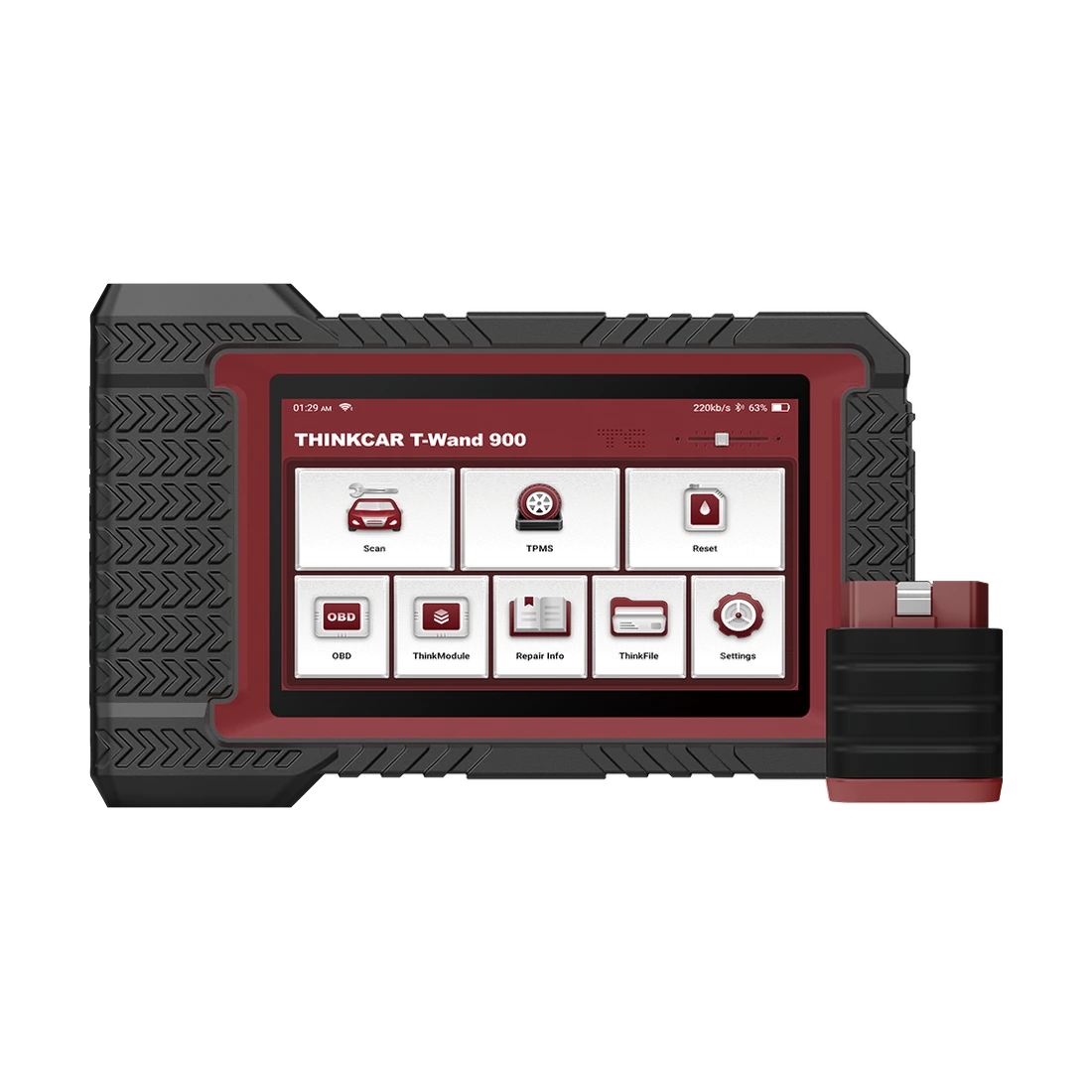
For tire service, the device may not be limited to just triggering the sensor. Features such as programming target sensor brands, ID cloning, batch processing of four sensors, re-learning via OBD, vehicle coverage updates, and reporting are evaluated. The workflow difference between a product that operates as a module with a main diagnostic tablet and a standalone TPMS device is examined.
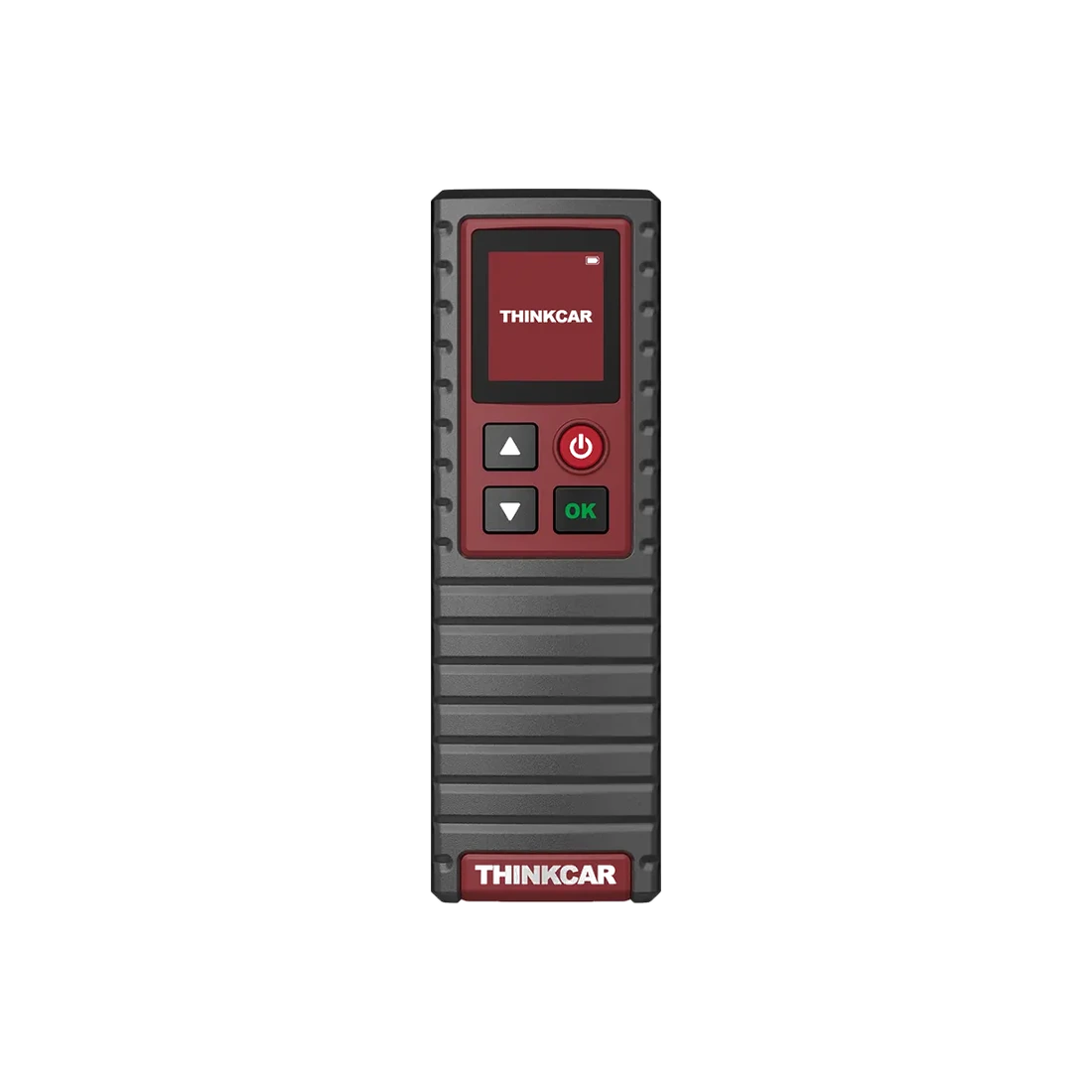
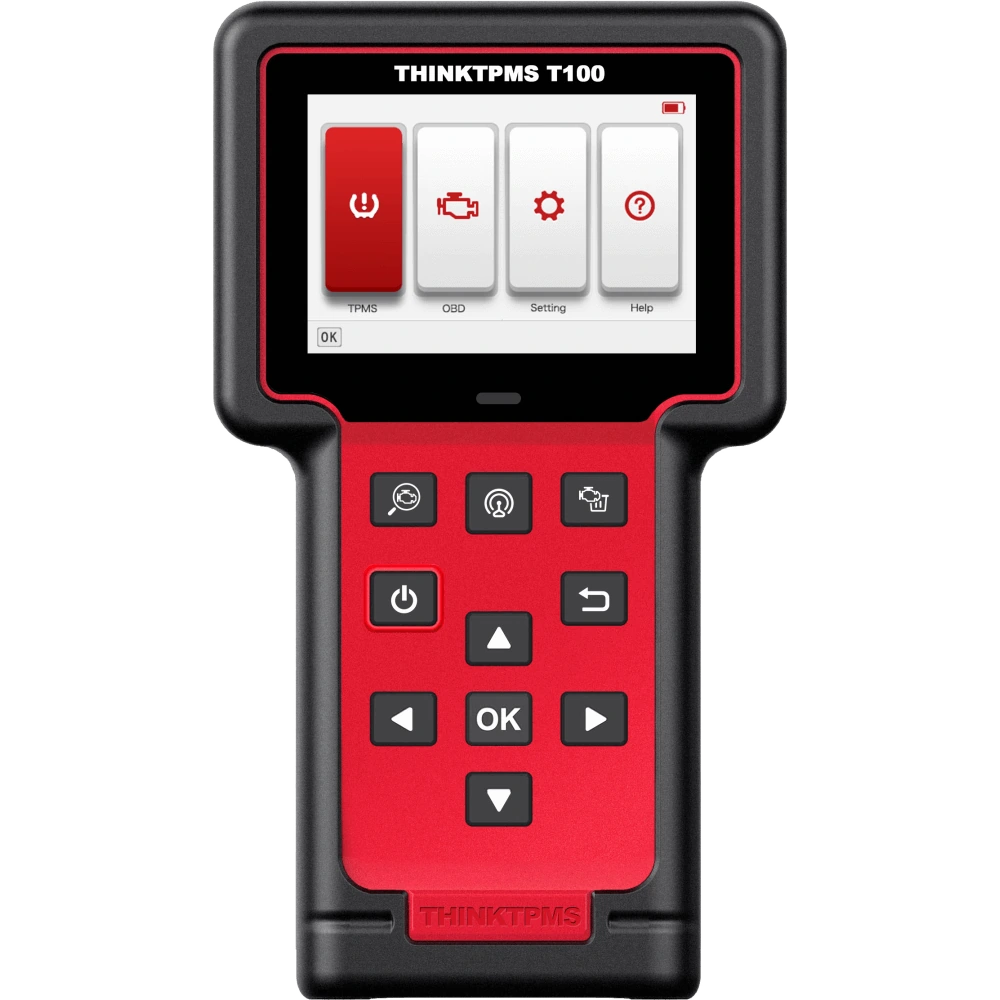
A programmer like T-Wand may work with specific Thinkcar devices; standalone products like the TPMS T100 may have different coverage. A sensor programming device and a multi-system diagnostic tablet are not the same product. The package contents, including the OBD cable, charging equipment, and supported sensor ecosystem, should be clearly checked.
If your service only performs seasonal tire changes, quick sensor testing, cloning, and common vehicle learning methods may be prioritized. If the mechanical workshop also performs ABS/ESP and vehicle electronics diagnostics, a TPMS solution integrated with the main tablet may be preferred. The daily vehicle count and reporting needs influence the choice.
Before purchasing, coverage should be requested with five real vehicle examples. The brand, model, year, direct/indirect system, and the sensor brand to be used are written down. Instead of absolute statements like "TPMS on all vehicles," the manufacturer's current coverage list and software version should be verified.
Sensor triggering and testing
Programming and cloning
OBD re-learning
Sensor ecosystem compatibility
Updates and reporting
Decision guide
Customer delivery and service record
When the TPMS procedure is complete, the pressure and sensor response of each wheel are recorded, it is confirmed that there is no warning on the vehicle, and a test drive is performed if necessary. The ID and position list of the new sensors are added to the service record. Tire pressure is explained to the customer according to the vehicle manufacturer's load condition.
The customer is informed that TPMS does not replace tire maintenance. The system provides a warning for pressure loss; it does not solely assess tire age, tread depth, sidewall damage, or mechanical safety. Pressure should continue to be checked regularly with an appropriate pressure gauge.
If a second set of wheels is used, cloning or the use of separate IDs is noted in the report. It is written which learning procedure will be required during seasonal changes. The exact lifespan of the sensor battery is not guaranteed; it is explained that it varies depending on usage and sensor construction.
A correct service record accelerates subsequent troubleshooting. When a warning occurs a year later, the old ID, frequency, position, and battery information can be compared with new measurements. This concrete record is more valuable than a general "sensor replaced" note.
Decision guide
Final check before purchase and before application
The biggest confusion in TPMS work is considering programming and re-learning as the same procedure. The vehicle protocol may have been written to the new universal sensor, but the vehicle may not recognize the sensor yet. If the old ID was cloned, the vehicle may not require re-learning, but this is not guaranteed for all systems. In indirect systems, sensor programming may not be relevant at all.
The procedure order should be established with the following logic: determine system type, check pressure and physical tire, test existing sensors, select the correct replacement sensor, program or clone if necessary, teach to the vehicle according to the manufacturer's method, perform base setting, and verify with a test drive. Each step is based on the previous finding.
When selecting a device, sensor brand, RF frequency, programming coverage, OBD learning, software updates, and main tablet compatibility are checked individually. A product's ability to read TPMS sensors does not mean it can write to universal sensors. Its ability to program does not guarantee it can perform OBD learning on every vehicle.
T-Wand 900, T-Wand 200, and TPMS T100 are compared in terms of sensor family, RF frequency, programming method, OBD learning coverage, and compatible main tablet. The current package contents for each sensor and device package are shown separately on their respective product pages.
Frequently Asked Questions
Most frequently asked questions by customers
Are TPMS programming and relearning the same?
No. Programming writes the protocol and ID compatible with the vehicle to the new sensor. Relearning allows the vehicle to recognize this sensor ID.
Does a cloned TPMS sensor require programming to the vehicle?
In some systems, additional registration may not be required when the old ID is copied. The result depends on the vehicle and sensor system; it is verified with a test drive and warning check.
Is the sensor programmed in indirect TPMS?
Indirect systems mostly use ABS wheel speed data and do not have a pressure sensor inside the wheel to be programmed. A basic setting can be applied after the correct pressure is set.
Does a 433 MHz sensor work on every European vehicle?
No. Frequency alone is not sufficient; sensor protocol, part compatibility, vehicle model, and learning method must also match.
Why does the TPMS light not turn off after the procedure?
Incorrect pressure, unresponsive sensor, wrong protocol, incomplete learning, vehicle receiver, or system error can be causes. Sensor testing and vehicle fault scanning are performed together.
The THINKCAR THINKTPMS T100 is a TPMS service device with a screen for sensor activation, reading, programming to compatible THINKCAR sensors, and relearning according to vehicle procedures.