How to differentiate live data, active test, and adaptation in EGR faults?
When an EGR warning appears, the first question is not whether to replace the valve immediately, but which finding indicates the problem. The fault record, valve position, airflow, and mechanical movement do not provide the same information. This guide explains the functions to request for EGR diagnostics and the place of post-repair learning when evaluating Ancel DS600 and Launch CRP919E BT.
Record the fault code and the conditions under which it occurred.
02
Check Valve Response
Compare the command with the response in a supported active test.
03
Verify Post-Repair Learning
Check the procedure required by the vehicle after cleaning or replacement.
EGR functions are verified according to the engine, control unit, and software version.
Evaluation Method
How was this guide prepared?
Otobiltek is the seller of the devices for which a connection is provided. Device selection is based on the service task to be performed and verified vehicle support.
Manufacturer documentation and technical service resources have been reviewed. Results are not presented as if practical vehicle tests have been performed. Product photos show actual devices. The descriptions next to them differentiate operations; they do not show the result of an applied vehicle test.
Under what conditions the complaint occurred
Control unit and support for the requested function
Verification of device data with physical inspection
When software or manufacturer procedures change, the scope of the operation is re-verified. The delivery package and commercial terms are checked on the product page.
Quick comparison
Separate the question before starting the procedure.
Need
Information expected from the device
Complementary check
Understanding the fault record
Code, status, and, if available, error moment information
Complaint and engine identification
Testing movement
Supported active test and feedback
Electrical, vacuum, or mechanical inspection
After cleaning/replacement
EGR learning in the vehicle, if required
Manufacturer procedure and final check
Decision guide
What is EGR and why is a fault code not sufficient alone?
Exhaust gas recirculation is a system that directs a portion of the exhaust to the intake side, depending on operating conditions. The valve's command and feedback vary by system; electrically or vacuum-operated systems are not tested in the same way. A fault code indicates that a check did not produce the expected result, it does not identify the part to be replaced on its own.
Include the exact code, current or past record status, and the conditions of the complaint in the work order. Do not record the irregularity seen during cold start and the power loss under load as the same symptom. The engine code, previous repairs, and software version used are the basis for subsequent comparisons.
What capabilities should be inquired about for EGR when selecting the DS600?
The DS600 manufacturer page includes system diagnosis and bi-directional control. What is required for EGR tasks is reading the relevant codes and parameters in your engine control unit and, if necessary, activating the valve command. General active test support does not guarantee that a specific EGR command will work on every vehicle.
Instead of just saying "Does it do EGR?" to the seller, provide the make, model year, engine, and the desired function. Get separate answers for reading, actuator test, and post-repair learning. A test video on another vehicle does not confirm the coverage for your specific ECU version.
EGR Live Data
Distinguish between the position requested by the device and the position reported by the valve.
A percentage value alone does not indicate the actual amount of gas passing through the valve.
This is the request sent by the engine control unit to the valve.
02
Reported Position
This is the position reported back by the valve, if supported by the vehicle.
03
Physical check
Connection, leaks, and mechanical movement are examined separately.
Compared data is recorded under the same engine temperature, RPM, and load conditions.
Decision guide
Requested position, reported position, and flow are not the same measurements.
Compare the position requested by the control unit with the position reported by the valve in the supported parameters. Not all vehicles may offer both values; percentages shown under different names are not assumed to have the same reference. Position information is not a direct measurement of the actual amount of gas passing through the channel.
Record the data with engine temperature, RPM, and load information. Do not make judgments between two recordings without maintaining the same test conditions. If complementary data such as airflow or pressure is available, evaluate it with the manufacturer's relevant test plan; do not consider a single percentage found online as a threshold for all engines.
Decision guide
Command and response are recorded separately during active testing.
On a compatible vehicle, an active test can send a specific movement request to the valve via the ECU. Record the acceptance message on the screen and the observed movement or parameter change separately. If the command fails, first read the preconditions and test scope; this result alone does not prove the valve is electrically faulty.
An example recording format could be: test name, starting conditions, device message, and observed response. This is not a measured vehicle result; it is a suggested report format for the technician to not lose their own observations. If access to hot or moving parts is required, follow the vehicle manufacturer's safe work procedures.
Decision guide
Why are electrical results and mechanical conditions examined together?
HELLA recommends checking connections, vacuum lines, and leaks first when diagnosing EGR. Normal electrical readings do not exclude mechanical binding. Therefore, scan results and physical checks are not interchangeable.
The initial recording must be preserved to evaluate the change after cleaning. Erasing a code to make a mechanical problem identified by the technician disappear is not repair. General pin assignments or random supply voltages are not provided; measurement points are taken from the exact part and vehicle documentation.
The guide provided by the manufacturer for CRP919E BT includes the EGR Adaption heading, which explains the learning function after cleaning or replacement. This heading does not mean that the same learning step is required for every engine or that the device covers all vehicles.
First, determine the repair performed and the service step requested by the vehicle. Check for the function in the relevant brand software, its preconditions, and the completion message. Active test investigates the valve's response; learning serves for post-repair adaptation in a supported system.
Decision guide
Do not confuse EGR issues with DPF procedures.
Although EGR and DPF are related to exhaust management, they are different parts and processes. An EGR record does not automatically trigger a DPF regeneration. DPF service needs are evaluated with their own fault records, sensor data, and vehicle procedures.
If warnings from both systems appear on the same vehicle, examine the records together without clearing them. The work order should specify which procedure to perform based on which finding. This content does not provide methods for disabling or removing emission systems from software.
Decision guide
What information is used to close the post-repair check?
Include the mechanical or electrical work performed, any completed learning, and the result of the final scan in the report. If the conditions under which the initial complaint occurred cannot be reassessed, state this clearly. The absence of a code at idle does not solely indicate that the complaint under load has also ended.
Use the same logic when purchasing a device: request an example report and function support for the relevant vehicle, then compare the connection package and update conditions. The choice between DS600 and CRP919E BT should be based on the verified scope of the EGR task to be performed, rather than the total number of functions in the catalog.
Frequently Asked Questions
Most frequently asked questions by customers
Are EGR active test and adaptation the same?
No. An active test examines the response to a command; adaptation is a learning process on a supported vehicle. They can have separate menus and conditions.
Does the DS600 perform EGR tests on all vehicles?
This conclusion cannot be drawn from general bi-directional control support. Current support must be verified by engine, ECU, and test name.
Does Launch perform EGR cleaning via the device?
A diagnostic command does not replace a physical cleaning process. EGR learning in the guide is a separate service step after cleaning or replacement.
If the EGR percentage appears normal, is the part okay?
A single parameter is not sufficient. Position and other related data are compared with operating conditions and mechanical movement.
Does clearing the code and turning off the warning light prove repair?
No. The initial record should be saved, the actual cause addressed, and the final check performed under appropriate conditions.

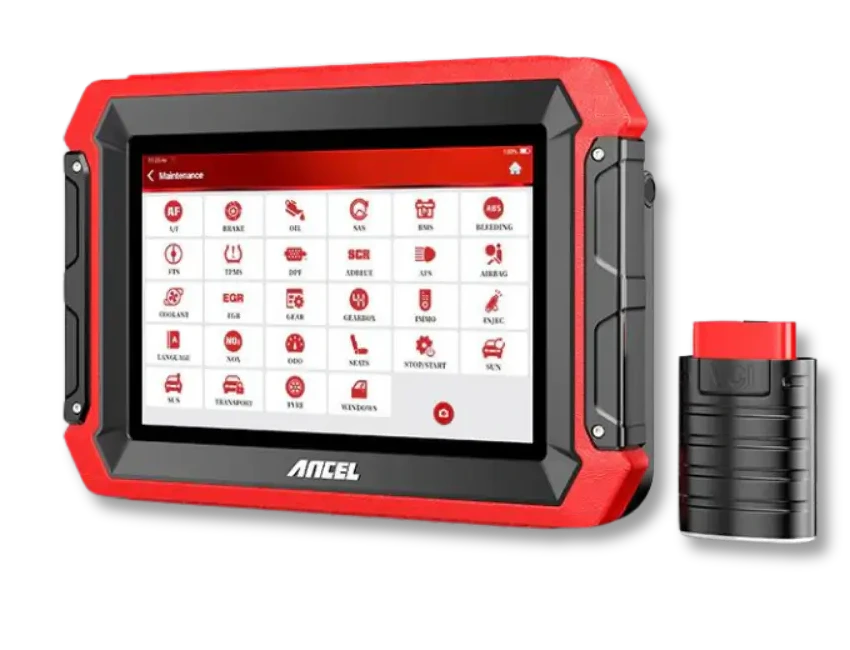 Ancel DS600
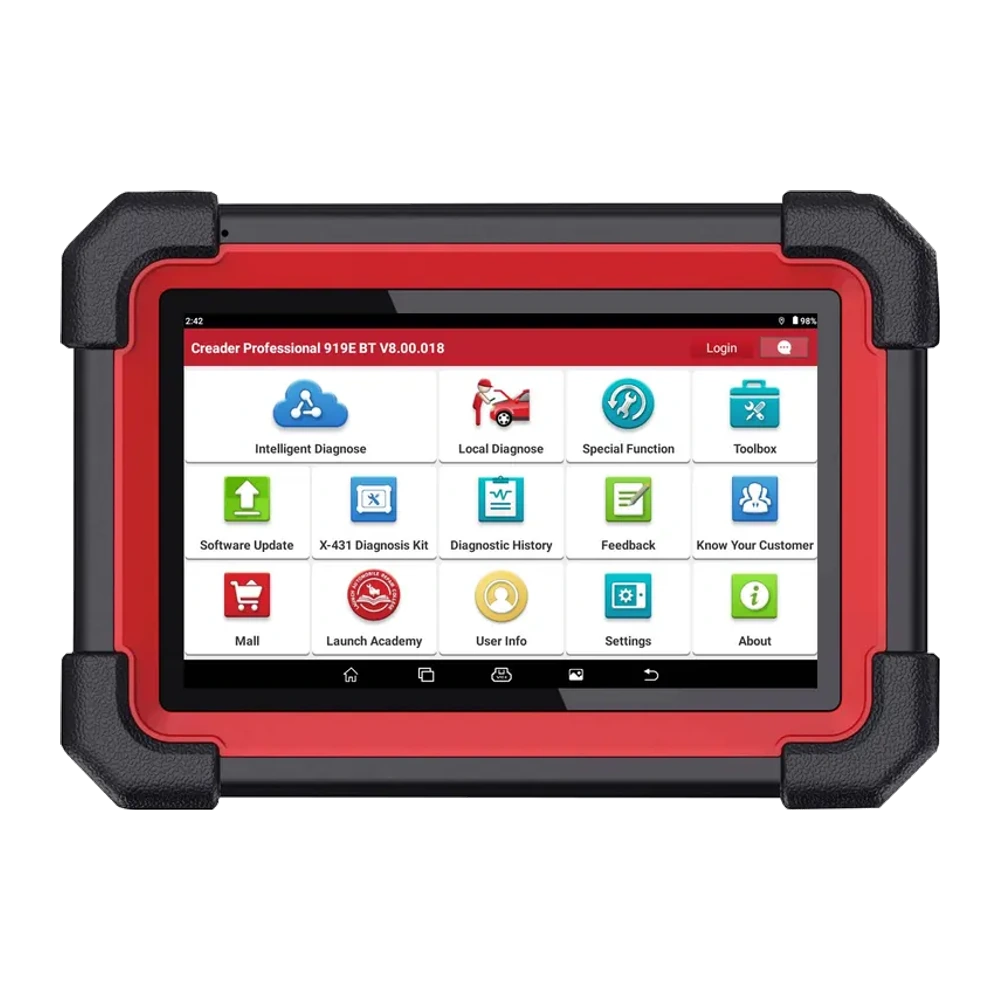 Launch CRP919E BT

