What device is needed for throttle body adaptation?
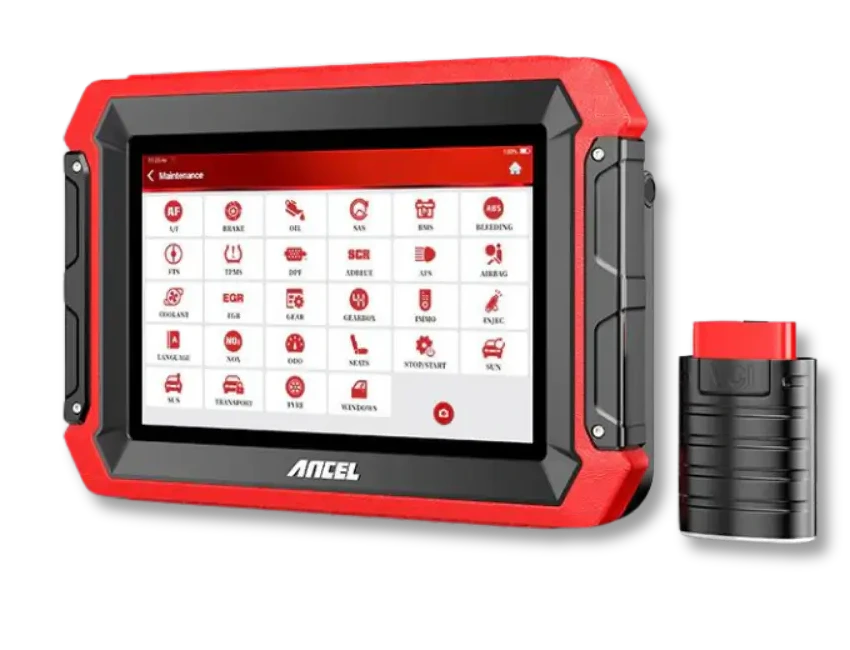
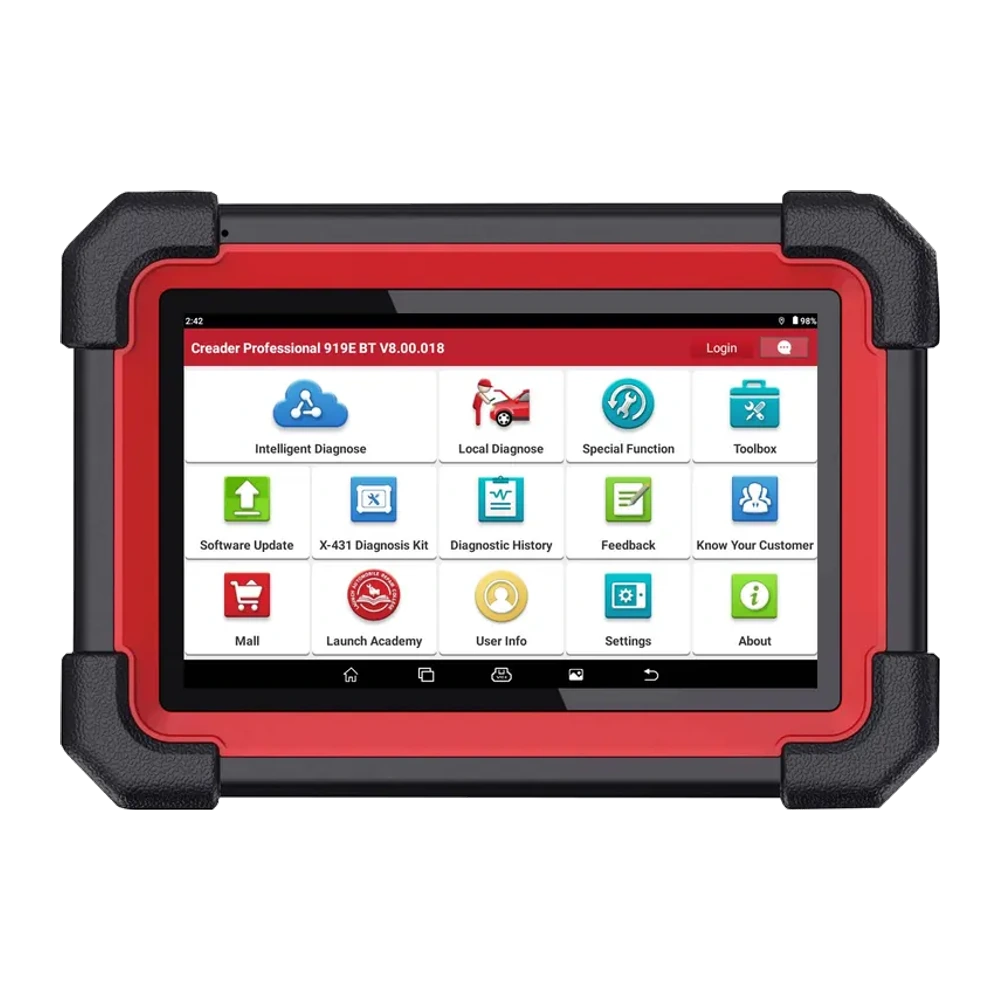
Throttle body adaptation is a service procedure that allows the engine control unit to learn the throttle references on a supported vehicle. Cleaning the throttle, clearing the fault code, and completing the learning process are not the same thing. This function is included in the documentation for Ancel DS600 and Launch CRP919E BT; the primary check when deciding to purchase is whether the correct learning procedure can be accessed on your specific engine and control unit.
Otobiltek is the store selling the Ancel and Launch devices in this guide. Model recommendations are offered on the condition of verifying vehicle support.
Manufacturer product documentation and Launch user manual were reviewed. Ross-Tech explanation was used only to understand method differences in VW/Audi gasoline vehicles; no application test was performed on DS600 or Launch. The cover is a representative workshop prepared with AI; photos in the product sections belong to actual devices.
Separation of cleaning and learning
Function record for engine and ECU
Pre-operation conditions
Result and ongoing complaint
Explanations are re-checked when model documentation or vehicle function records change. Current price and sales package are found on the product page.
Quick comparison
What check is needed for which requirement?
Need
Operation sought
Information that is not sufficient on its own
Learning after cleaning or part replacement
Throttle body adaptation as requested by the vehicle manufacturer
Ability to read engine fault codes
Examining the throttle's response to commands
Supported actuator test and related live data
Locating the adaptation menu
Investigating idle fluctuation
Fault records, measurements, and mechanical inspection
Attempting adaptation in every case
Device purchase
Confirmation of learning function for the specific engine and ECU
Number of general service functions
Decision guide
Difference between throttle body cleaning and adaptation
Cleaning is a physical intervention; adaptation is an electronic learning process. Installing a clean part does not guarantee that the control unit will automatically complete the required reference on every vehicle. The reverse is also true: running the learning command does not repair a dirty, stuck, or faulty part.
Ross-Tech explains that in some VW/Audi gasoline vehicles, basic setting may be required after throttle cleaning or removal and reinstallation. This example cannot be generalized to all brands. The work order should specify the replaced part and the previous intervention, and the required learning should be determined by the vehicle's service information.
Decision guide
If there is idle fluctuation, is the first question adaptation?
Initiating learning based solely on symptoms is not correct diagnosis. First, it is recorded whether the complaint occurs with a cold engine, a warm engine, or under specific load. Existing fault information and related live data are saved before clearing codes.
For example, a complaint that existed before cleaning and a behavior that starts after intervention on the part are different starting points. Ask the workshop to explain why adaptation is deemed necessary and what finding will be checked after the procedure. This guide does not offer a single cause of fault or a universal solution for idling.
Ancel's DS600 product page includes the heading Throttle Matching. This indicates that you can consider the device for throttle learning. However, it is not sole proof that a specific engine management system is supported or that a different DS600BT model offers the same menu.
When purchasing the DS600, inquire about the exact learning function with the vehicle model, year, engine code, and, if possible, the ECU ID. Request the scope record of the required adaptation instead of just the fault reading or component actuation display. If you plan to use the device for multiple functions, verify other needs such as injector coding separately.
Section 6.10 of the Launch CRP919E BT manual describes Throttle Matching, i.e., electronic throttle learning. This service function is distinct from general active test support. Actuating a component does not indicate that learning is complete.
Do not use CRP919E BT, CRP919X BT, and CRP 919 MAX names interchangeably on the offer. The basis here is the E BT manual. When querying vehicle and function support for Launch, perform a support check with engine information; also examine the match between the device's brand software and the desired menu.
Decision guide
What conditions are verified before the procedure?
Learning may not be completed without the conditions required by the control unit being met. Ignition or engine status, vehicle voltage, temperature, pedal position, and blocking fault records are evaluated according to the vehicle procedure. Do not consider second, temperature, or voltage values from another vehicle as universal instructions.
Even the classic group numbers and UDS menus in Ross-Tech documentation are not the same. Therefore, VCDS screen names cannot be directly used as key sequences for Ancel or Launch. The vehicle's service documentation and the device's guidance are followed together; manual intervention on moving parts is not performed.
Decision guide
What should be recorded if adaptation fails?
The menu not being found at all, being rejected before starting the process, and giving an error after starting are separate situations. Providing the full message, brand software version, selected vehicle record, and the stage at which it stopped when requesting support is more useful than just saying 'it doesn't do adaptation'.
Even if the device menu is visible, first separate the lack of prerequisites from the vehicle support issue. To resolve failure, do not randomly change values or clear all fault records with every attempt. Seeing the same symptom again does not mean repeating the same command will be the solution.
Decision guide
What to look for after the success message?
The device's completion message is the result of the learning process; the resolution of the customer's complaint is evaluated separately. An operation log is kept, the checks requested by the vehicle manufacturer are performed, and the previous symptom is re-examined under the same conditions.
If idling is still irregular, do not automatically interpret this as insufficient device capability or a need for re-adaptation. Misfires, air-fuel measurements, and mechanical findings are addressed in their own diagnostic flow. The learning status in the control unit and the vehicle's physical behavior should support each other.
Decision guide
Link the purchase decision to a task list
A user looking for a device for a single vehicle should first verify the learning function for that engine. A multi-brand workshop performs the same check for each of the frequently encountered vehicles. If both devices meet the required task, other service needs, ease of use, connection layout, and sales package can be decisive factors.
Specify the full model name, the required learning procedure, and the verified vehicle information on the offer. Check the software update, license, and additional connection requirements with the purchased package. If your need is solely for diagnosing an idle complaint, obtaining a diagnosis from a qualified service instead of purchasing a device may also be considered.
Frequently Asked Questions
Most frequently asked questions by customers
Is adaptation always necessary after cleaning the throttle body?
It is not the same for every vehicle. The learning required after cleaning or part replacement is determined according to the service information published for the engine and ECU.
Does clearing the engine fault code perform throttle adaptation?
No. Clearing the fault memory and the control unit learning the throttle references are different operations.
Which should be chosen: DS600 or Launch CRP919E BT?
Both models include throttle learning in their manufacturer documentation. Make your decision based on specific engine and ECU support, other service needs, and the purchased package.
Does the DS500BT support the same adaptation?
The function in the DS600 documentation cannot be transferred to the DS500BT. The relevant vehicle and learning command must be verified separately for the DS500BT.
Does the online pedal and ignition sequence work on all vehicles?
No. Only the method compliant with the vehicle manufacturer's procedure should be used; a general pedal sequence is not a guarantee of support or results.