Decision guide
What do P0300 and P0301 codes indicate?
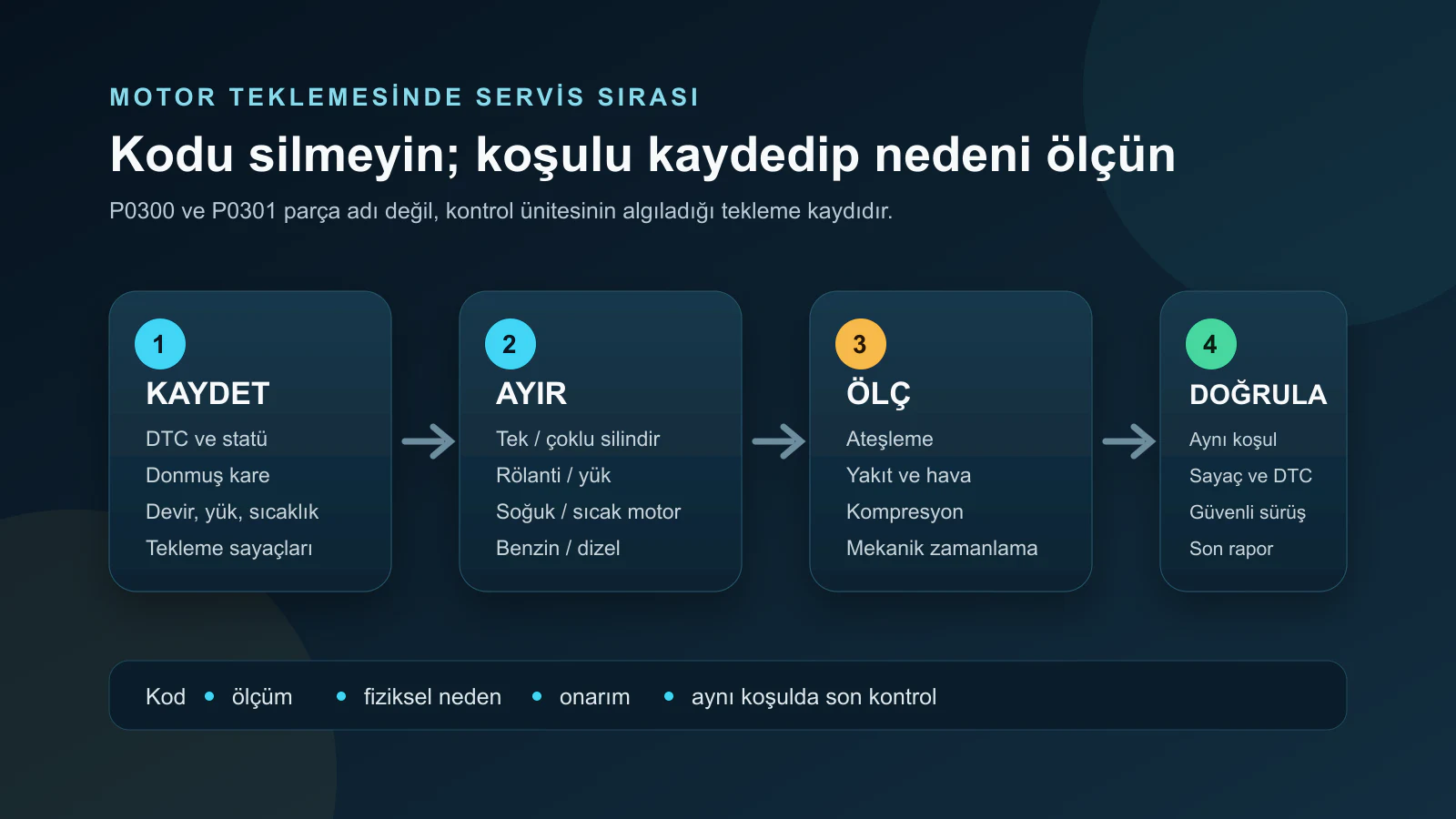
The OBD system can detect misfire based on engine revolutions or other combustion information used by the vehicle manufacturer. P0300 indicates a general or multi-cylinder misfire, while P0301 indicates a misfire detected in the first cylinder. P0302 continues the same code family for the second cylinder, P0303 for the third, and so on.
The California OBD regulation requires the system to monitor misfires that could damage the catalyst or increase emissions and to record the affected cylinder when reliably identified. If multiple cylinders are affected, a general multi-cylinder code may occur. This recording indicates the result detected by the control unit; it does not explain which part, such as a spark plug, coil, injector, or mechanical component, is faulty.
Misfire is the absence of the expected combustion contribution in a cylinder. In a gasoline engine, spark, fuel dosage, air leak, compression, or timing can be effective. In a diesel engine, ignition coil and spark plug order do not apply; the injector, compression, glow plugs, and engine management are examined according to the vehicle type. A parts list cannot be prepared without selecting the engine and fuel type.
The code's confirmed, pending, or permanent status is also recorded. A pending code may indicate that the misfire was seen in one monitoring cycle, while a confirmed code may indicate that the control unit has completed its own verification conditions. Status names may vary depending on the device software; all statuses are stored in the initial scan report.
- P0300: random or multiple cylinders
- P0301: cylinder one
- Code indicates result
- Measurement determines cause
Decision guide
What information is recorded without deletion during the initial scan?
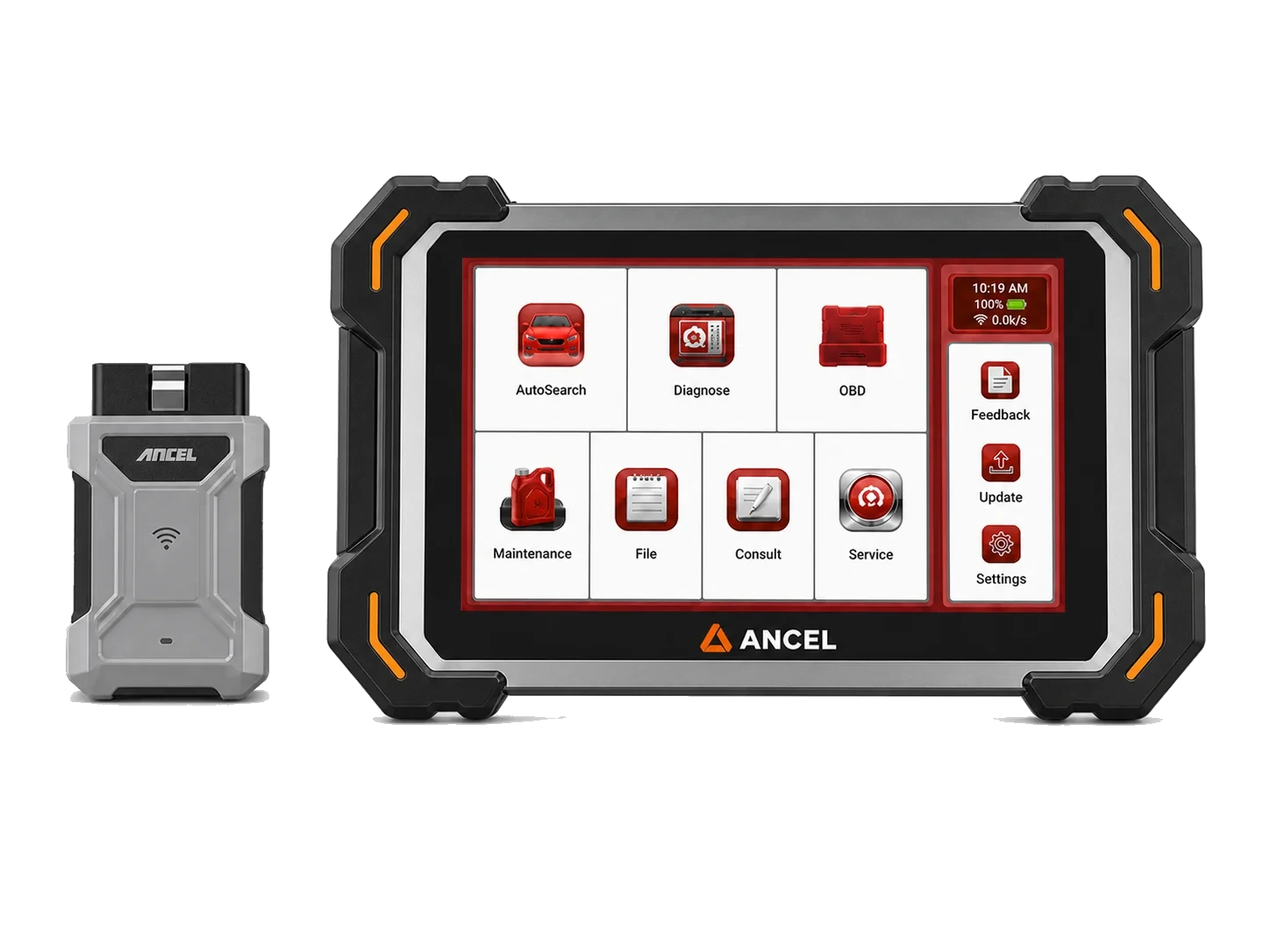
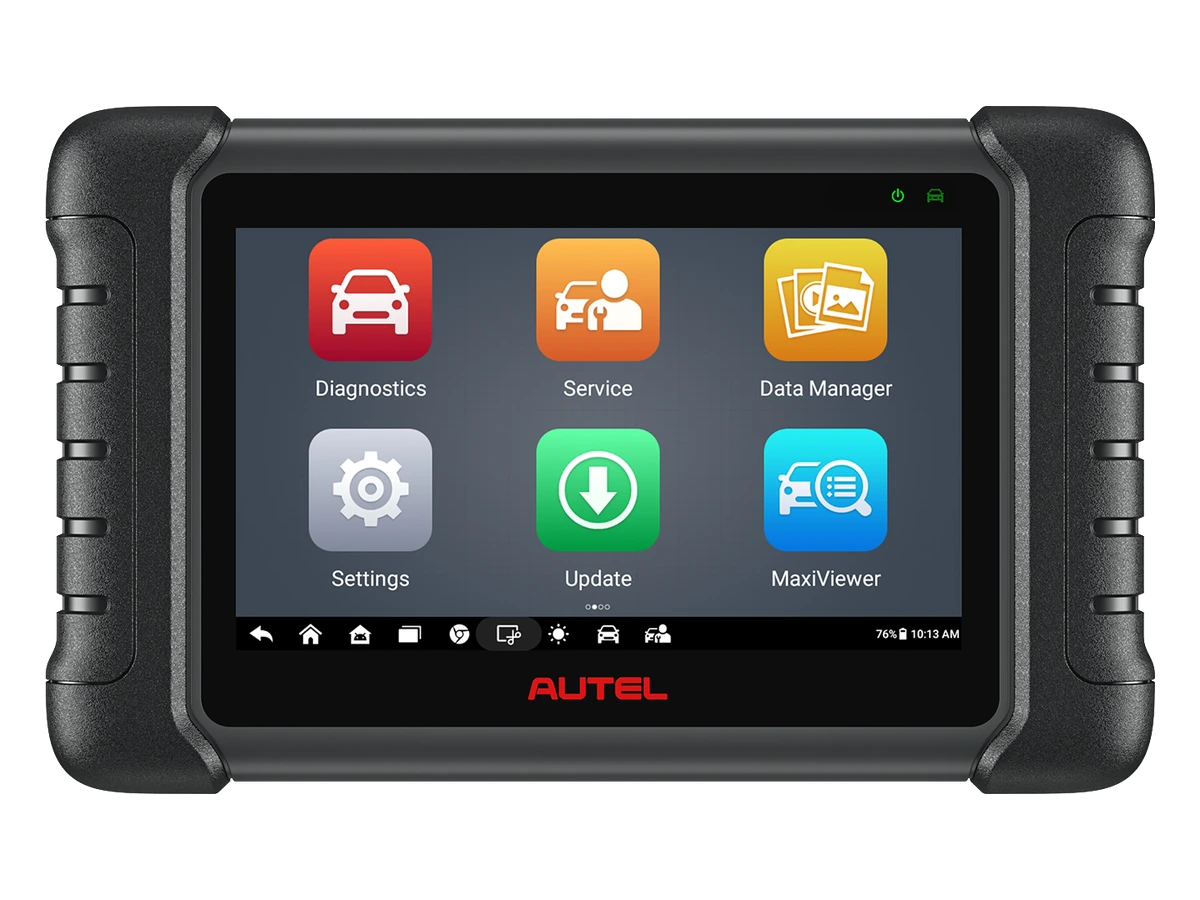
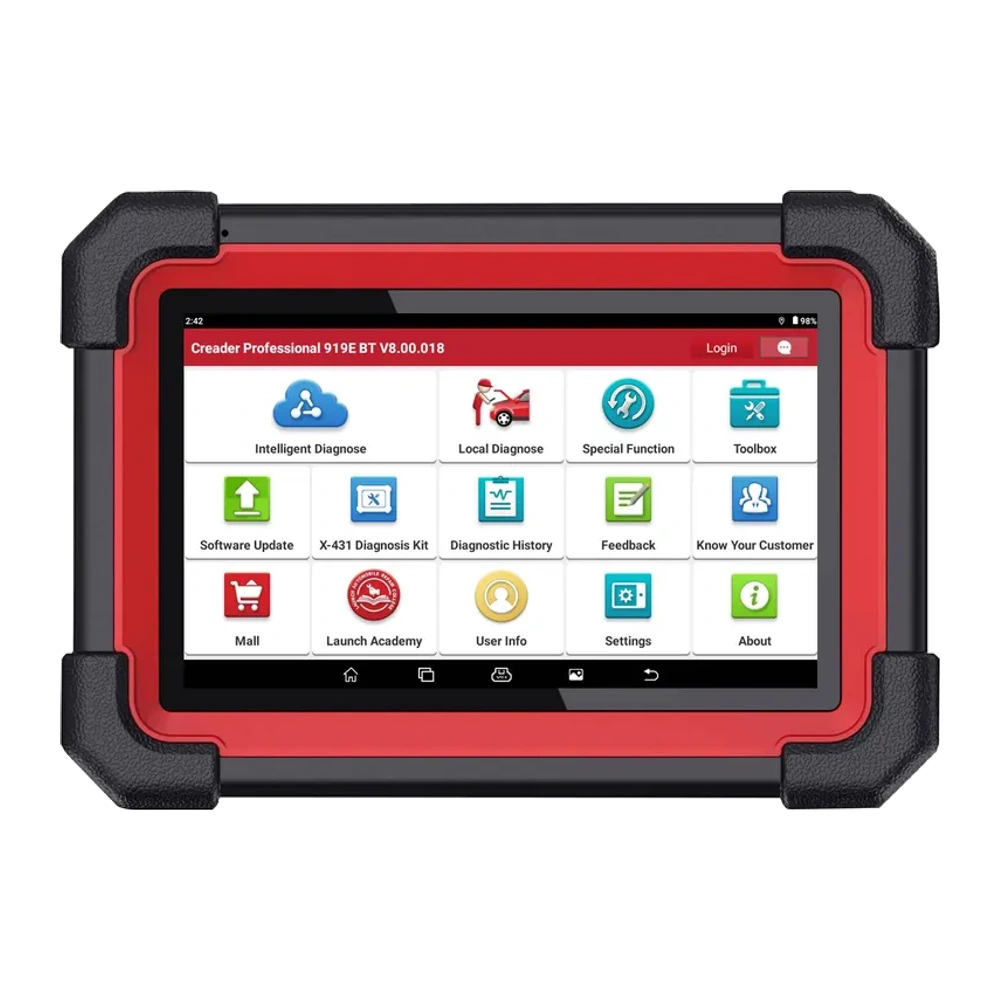
The first step is not to clear the code, but to preserve the condition under which the fault occurred. All control units are scanned; the status of engine codes, freeze frame, engine speed, calculated load, temperature, and fuel trims are recorded in the report. If the vehicle has manufacturer-specific misfire counters, each cylinder's counter is monitored over the same time interval.
Freeze frame can indicate whether the misfire was recorded at idle, during cold start, at steady speed, or under load. This distinction changes the test sequence. A misfire observed during cold start is not re-tested under the same conditions as a misfire that occurs only under high load. For a complaint with no recording, the customer's statement, engine temperature, and time of use are clearly written on the work order; no fabricated measurements are added.
Mixture codes such as P0171/P0174, injector circuit codes, ignition coil circuit codes, crankshaft/camshaft relationship codes, or fuel pressure codes may be present simultaneously. These codes can narrow down the context of the misfire. Selecting only the P0301 line and clearing other records may overlook a common supply or synchronization issue.
Battery and charging voltage, socket connection, and device communication are checked. Low supply voltage can affect measurements and control unit behavior. Battery connection is not disconnected, and adaptation or learning values are not reset, without recording codes, counters, and operating conditions.
- Code and status
- Freeze frame
- Cylinder misfire counter
- RPM, load, and temperature
- Fuel trim
Decision guide
What to do when the engine malfunction light is flashing?
During a severe misfire, the engine malfunction indicator lamp may flash. OBD rules require a clear warning to the driver for misfires that could damage the catalyst. If the engine is shaking severely, power is significantly reduced, or the lamp is flashing, do not continue driving under high load; follow the safety guidance in the vehicle manual.
A flashing lamp does not indicate the same driving distance or damage level on every vehicle. The control unit's threshold can vary with engine speed and load. Instead of repeatedly stressing the vehicle on the road, the service department takes the initial recording in a safe area and uses the vehicle manufacturer's test method.
Fuel reaching the exhaust without burning can increase catalyst temperature. Therefore, tests such as disabling a cylinder or disconnecting an injector or coil connector are only performed if permitted by the manufacturer's procedure. Randomly disconnecting connectors can lead to additional codes, electrical damage, or increased exhaust temperature.
If the vehicle is not operating safely, a test drive is not performed. If there are additional symptoms such as fuel odor, exhaust overheating, mechanical knocking, or oil pressure warnings, the engine is stopped, and a physical inspection takes priority. The diagnostic device does not replace safety warnings.
Decision guide
How are single-cylinder and multi-cylinder misfires differentiated?
Cylinder counters indicate whether the misfire is concentrated in a specific cylinder. For a single-cylinder code like P0301, the engine's cylinder numbering is verified first. For P0300 or multiple-cylinder codes, common air, fuel, electrical supply, and timing possibilities are also included in the test plan.
The location of the number one cylinder on the engine is not assumed. The layout varies in inline, V, and boxer engines; choosing based on the front-rear or right-left side of the engine can lead to testing the wrong coil, injector, or compression point. The vehicle manufacturer's cylinder order and firing order are used.
If the misfire is concentrated in one cylinder at idle and disperses to other cylinders when RPM or load changes, the counter sampling time and operating conditions are recorded. Some control units may reset counters on ignition cycle or update them only in a specific menu. Counter behavior is compared with the official service information for the device and vehicle.
Common fuel pressure, intake air, EGR, sensor data, exhaust restriction, or engine timing across all cylinders can be prioritized on the checklist. A persistent increase in a single cylinder may indicate a spark, injector, compression, or leak specific to that cylinder. Both outcomes guide measurement; they do not directly generate parts orders.
Decision guide
How to check spark plugs and coils in a gasoline engine?
Ignition system inspection begins with a visual check. Look for oil or water in the spark plug well, cracks on the coil housing, corrosion in the connector, and damage to the wiring. If removing a spark plug, allow the engine to cool, use the correct tool and manufacturer's torque procedure; do not touch the high-voltage system with bare hands while it is active.
HELLA describes coil diagnostics as first reading the fault memory and parameters, then checking the power supply, trigger signal, and if necessary, the oscilloscope signal. Resistance values vary by coil design, and classic resistance measurement may not be valid for some coils with integrated diodes. A single online ohm range does not apply to all coils.
The spark plug electrode, insulator, gap, and deposits are inspected visually. NGK lists wear, carbon buildup, overheating, oil entering the combustion chamber, and incorrect spark plug gap among conditions related to misfires. The appearance is compared to the engine's official spark plug type and maintenance history; definitive mixture diagnosis is not made solely based on color.
A coil swap test to another cylinder may indicate if the fault moves with the coil on some engines. This procedure is only applied if the coils are identical parts, access is safe, and manufacturer procedure permits. If the connector lock, spark plug boot, or wire is damaged, swapping may create a new fault; physical defects must be addressed first.
- Spark plug well and socket
- Coil power and trigger
- Correct spark plug type and gap
- Oscilloscope verification if needed
Decision guide
In what order are the fuel and air sides measured?
When spark test results are clean or misfire affects multiple cylinders, fuel and air measurements are expanded. Fuel pressure, injector electrical circuit, injector balance, intake leaks, and fuel trim are recorded under the same operating conditions. Pressure and flow values are taken from the vehicle manufacturer's specifications.
Injector socket power and control signal are inspected with an appropriate measurement device. If an active test menu is available, it is used only on supported vehicles and ECUs; the menu's appearance does not prove the injector's mechanical flow rate. Injector balance or leak testing is performed with fuel system pressure and fire safety procedures.
If P0300 and positive fuel trim increase under the same conditions, unmetered air or insufficient fuel supply may be investigated. Negative trim can initiate an investigation towards excess fuel or air measurement deviation. STFT/LTFT only indicate direction; the cause-and-effect sequence is separated by measurement, as oxygen carried to the exhaust due to misfire can also affect sensor feedback.
Intake hoses, manifold gaskets, PCV, and vapor purge lines are visually inspected and undergo appropriate leak testing. Using flammable spray is not a controlled measurement and carries a fire risk. If a smoke test is to be performed, follow equipment instructions, allowed pressure, and vehicle manufacturer's procedure.
Decision guide
When are compression and mechanical timing checked?
If ignition and fuel checks do not explain the results, mechanical condition is measured. Relative compression, conventional compression, or cylinder leak-down test is selected based on the vehicle and equipment. When a low result is found in a cylinder, investigate the leak direction and mechanical synchronization before concluding about valves, rings, gaskets, or timing.
Before performing a compression test, disable fuel and ignition safely, ensure adequate battery capacity, and set the throttle position according to manufacturer procedure. All cylinders are measured at the same engine temperature and cranking conditions. A single pressure value found online does not apply to different engines.
Cylinder leak-down testing helps investigate the direction in which air is leaking into the intake, exhaust, crankcase, or cooling system. Since pressurized air can rotate the crankshaft, the piston position is fixed, and safety precautions are taken. The result is compared to the manufacturer's allowable leak rate.
Low or irregular compression in multiple cylinders may bring the camshaft-crankshaft relationship and mechanical timing into question. Relevant correlation codes, sensor waveforms, and physical timing marks are inspected. Parts removal is planned after mechanical measurement results, not from the ECU's misfire counter.
Decision guide
How to verify misfire after repair?
After the identified cause is resolved, inspect removed connectors, coils, fuel connections, and vacuum lines. Note any additional codes generated during diagnostics; clear them if manufacturer procedure requires. Restart the engine under the same temperature, RPM, and load conditions; re-record cylinder counter and live data.
HELLA's coil diagnostic flow is completed with a post-repair test drive and re-reading the fault memory. The test drive is performed only if the vehicle operates safely. The operating point where misfire previously occurred is repeated in compliance with traffic laws; the device screen is not monitored by the driver, and the recording is reviewed later.
Even if the misfire counter does not increase and the code does not return immediately, the initial check alone does not prove a permanent fix. Complete the manufacturer's monitor conditions and required drive cycle. Re-read readiness status, pending codes, and the check engine light; do not repeatedly reset to store the code.
The work order should include initial codes, freeze frame data, measurements taken, the physical cause found, parts replaced or repaired, and the final inspection record. Instead of brief notes like 'Coil replaced, fixed,' document which test moved or confirmed the fault. This creates a comparable record if the same vehicle returns.
- Remasurement under the same conditions
- Counter and DTC check
- Safe test drive
- Readiness and pending code scan