Decision guide
What a DTC code tells and doesn't tell
DTC, an abbreviation for Diagnostic Trouble Code, is an alphanumeric code recorded by the control unit under a defined monitoring condition. SAE J2012 defines the standard code format and areas reserved for the manufacturer. The code provides a structured starting point for investigating the system and condition where the fault occurred.
The DTC description may mention a sensor, valve, circuit, or performance limit. This statement does not indicate that the part is definitively faulty. Supply voltage, ground, connector, cable, air leak, mechanical wear, incorrect adjustment, or the influence of another control unit can lead to the same code. The code is read; its cause is investigated separately.
The control unit can directly monitor conditions like an open or short circuit. For some performance codes, it evaluates the difference between expected and measured behavior. The testing method is not the same in these two cases. For circuit codes, electrical diagrams and measurements are key; for performance codes, operating conditions and related live data may be more decisive.
Online code dictionaries can help find standard definitions; they do not replace vehicle-specific repair steps. The same general code may be encountered with different part locations or control strategies across different makes, engines, and software versions. The manufacturer's service information, electrical diagrams, and technical bulletins should be consulted after the code description.
- Narrows down the system
- Classifies the fault type
- Read with operating conditions
- Does not provide a definitive part decision
Decision guide
What do the letters P, B, C, and U mean?
The first letter of the five-character code indicates the system family. P is used for powertrain system, B for body, C for chassis, and U for network communication codes. This classification narrows down the area to investigate the code; it does not, by itself, indicate the severity of the fault or the repair cost.
P codes are commonly encountered in the powertrain system related to the engine, transmission, and emissions. B codes are related to body electronics, comfort, and some safety functions; C codes are related to braking, steering, or chassis systems; U codes may be related to communication between modules. The vehicle manufacturer's module architecture provides more detailed descriptions under these general classifications.
The second character of the code helps distinguish between the standard/general area and the manufacturer-reserved area. However, memorizing all digits does not enable vehicle-specific diagnosis. Current SAE datasets and manufacturer service resources are used. An old internet table may not include new code additions, sub-fault types, or expanded definitions.
Subsequent characters form the subsystem and fault number. For example, within the same P family, there can be different groups related to fuel-air, ignition, emission auxiliary systems, or transmission. The complete code, control unit name, and additional fault information should be recorded together; searching only the last two digits will yield incorrect results.
Decision guide
Difference between general code and manufacturer-specific code
The general DTC area aims to provide a common code meaning across different manufacturers. Manufacturer-specific codes, on the other hand, are definitions reserved for the brand's own system, software, and diagnostic structure. A general OBD2 reader may not display all manufacturer codes with accurate text and test steps.
A basic reader can display a standard engine code in alphanumeric format; the application description may be limited or in a foreign language. A multi-system diagnostic device can access manufacturer-specific modules on supported vehicles, offering additional status, sub-fault types, live data, and service guidance. This difference arises not from the physical socket but from software and vehicle coverage.
Seeing 'manufacturer specific' at the beginning of a code or in its description should not be matched with a similar general code found on the internet. Vehicle VIN information, the correct model year, engine, and control unit must be selected to read the manufacturer's definition. Different body styles or ECU suppliers within the same brand can also alter the description.
An application listing thousands of codes does not prove it can connect to all modules of the vehicle. The code database may be an offline dictionary; actual diagnosis requires communication with the control unit, the correct protocol, and vehicle software. When purchasing, compare supported systems and vehicle-process coverage instead of 'number of codes.'
Decision guide
Pending, confirmed, permanent, and historical codes
The DTC status helps understand when and at what verification level the fault occurred. A pending code may indicate that the fault condition has been detected once or with incomplete verification; a confirmed code may indicate that the control unit has met its own criteria. Permanent codes have separate clearing criteria in emission monitoring logic.
A pending or waiting code does not mean the part needs to be replaced immediately. It could be an intermittent connection, a specific temperature/load condition, or a monitoring result that has not yet recurred. Check the customer complaint, freeze frame, and whether the code reappears under the same driving conditions. Ignoring the code simply because it is not currently visible is also incorrect.
Terms like Confirmed, Current, Active, Stored, and History may be displayed with different Turkish translations depending on the device brand. The user should read how statuses are named in the device's manual. A current fault and a historically recorded but currently inactive record are not handled with the same repair decision.
A Permanent DTC may not disappear with a simple 'clear' command on compatible vehicles. After the underlying issue is resolved and the control unit completes the relevant monitoring conditions, the system clears the record by its own criteria. Clearing codes to reset inspection readiness monitors does not mean the vehicle has completed its emission evaluation.
- Pending code
- Confirmed or active code
- Historical record
- Permanent emission code
Decision guide
How do freeze frame and live data explain a code?
Freeze frame is the snapshot of operating data stored by the control unit when a specific code is recorded. Current parameters such as engine speed, load, temperature, vehicle speed, or fuel correction can help understand the conditions under which the fault occurred. Not all vehicles and codes offer the same data fields.
Take a photo or report of the freeze frame screen before clearing the code. For example, if the problem only occurs during cold starts, under heavy load, or at a specific temperature, this condition will guide the subsequent test plan. Freeze frame shows a single moment; it may not explain the entire fault process. It is supported by live data and controlled re-testing.
Related parameters are monitored together in live data. Instead of a single sensor value, evaluate the power supply, comparison sensor, engine condition, and control command. The unit must be correct, the data refresh rate must be sufficient, and the vehicle must actually support that PID. An empty or static value should not immediately be considered a part failure.
Some modules may offer extended information such as the number of code occurrences, time since last seen, mileage, or ambient data. These are part of the manufacturer-specific diagnostic coverage. Their absence in a basic OBD application does not mean there is no record in the vehicle; check the device's level of access to the module and additional data.
Decision guide
How to read fault codes in the correct sequence?
Put the vehicle in a safe parking position, check battery and connection stability, use the correct make-model-year or automatic vehicle recognition, and perform a full system scan if possible. Record the control unit, DTC, description, and status on the code screen. The clear command should not be used before completing the diagnostic record.
Looking only at the engine module in the initial scan can miss related records in other systems. For example, low voltage can generate communication codes in multiple modules. A full scan helps to see records from multiple modules within the same time frame. Automatically assuming the module with the most codes is the source of the fault is incorrect.
Note the customer's described symptom, when the warning light came on, recent repairs, and battery condition. Match the code's occurrence condition with this information. If there are aftermarket accessories, water ingress, impact, or cable modifications, add them to the visual inspection plan.
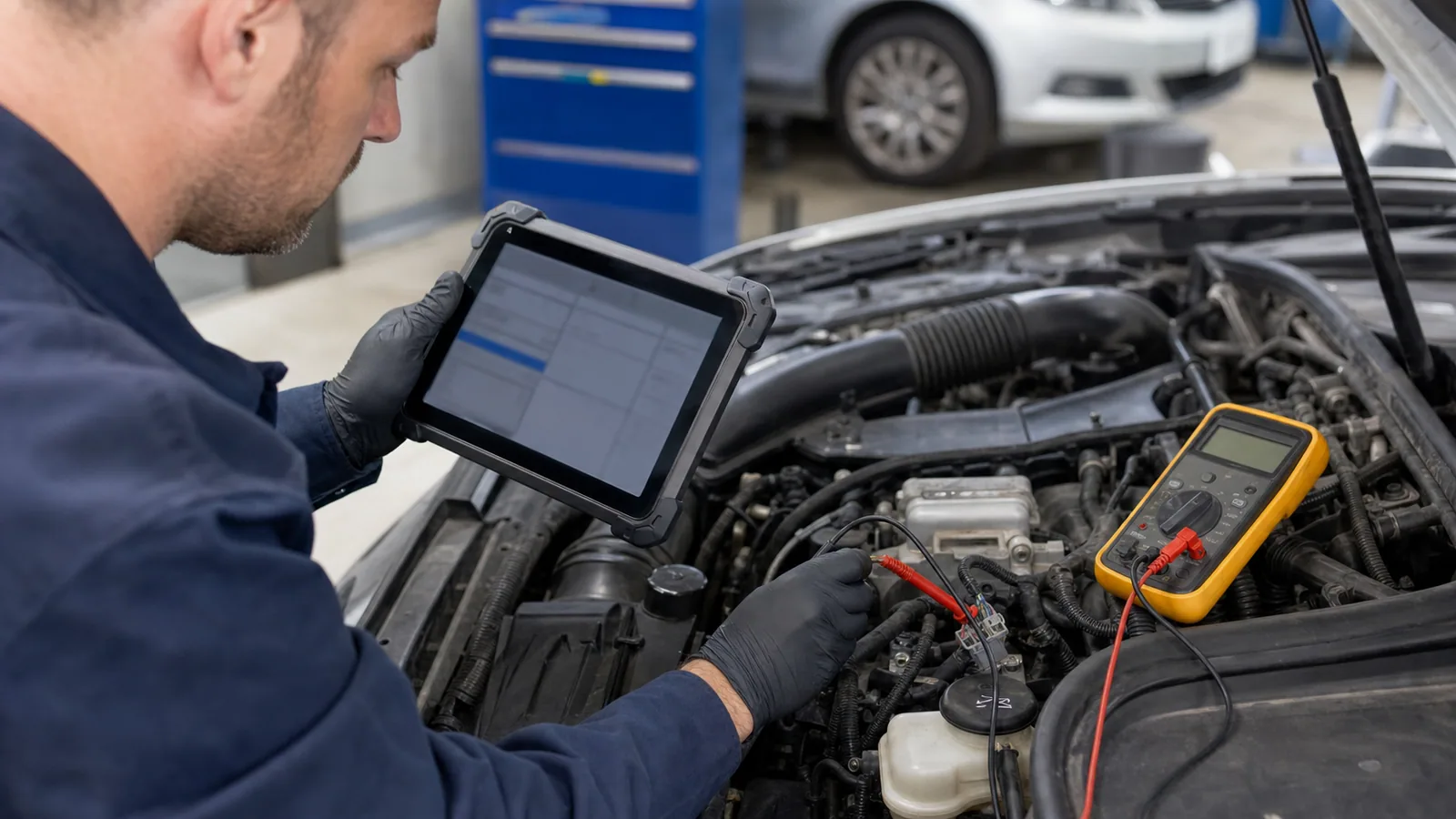
Then, follow the prerequisites and test sequence in the manufacturer's service procedure. Perform fuse and power supply checks, connector-cable continuity, reference value measurements, mechanical condition checks, and component tests according to the relevant diagram. If the measurement results do not confirm the code description, re-check the test step and vehicle selection instead of replacing the part.
- Correct vehicle and module
- Record code and status
- Save freeze frame
- Verify with diagram and measurement
Decision guide
When is a code cleared and why does it return?
The code is cleared after the diagnostic record is taken and the cause of the fault is resolved. The clearing process may erase the warning record in the control unit; it does not repair damaged cables, leaks, mechanical faults, or faulty parts. If the problem persists, the code will be re-recorded when the same condition occurs.
Clearing the code can affect freeze frame and some adaptive or readiness information. Therefore, clearing the code simply to 'turn off the light' when the customer first brings the vehicle in results in the loss of diagnostic evidence. Especially before emission inspections, resetting monitors does not mean the vehicle is ready; on the contrary, in some cases, the evaluation may not be complete.
After the repair, the engine is run under safe conditions, relevant live data is observed, and the manufacturer's required check or drive cycle is performed. Then, the same module and, if possible, the entire vehicle are scanned again. The absence of the code returning is not, by itself, proof that the entire system is flawless; the resolution of the customer's symptom and normal measurement ranges are also evaluated.
Clearing codes in airbag, brake, steering, and other safety systems does not make the faulty system operational. Calibration or manufacturer-specific procedures may be required after part replacement. If the safety warning persists, the vehicle should not be put into traffic until the appropriate service procedure is completed.
Decision guide
What device is needed to read fault codes?
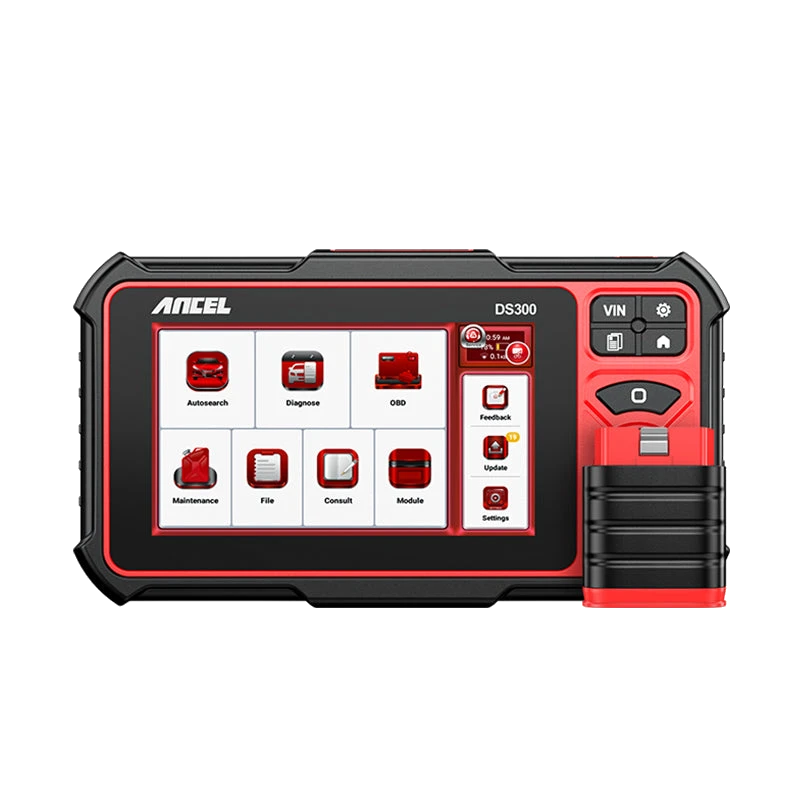
For users who want to see standard engine codes and basic live data on their own vehicles, a compatible OBD2 reader may be sufficient. For ABS, airbag, transmission, body modules, and service functions, a multi-system diagnostic device is required. For daily workshop use, reporting, fast scanning, updates, and vehicle coverage are also important.
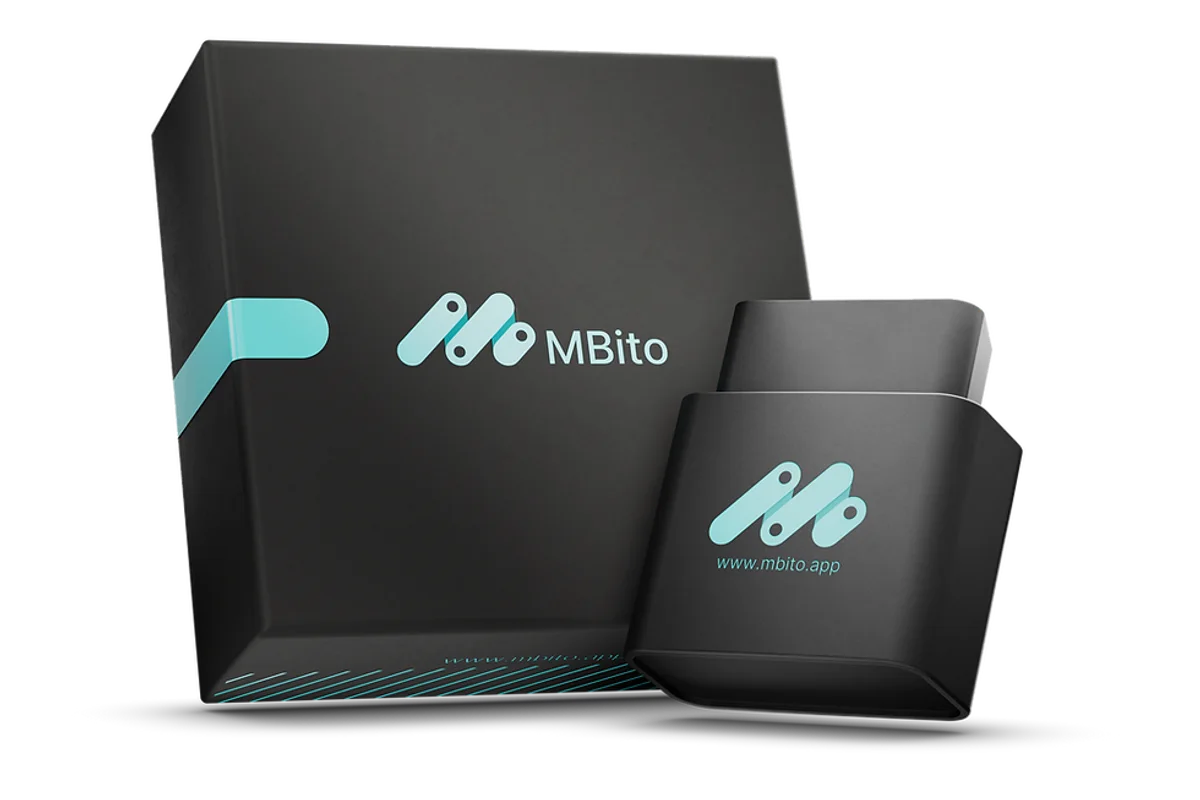
For phone adapters, check the operating system, Bluetooth/BLE/Wi-Fi connection, official application, and license structure. The code dictionary in the app store does not prove that the adapter can actually communicate with the vehicle. Do not perform code clearing or writing operations with applications lacking reliable hardware and developer support.
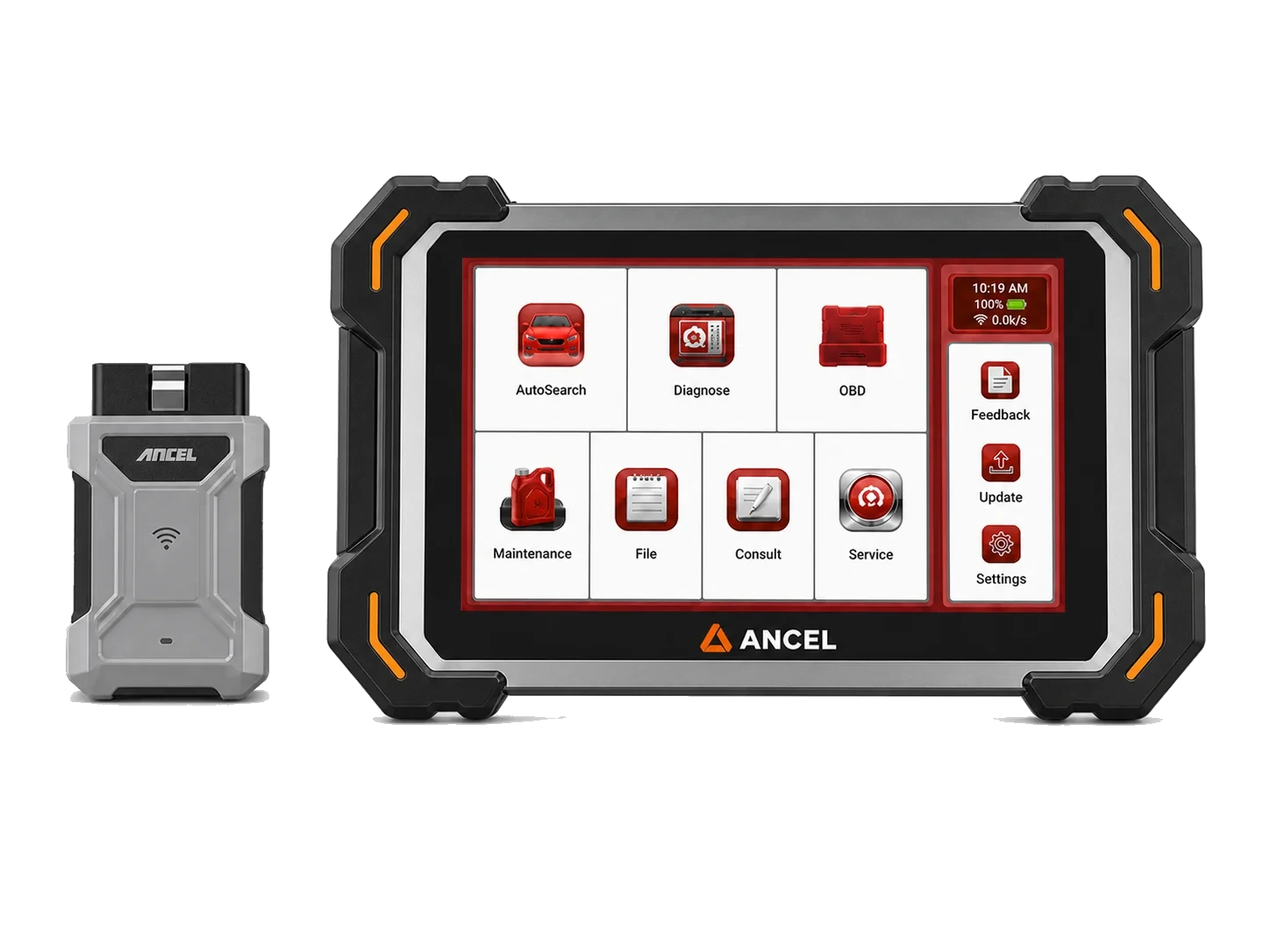
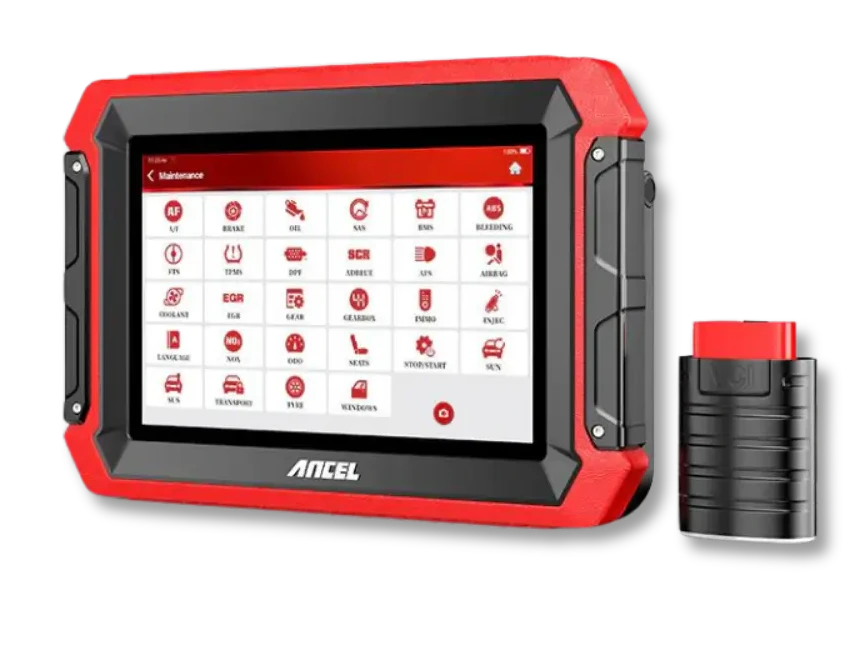
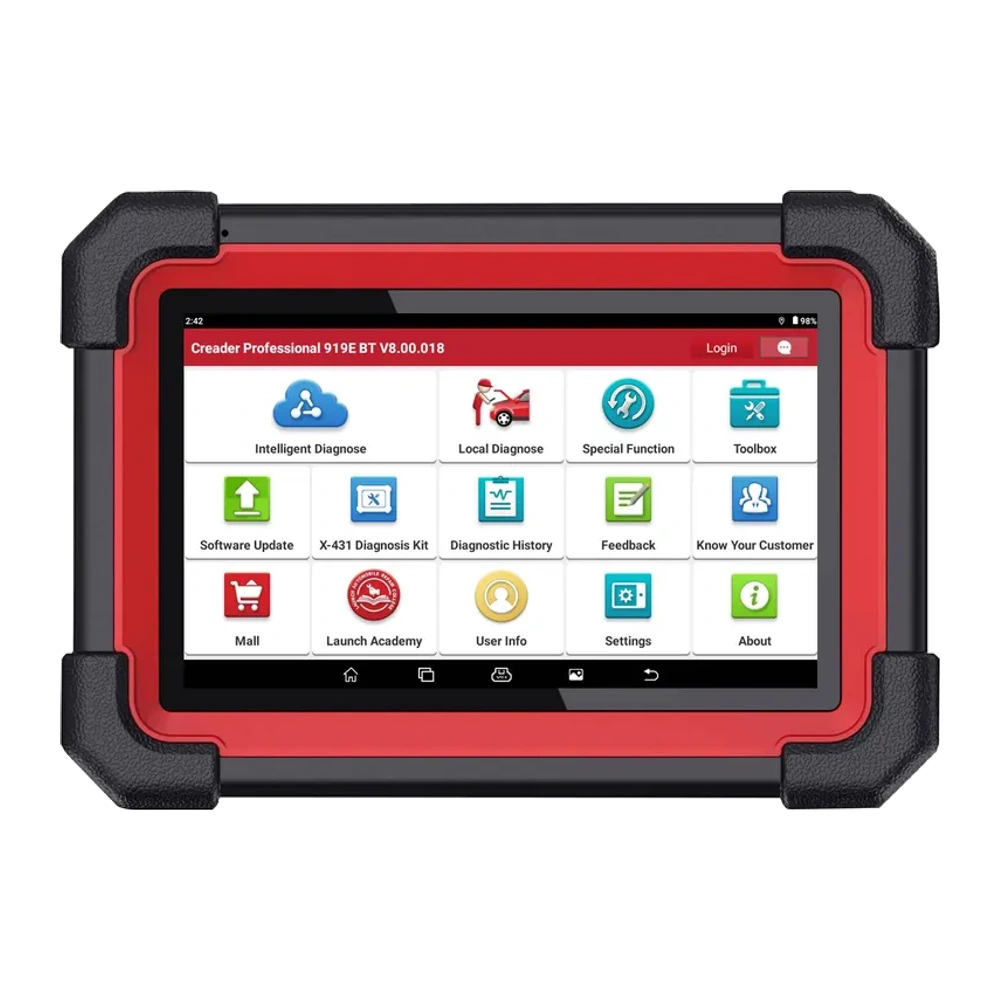
Handheld reader with its independent screen can be practical for basic checks. A service tablet, on the other hand, can offer manufacturer-specific modules, active tests, service functions, and reporting. The scope of these features varies by make, model, year, engine, and control unit; verified information on the product page and the manufacturer's current vehicle list are checked separately.
A user looking for a fault code lookup program should first determine whether they only need the code description or a licensed diagnostic software that connects to the vehicle. Unlicensed APKs and cracked programs downloaded from the internet pose risks to vehicle data, accounts, and device security. Otobiltek's software guide explains the selection of official applications, licenses, and updates separately.