Program and License Guide

How to choose a vehicle diagnostic software?

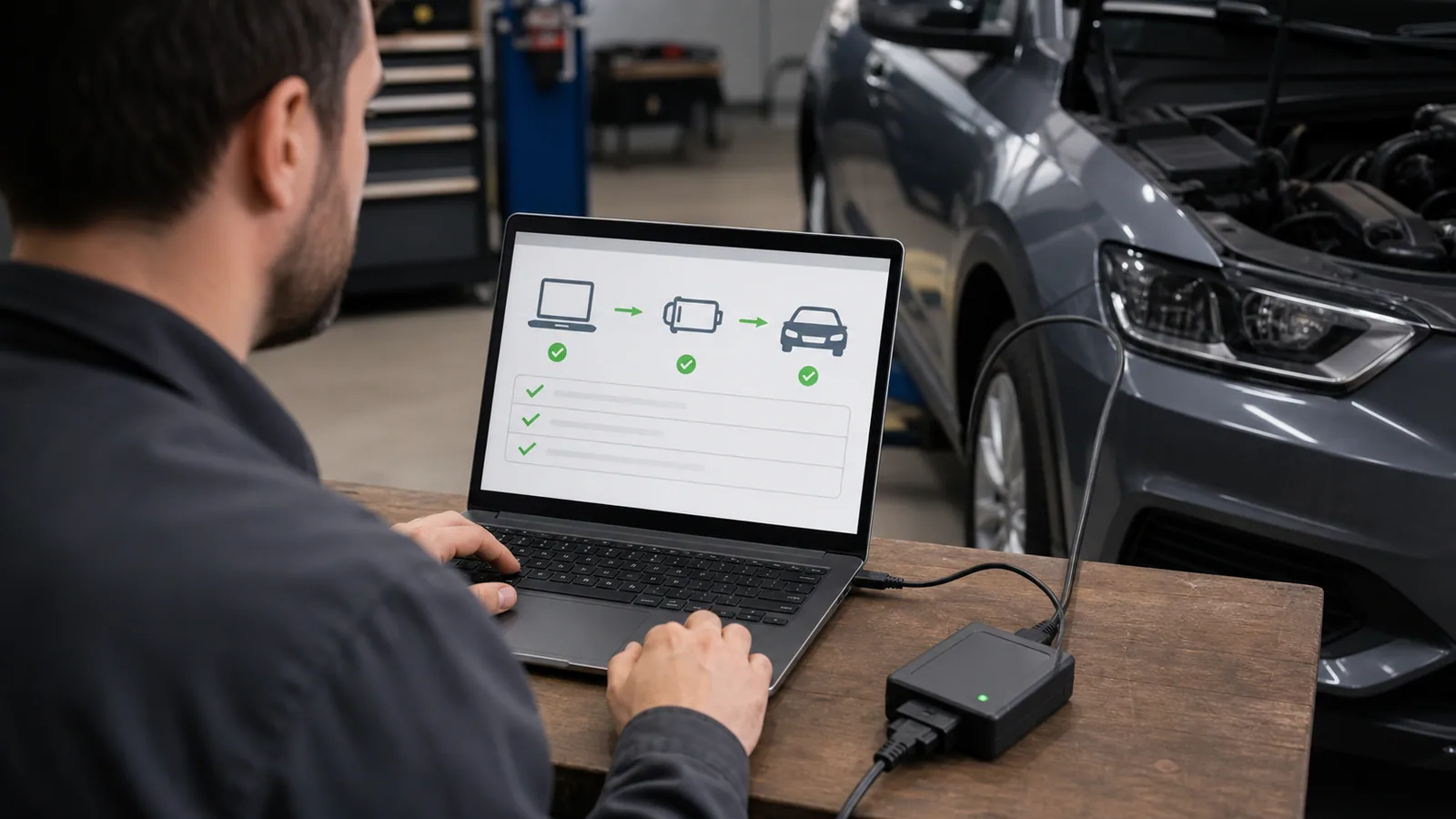
Fault code query software does not connect to the vehicle by itself. A computer or tablet, a compatible OBD/VCI interface, the correct driver or connection method, a valid license, and vehicle software all work together in the same chain. If the program opens but the hardware does not match, communication with the vehicle cannot be established; if the license or vehicle package is missing, expected systems will not appear. The selection starts not from the download file, but from the device to be used, the vehicle group, and the operation to be performed.

Prepared by: Otobiltek Content TeamPublication: Technical check:
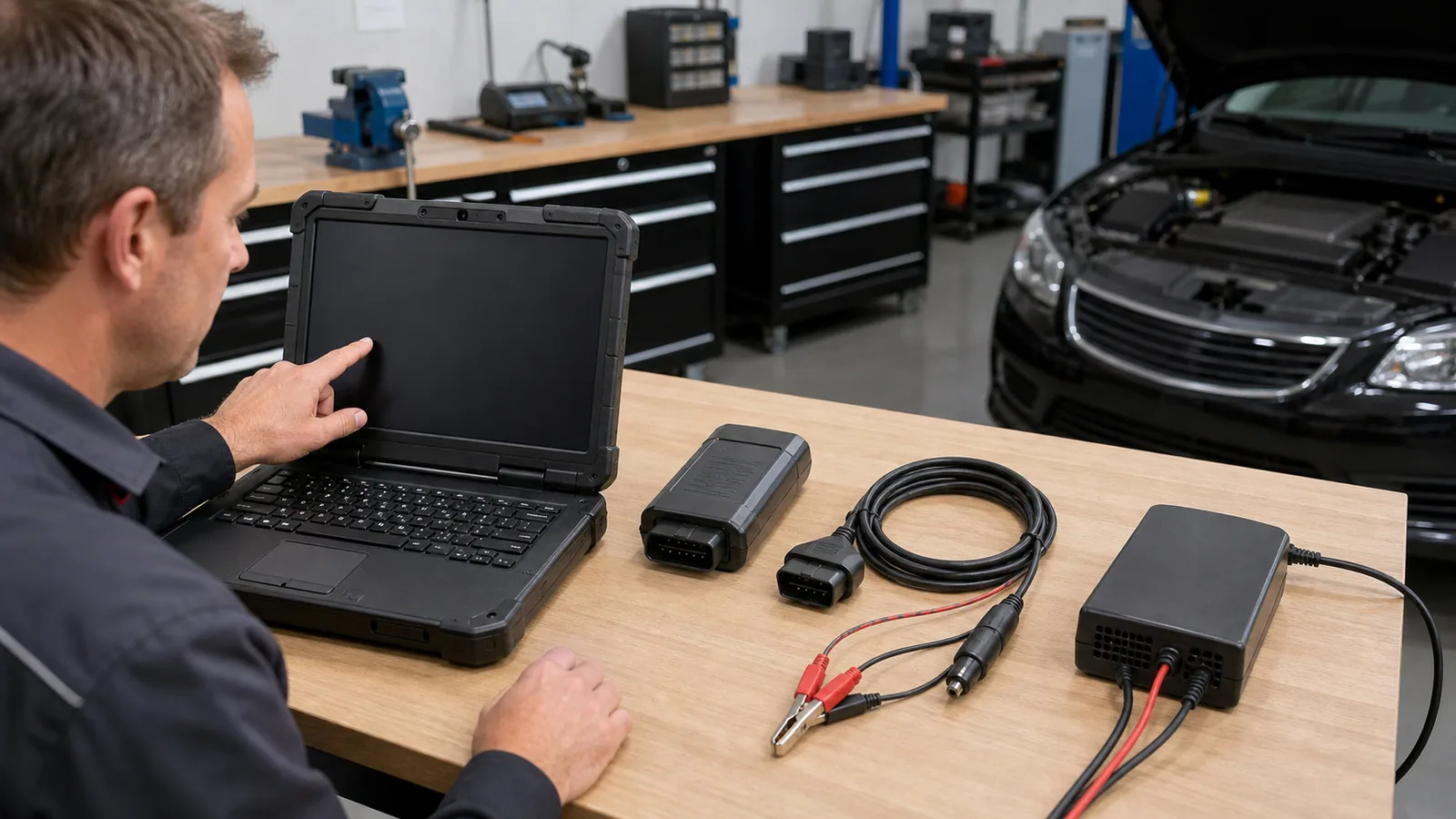
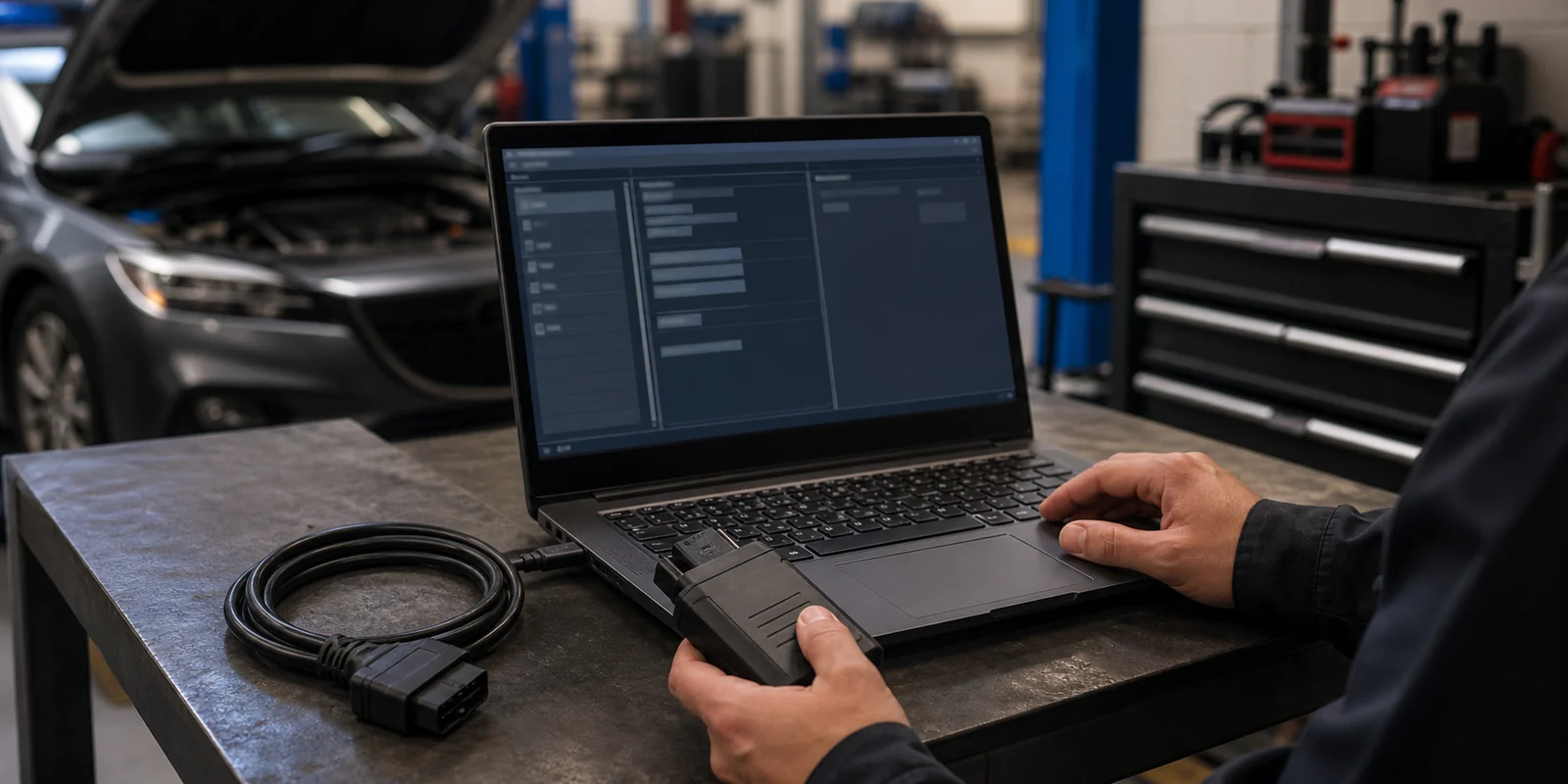
Laptop, OBD cable, and unbranded diagnostic connection interface on an automotive service bench

Quick comparison

Categorize program type by intended use

The same "fault diagnostic program" search brings together different needs, from a basic phone app to manufacturer-specific programming software.

UsageRequired basic componentsInitial Check
Basic engine data on phoneCompatible mobile app and OBD2 adapterAndroid/iOS and connection type
Multi-brand diagnostics with PCComputer software, VCI, and driverOperating system and device serial information
Service tabletManufacturer application, active device account, and licensePackage, region, and update period
Brand-specific diagnosticsAppropriate interface and official vehicle softwareVehicle family, access, and subscription
ECU programmingPass-Thru/VCI, OEM process, power support, and competenceOperational risk and official procedure
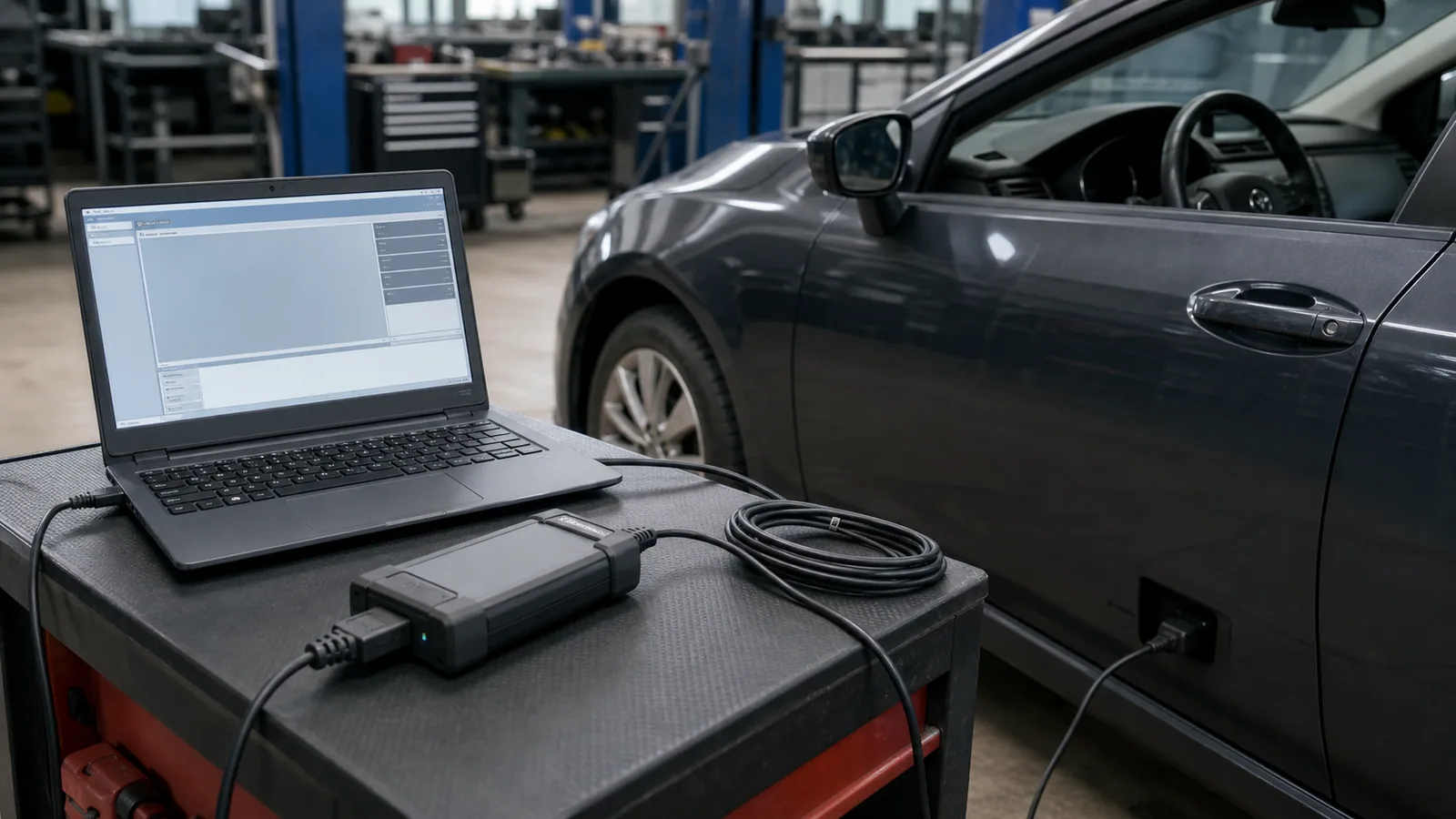
Fault detection connection chain consisting of a computer, diagnostic VCI interface, and automobile

Decision guide

How does fault code query software work?

Diagnostic program is the software layer that provides code, live data, system scan, and report screens. Physical communication with the vehicle is established by an OBD cable, VCI, or another connection interface. Drivers and firmware allow the computer to recognize the interface; the license can determine which brands, models, duration, and functions will be activated.

Installing the program on the computer is only the first layer. After the software opens, it must see the connected interface, the interface must work with the correct firmware, and the vehicle protocol must be supported. Two devices sold under the same body name may have different electronic boards, serial numbers, regions, or firmware channels. Therefore, a general installation video found online may not be correct for the interface you have.

Vehicle selection also determines the actual scope of the program. The appearance of a brand logo in the menu does not mean that all model years and control units of that brand will be unlocked. Reading engine codes, full system scanning, maintenance resets, active tests, coding, and programming are different access levels. When making a selection, vehicle information and the service operation to be performed should be added to the question "which program?".

It should be remembered that the license can affect not only the program's startup but also brand packages, update rights, cloud functions, security gateway access, or reporting features. The product offer should clearly state the device, software, license duration, active brand packages, and renewal conditions. General information in a blog post does not replace a current commercial offer.

  • Computer or tablet
  • Diagnostic interface and cable
  • Driver and firmware
  • License and vehicle package
Technician using a PC-based vehicle fault diagnostic program in a service environment

Decision guide

Selection of PC vehicle fault diagnostic program

In PC-based systems, the operating system version, processor architecture, USB or Bluetooth driver, interface firmware, and the program's licensing method are checked together. The fact that an old program opens on a new Windows version does not guarantee stable communication with the vehicle.

Before installation, the official system requirements of the program should be read. The supported Windows version, 32 or 64-bit requirement, administrator privileges, internet connection, and required disk space should be noted. The driver file should only be obtained from the device manufacturer or an authorized software channel. Random driver packages pose risks to system security and connection stability.

For USB interfaces, the correct port or device record should be visible when the operating system recognizes the device. The same interface and communication port are selected within the program. For PC interfaces using Bluetooth, after pairing is complete, the program's connection settings can be configured separately. The computer recognizing the device and the diagnostic program connecting to the vehicle via the interface are two different verification steps.

Automatic operating system updates, power saving, sleep mode, and security software on the service computer can affect the connection. These settings should only be changed if officially recommended by the manufacturer. Permanently disabling antivirus or bypassing security warnings is not an installation method. The reason why the valid software is blocked should be resolved with manufacturer support.

The advantage of a PC system is its large screen, report archive, printer, and ability to work with some brand-specific processes. The disadvantage is that cable, driver, and operating system maintenance add an extra burden to the service workflow. If mobile use and quick vehicle acceptance are priorities, an independent service tablet may be more suitable.

OBD2 program, diagnostic interface, and vehicle connection selection chain

Decision guide

When searching for OBD2 programs, check the device, adapter, and license together

An OBD2 program search often bundles three different needs into one box: viewing basic engine data on a phone, using an OBD interface with a PC, or updating manufacturer software on a service tablet. Therefore, the first decision is not the file to be downloaded, but the actual operation on the device and vehicle to be used. The term OBD2 software can cause the same confusion in English sources; the software name, connection interface, and license channel should be verified separately.

For the basic user, an OBD2 program can be a mobile application that displays standard codes and limited live data from the engine control unit. For this use, the adapter's Bluetooth, BLE, or Wi-Fi connection, the phone's operating system, and the support information in the app store are important. If ABS, airbag, transmission, or service operations are required, the basic application class is not considered sufficient.

On the PC side, the OBD interface is as decisive as the program. Communication with the vehicle cannot be established without the USB driver, port settings, firmware, Windows version, and license method working. It is not assumed that the same program name will work with different interfaces; the device's serial number and manufacturer channel are checked.

On the service tablet, the software works together with the device body, the VCI, and the license in the account. The APK or installation file alone does not unlock vehicle coverage. Otobiltek therefore guides users looking for software not just to the download link, but to make decisions based on the device, VCI, license, updates, and the service operation to be performed.

  • Phone application?
  • PC program and USB/VCI interface?
  • Service tablet software?
  • Is the license and update channel open?
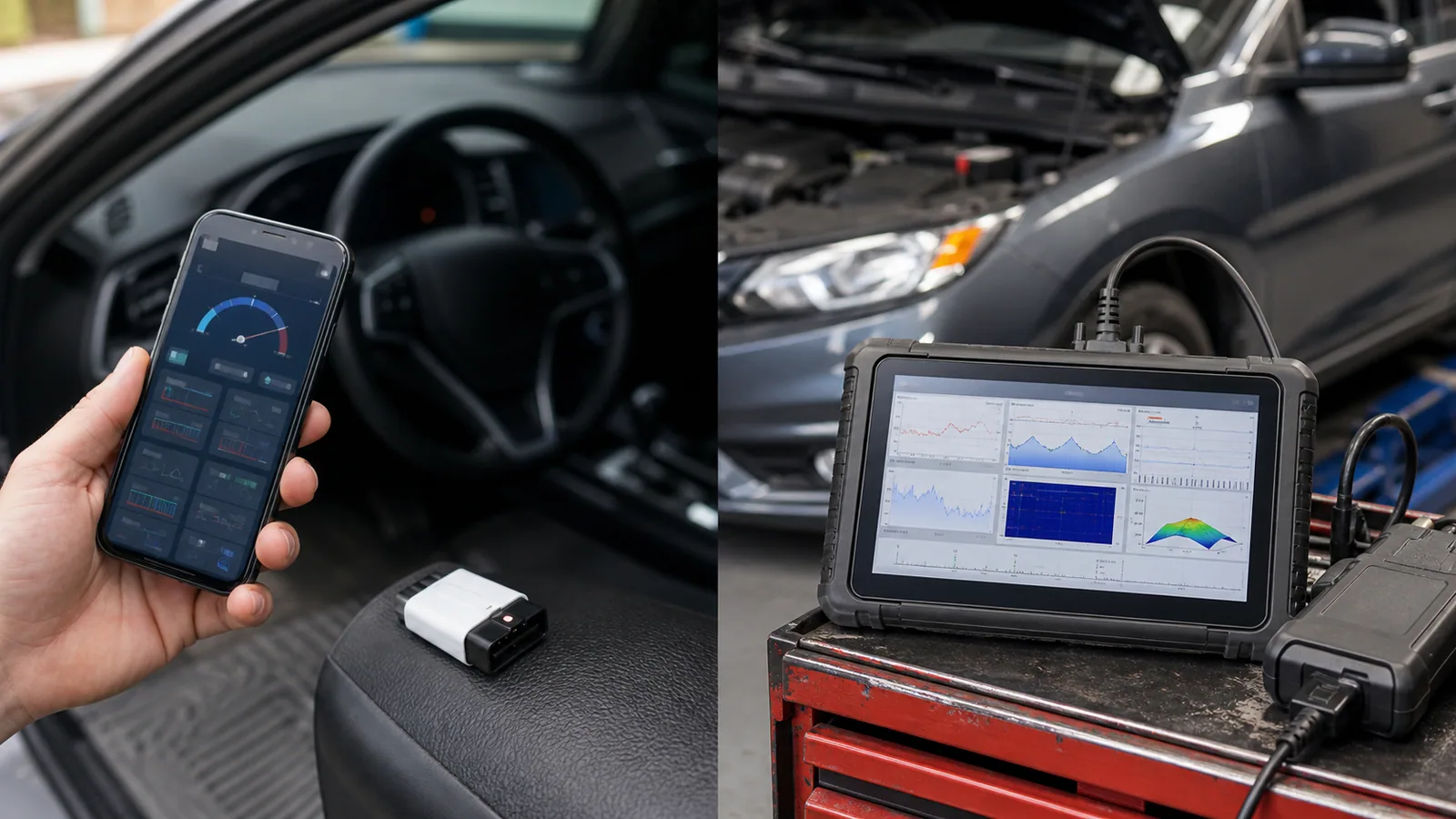
Side-by-side comparison of Android phone application and professional service tablet

Decision guide

Android and phone applications do not offer the same coverage

The term Android fault diagnostic program can refer to both basic OBD applications running on a phone and the manufacturer's own diagnostic tablet software. Even if the screen systems of the two product groups are the same, they differ in vehicle coverage, VCI connection, license, and service functions.

A phone application can display standard engine codes and supported live data with a small Bluetooth, BLE, or Wi-Fi adapter. Additional licenses may be required if manufacturer-specific packages are available. The presence of ABS, airbag, or service operations in the app's store description does not mean these functions will be unlocked on every vehicle. The support list should be checked against the vehicle and model year.

On the service tablet side, Android is only the operating system base. The device's real value comes from the diagnostic software, VCI hardware, vehicle database, updates, and support package. Installing the same APK on an ordinary Android tablet does not create the license or VCI access of a manufacturer tablet. Serial number, account, and hardware matching may be required.

When installing the application, permissions such as Nearby Devices, Bluetooth, or storage may be visible. Each permission must be compatible with its function and have an official privacy statement. Installing an APK file from an unknown source can put your account, license key, vehicle identification information, and customer reports at risk. Disabling Google Play Protect warnings is not an alternative to secure installation.

When the Android version is upgraded, the old application may not work due to permission or file access issues. Before updating the device, the supported version by the diagnostic manufacturer should be checked. The automatic update time of a tablet used in intensive service should be planned, and the software or system should not be restarted in the middle of an operation.

  • Phone application
  • Manufacturer service tablet
  • VCI and serial number matching
  • Android version support
User checking source security before downloading vehicle diagnostic software

Decision guide

What does a free vehicle fault diagnostic program mean?

The term 'free' can describe four different situations: basic functions in a free mobile app, software included with a device purchase, a limited-time trial, or a file distributed without a license. These do not have the same level of trust, coverage, or usage rights.

Some mobile apps offer standard OBD2 connection, limited code reading, or a few gauges for free; advanced graphics, exporting, or manufacturer packages may be paid. This model is legitimate, and its terms can be viewed in the app store. The user should evaluate whether the free portion meets their needs using the feature list and supported adapters.

Professional devices may include updates for a specific period or manufacturer software as part of a purchase package. A statement like 'two years of free updates' does not imply that all cloud and programming functions are free for the device's lifetime. The start and end dates, which software packages are included, and whether the device will function with the current version after the period expires should be clear in the product offering.

A trial version may allow evaluation of the program's interface or specific tools for a limited time. Trial conditions should be found on the developer's official website. Using a modified file to exceed the time limit, unlock a manufacturer package, or bypass serial number checks does not grant licensing rights.

Cracked, keygen, modified APK, or unknown 'full package' files are not reliable options. They carry risks such as malware, account loss, incorrect vehicle data, interrupted updates, and corrupted firmware. Otobiltek installation content does not involve bypassing license checks or mimicking official access; it focuses on verifying the legitimate channel for the device and software.

  • Free basic version
  • License included with the device
  • Official trial version
  • Risk of unlicensed file
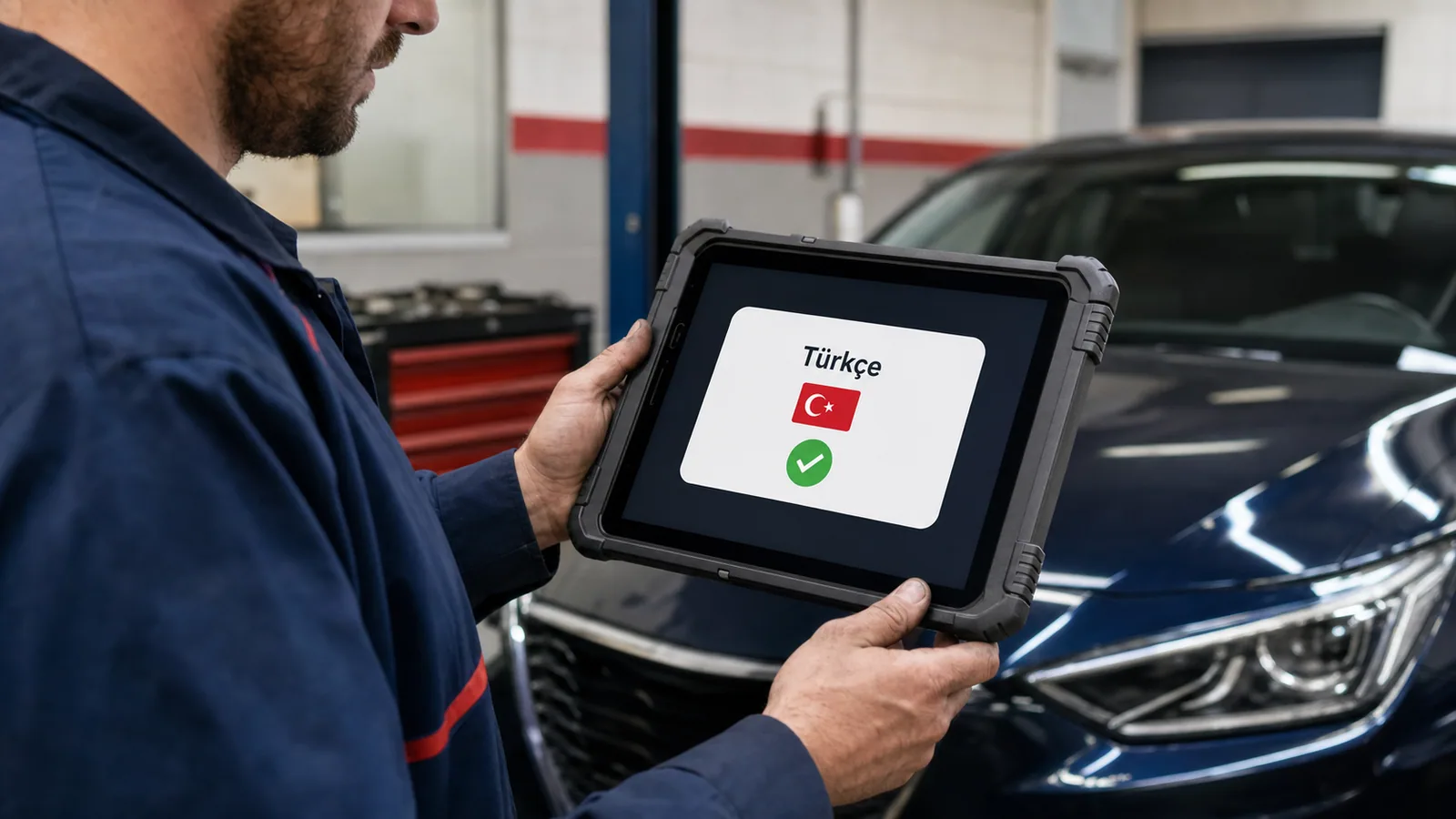
Automotive technician using a diagnostic tablet with Turkish language selection enabled

Decision guide

What to check in a Turkish vehicle fault diagnostic program?

A Turkish menu can increase service speed; however, translation quality, accuracy of technical terms, and maintaining language support in updates are important. A 'Turkish' badge on the product page does not guarantee that all vehicle descriptions are fully translated.

Fault code descriptions, control unit names, live data parameters, and service functions may come from different translation sources. Even if the menu is in Turkish, some manufacturer packages may remain in English. Before purchasing, if possible, the language coverage should be viewed through actual device screens, software versions, and the menu of one of the tools used in service.

Confusing similar concepts in technical translation increases the risk of errors. Adaptation, calibration, coding, and programming are not the same operations. DPF replacement, regeneration, or learning menus can also be different procedures. Users should read the official service description of the operation instead of relying solely on the Turkish label.

A Turkish fault code description does not complete the diagnosis. The original code number, status, and control unit should be recorded and compared with the manufacturer's service procedure. Incorrect or overly general translations should not lead to parts replacement. Translation speeds up the user's work but does not replace measurement and technical verification.

It is also checked whether the language package has changed after an update. If the device region or account language is incorrect, the Turkish menu may disappear. Unofficial methods of changing the region can lead to licensing and update issues. If the sales package is offered for use in Turkey, language and region information should be clearly stated in the offer.

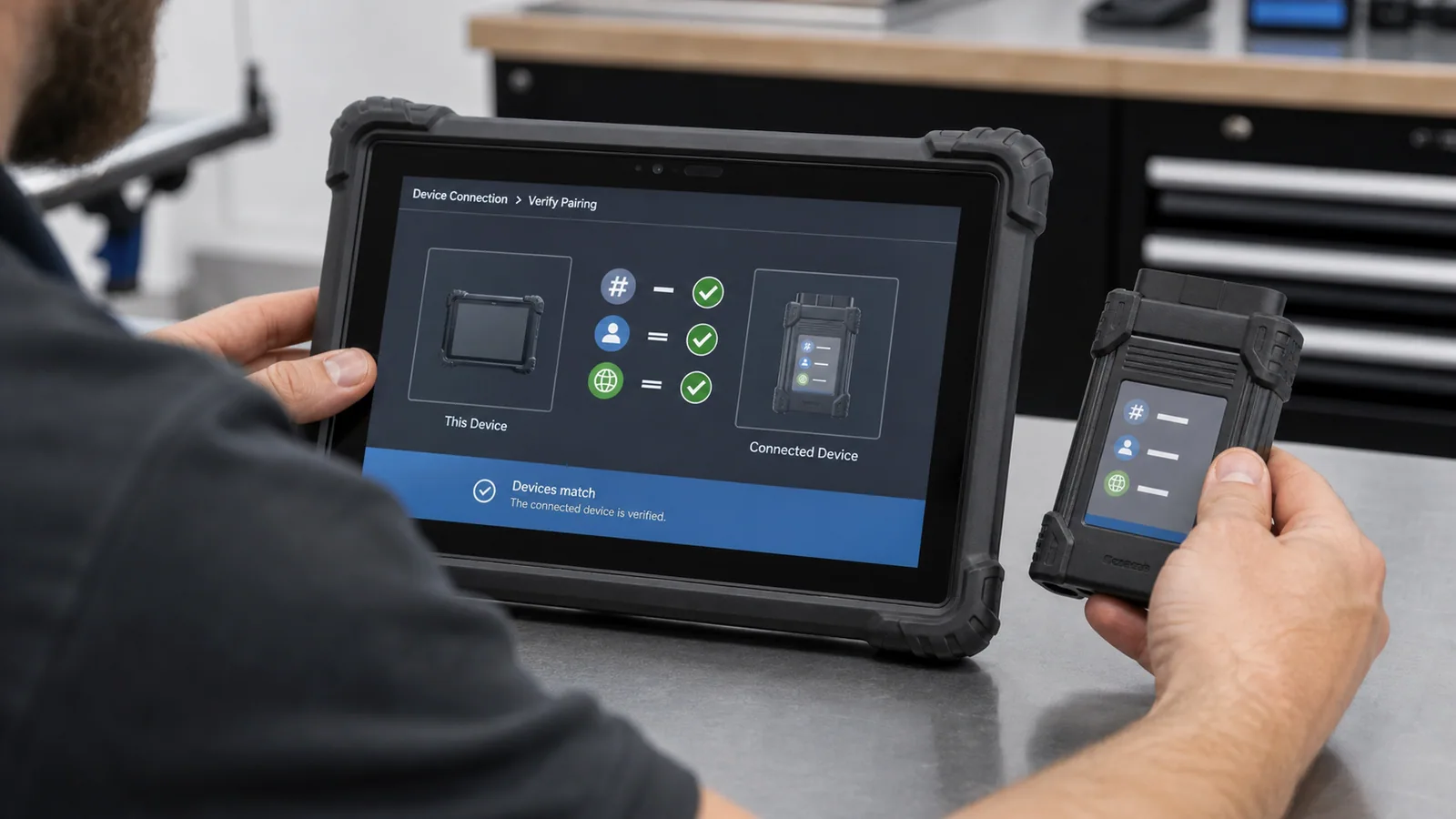
Technician checking device and license matching between diagnostic tablet and VCI interface

Decision guide

Device model, serial number, account, and region matching

The same model name may be available with different hardware revisions, sales regions, or software packages. When selecting a program, the device's full model code, serial number, registered account, purchase channel, and current license screen should be checked together.

A serial number is not just a warranty label; some manufacturers match the device with accounts, VCIs, or software packages using this number. An APK or license file obtained from another device may not work with the same serial number. For used devices, previous account ownership, transfer method, and license expiration are particularly important.

Region information can affect manufacturer packages, language, servers, and activation methods. Features seen on the global page may not be offered with the same duration or coverage in the Turkish package. Attempting to bypass region locks through unofficial methods can lead to loss of updates and account access. The product should be purchased through the correct channel for the market where it will be used.

The VCI and tablet may have separate serial numbers. Before device replacement, factory reset, or application reinstallation, the pairing record and backup method should be learned from manufacturer support. Random factory resets can result in license deletion, loss of reports, or the VCI becoming unable to reconnect.

Personal data should be hidden in screenshots transmitted during purchase with serial or license information. Serial numbers and activation codes should not be shared on open forums. Support calls should only be made through verified sales or manufacturer channels, and the scope of the operation should be clearly asked of anyone requesting remote access.

  • Full model code
  • Device and VCI serial number
  • Registered account
  • Sales region
  • License expiration
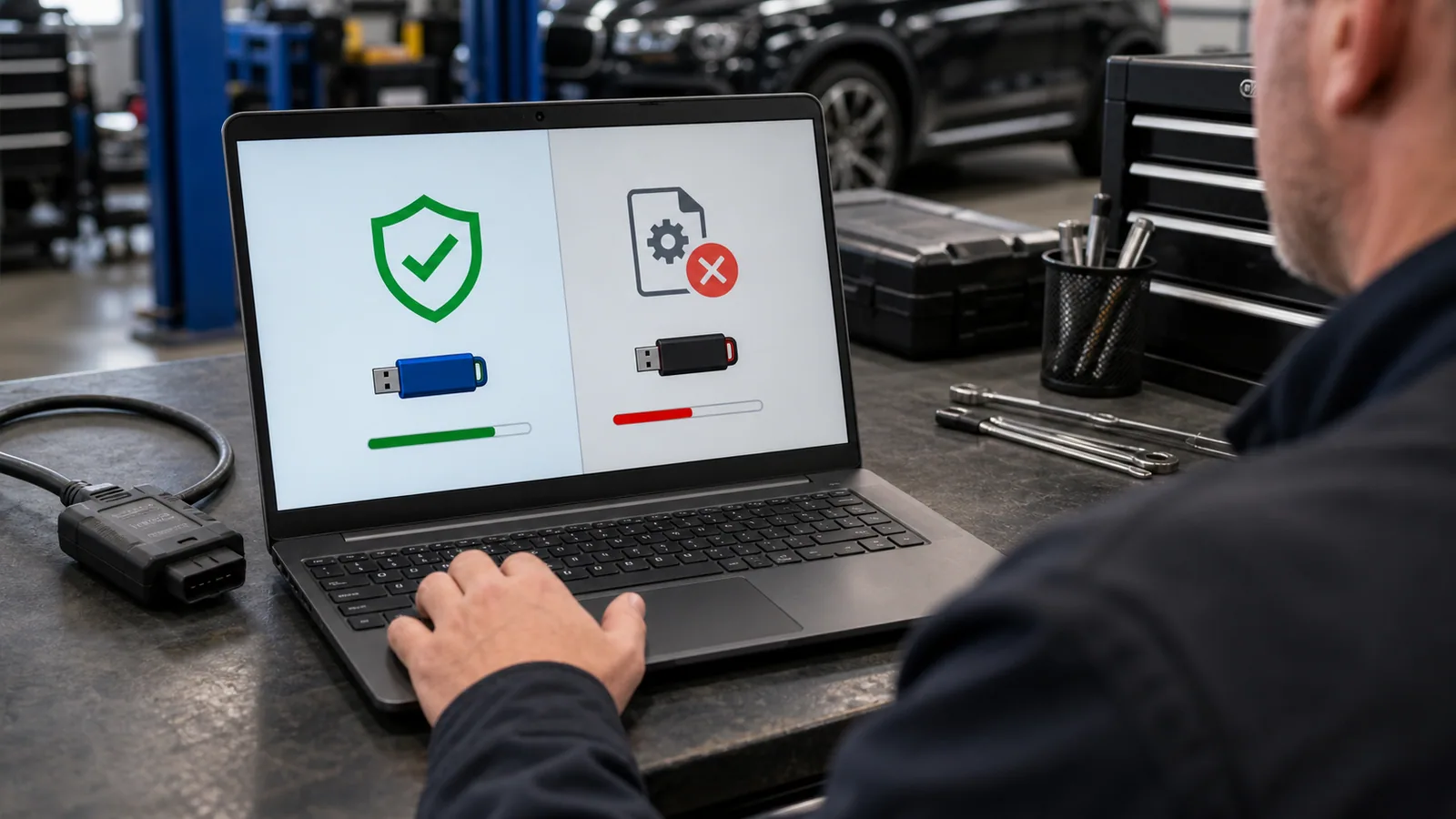
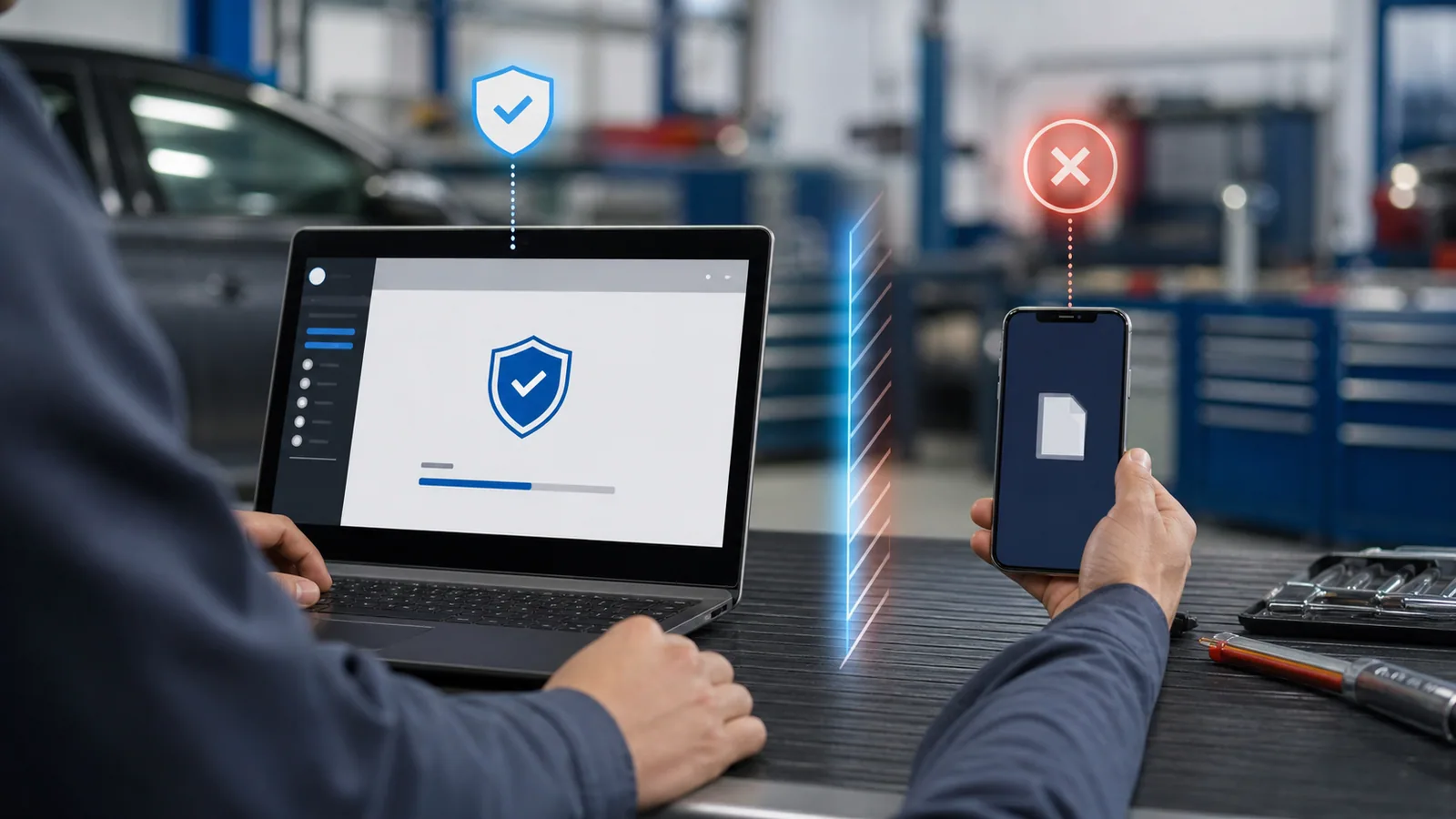
Service employee comparing verified manufacturer software with an application of unknown origin

Decision guide

Official software, third-party application, and device updates

Official manufacturer software, compatible third-party applications, and update cards are not the same product. Especially in searches for Launch, Xdiag, and DiagZone, even if the device body looks similar, the software channel, activation, and support responsibility must be checked separately.

On the Launch side, the device family, serial number, and official download or update channel are the basis. An application released by the manufacturer for a specific device may not work with another interface. The official product page, download area, and authorized support information are the starting points.

Third-party software names like Xdiag and DiagZone are searched along with some connection interfaces. These software programs may have their own websites, licensing methods, and support conditions; however, this does not automatically make them the manufacturer's official application. Otobiltek should not present any third-party stream as 'official Launch software'.

An update card or activation code can only be used with its corresponding device family and account. Before purchasing a card, the device serial number, current license screen, software channel, and region information must be checked. Even if the wrong product is physically delivered, it may not be applicable to the account.

Support responsibility is part of the purchasing decision. A user who obtains the interface from one seller, the license from another source, and the software from an unknown file may not find a single point of contact when a problem arises. Professional service should establish the device-software-license chain through documented and traceable channels.

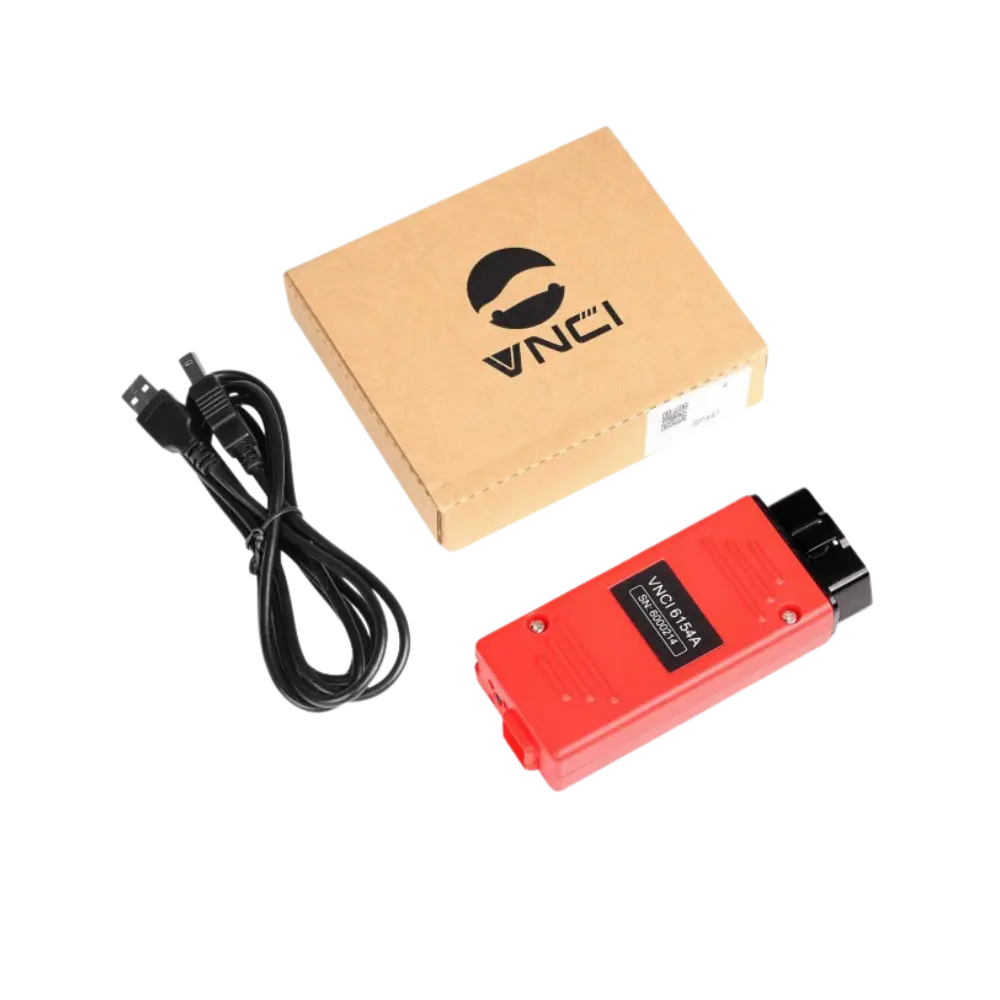
Otobiltek does not sell Otobiltek ODIS Service, ODIS Engineering, ODIS installation packages, accounts, activations, or licenses. ODIS software addresses direct to this guide explaining the selection of licensed diagnostic software. The VAG interfaces in the sales catalog clearly state their brand and hardware identity: VNCI 6154A is offered as an aftermarket ODIS interface alternative, while VAS5054A is presented as an older generation VCI. These products are not ODIS licenses, Volkswagen authorizations, or unlimited online operation promises.

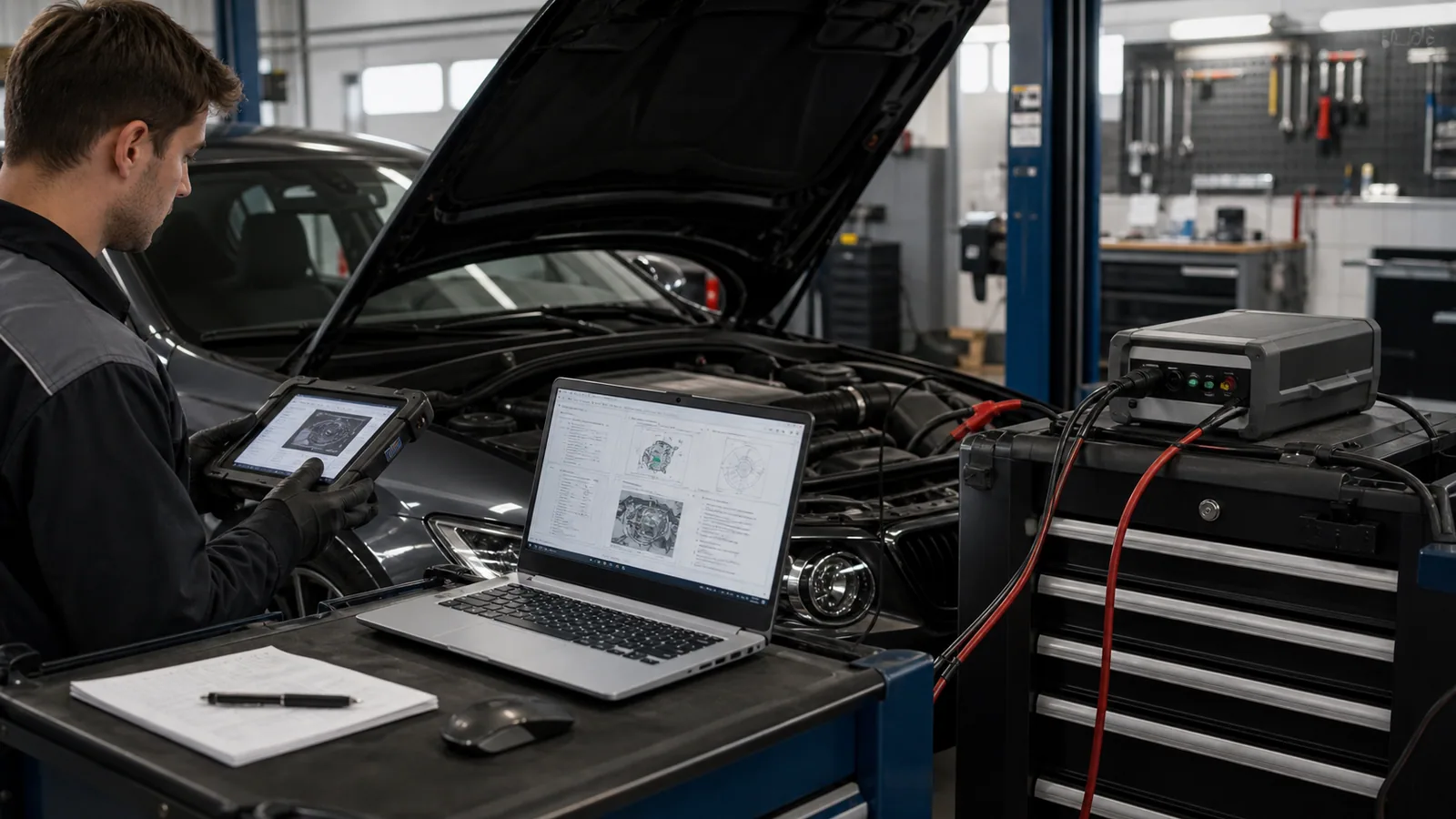
Service showing diagnostic, service information, and ECU programming screens on separate workstations

Decision guide

Diagnostics, service information, and ECU programming software are different

Diagnostic software that reads fault codes and displays live data, service information software that provides repair procedures and labor times, and programming applications that load software onto ECUs are not used for the same task. A single program name may not cover all three needs.

Diagnostic software communicates with vehicle control units; it presents codes, live data, tests, and supported service menus. A service information system, on the other hand, can provide resources such as wiring diagrams, disassembly/assembly instructions, torque values, or technical bulletins. After viewing the code, both types of information are often needed for accurate diagnosis.

Coding can modify a control unit's options or configuration information. Programming, on the other hand, may involve writing software or calibration data to a control unit. During these operations, voltage, network stability, the correct file, vehicle identification, and manufacturer procedures become critical. Simply seeing a button in the menu is not sufficient to ensure safe operation.

Standards like J2534 Pass-Thru can serve as an interface between the vehicle and manufacturer software in certain OEM programming processes. However, not all interfaces support every OEM, market, and operation; manufacturer accounts, subscriptions, and security access may be required. Current requirements from the vehicle manufacturer must be followed before programming begins.

Key/IMMO, airbag, or gateway operations may also require separate authorization and devices. Seeking free general programs in these areas carries both a low success rate and high risk. Service should use traceable procedures regarding legal access, customer authorization, and vehicle safety.

  • Diagnostic software
  • Service information system
  • Coding and Adaptation
  • ECU programming
Automotive technician verifying vehicle communication after diagnostic software installation

Decision guide

Pre- and post-installation verification list

Before installation begins, device and license information is recorded; official sources, system requirements, and backup methods are verified. After installation, it is checked not just if the program opens, but if it recognizes the interface, displays the license correctly, and establishes stable communication with a supported test vehicle.

First, if a currently working system exists, the program version, firmware, serial number, license expiration, and account information are documented with screenshots. Customer or activation data is stored securely. If the manufacturer has a backup method, it is applied. A rollback plan is prepared before attempting to use different version files from the internet.

The domain name, publisher, and, if possible, signature or verification information of the downloaded file are checked. If a request to disable security software during installation is made, the reason should be obtained from official support. Any process that bypasses license checks for the program to run is not considered a secure installation.

After installation, the interface is verified in the device manager or tablet settings. Within the program, the model, serial number, license, and update status should match the expected information. Then, on a secure test vehicle, a standard read is performed first; codes are not deleted, and reports and live data are checked. Active tests or write operations are not used as initial verification steps.

Finally, the update rollback procedure, support contact information, and license renewal date are recorded in the service log. If multiple technicians will use the system, account authorization and password sharing are arranged. Customer reports are not left unprotected on a shared desktop. This record quickly shows which software chain was active during a subsequent failure.

  • Current version and license record
  • Official download source
  • Interface and serial verification
  • Read test and report
  • Support and renewal record
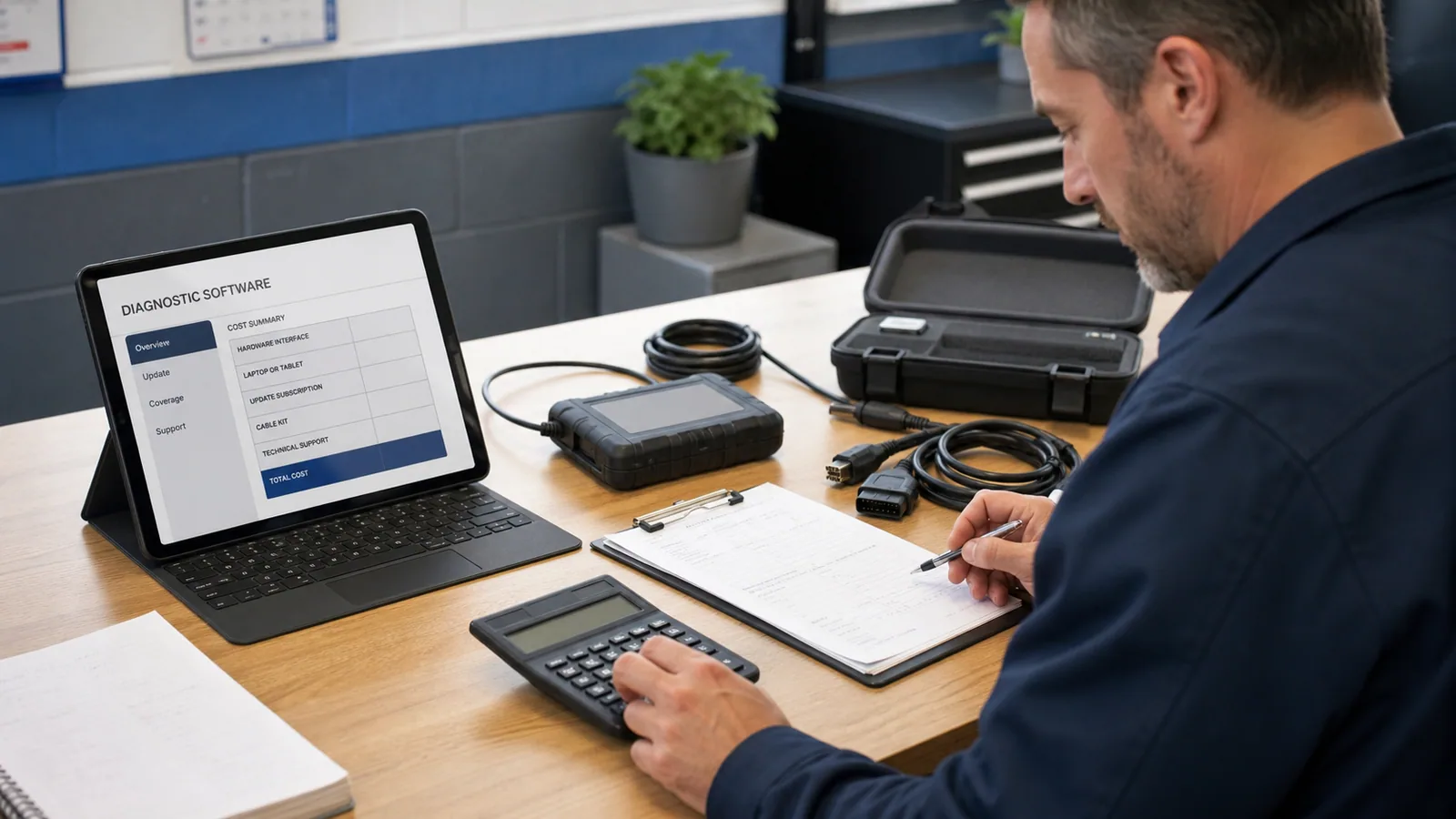
Service manager calculating diagnostic software, interface, update, and support costs together

Decision guide

Price and total cost of ownership

Program price is not just the initial license fee. The diagnostic interface, tablet or computer, manufacturer packages, updates, cloud and security access, technical support, and service downtime constitute the total cost.

A basic mobile application may offer a low initial cost; however, manufacturer packages, registration, and advanced gauges may be charged separately. On a PC system, the interface, computer maintenance, and driver support; on a service tablet, the device hardware and renewal license may be larger items. Do not compare two packages that do not perform the same task solely based on price.

After the free update period ends, it should be asked whether the device will function with the current software, how new vehicle packages will be obtained, and if online functions will continue. It should not be assumed that the device will completely shut down when the subscription ends; similarly, it should not be promised that all features will work indefinitely. Written conditions and device screens are the basis.

The correct cost calculation for a service is made based on the daily number of vehicles and lost time. Unstable connections, missing reports, or frequent reinstallation can be hidden costs of a cheap package. Conversely, it is unnecessary for a user who rarely reads basic engine codes to purchase a professional programming platform. The list of needs should determine the price level.

Otobiltek product pages show the current device price, package, and purchase status. The guide does not guarantee prices; it explains that the offer should clearly show the device, license period, activation method, and support scope separately. The device model, serial number, and the intended operation determine the correct software package.

Frequently Asked Questions

Most frequently asked questions by customers

Does a vehicle fault detection program work alone?

Generally no. A compatible OBD/VCI interface, correct driver or connection method, valid license, and vehicle software are required. Opening the program does not mean it can communicate with the vehicle.

Is a free vehicle fault detection program safe?

The free basic version in the official store, the license included with the device, or a developer trial can be a safe starting point. Cracks, keygens, and unknown APKs are not reliable and do not provide license rights.

Can PC diagnostic software run on an Android tablet?

Direct operation is not expected. The operating system, application format, driver, and interface connection are different. The manufacturer must provide separate application and device support for Android.

Does the Turkish program show all fault descriptions in Turkish?

Not always. While the main menu is in Turkish, some brand packages or technical descriptions may remain in English. The actual language coverage should be checked in the vehicle's menu and the current software version.

Do all vehicle brands unlock after installing the APK?

No. The APK only installs the application. License, account, device serial number, brand package, VCI, and vehicle coverage are verified separately.

Does the device stop working when the license expires?

Behavior varies by manufacturer and package. Some devices may continue to operate with the existing version; updates or online features may be disabled. The written license terms and device screen should be checked.

Does the diagnostic program perform ECU programming?

Some professional systems may support programming functions; however, basic code reading software is not automatically an ECU programming platform. OEM procedures, appropriate interface, account, and power support may be required.

Is an automotive ECU diagnostic device the same as an ECU programming device?

No. The term "automotive ECU diagnostic device" is mostly used for reading ECU codes and data. Fault scanning, coding, and ECU software programming are different functions; product scope should be verified according to the intended operation.

Does Otobiltek sell ODIS licenses or installations?

No. Otobiltek does not sell ODIS Service, ODIS Engineering, installation packages, accounts, activations, or licenses. The old ODIS product address is only directed to this guide for correct information.

Can used diagnostic software or devices be purchased?

It can be considered if account ownership, serial number, license transfer, region, VCI matching, and update status can be verified. If this information is unclear, a low price may turn into an unusable license later.

Related pages

Pages related to this topic

Technical Resources

Sources for technical information

Technical information verified with sources on July 22, 2026.

Related products

Related products

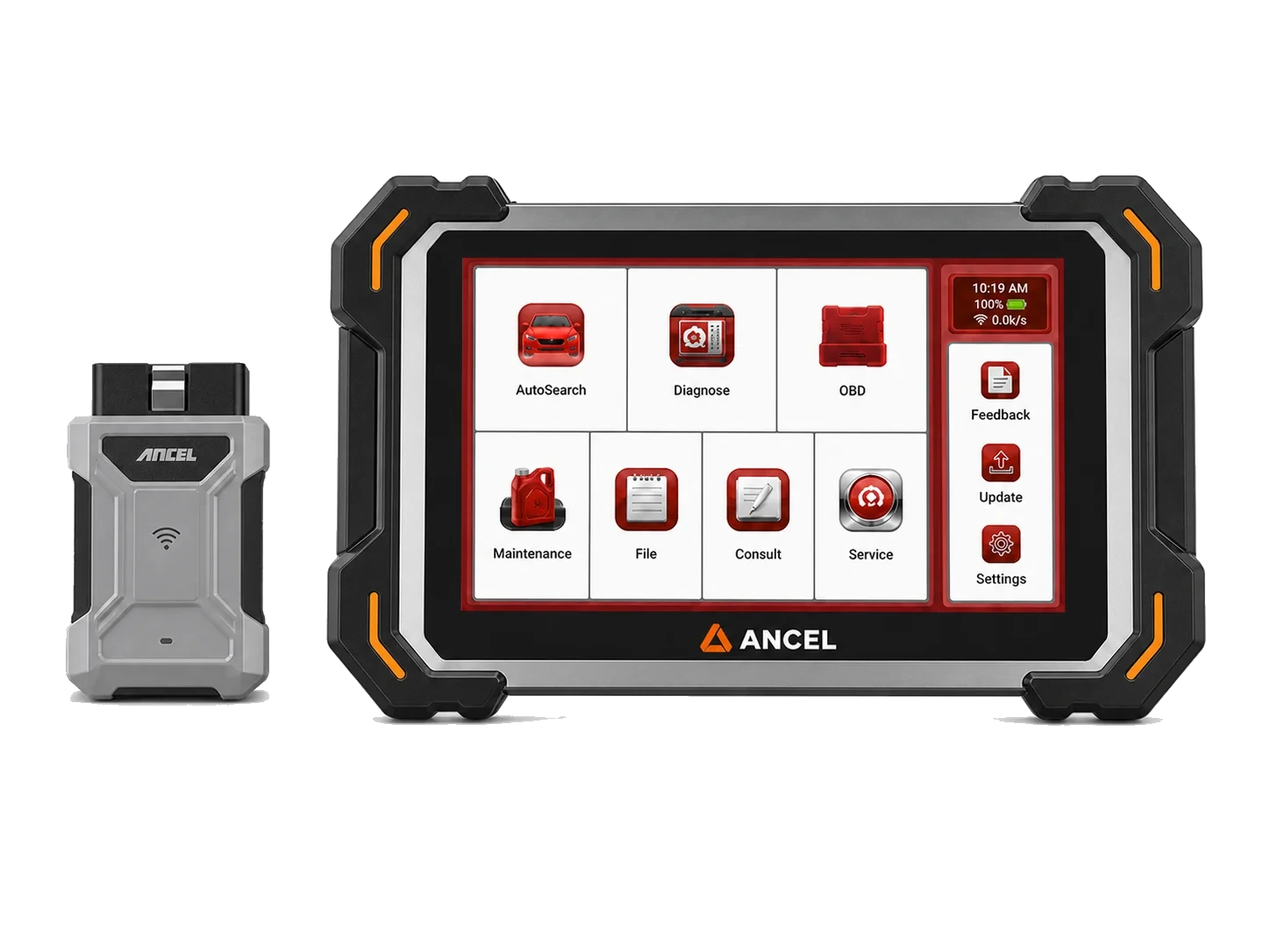
Ancel DS500BT product image

Ancel DS500BT

Tablet device with Bluetooth VCI connection for fault codes, live data, and supported maintenance operations.

  • BT connection
  • Service functions
  • Live data
≈ $50624,990 TL charged · VAT included · import duties excludedIn stock
Launch X-431 PRO (Old Model) product image

Launch X-431 PRO (Old Model)

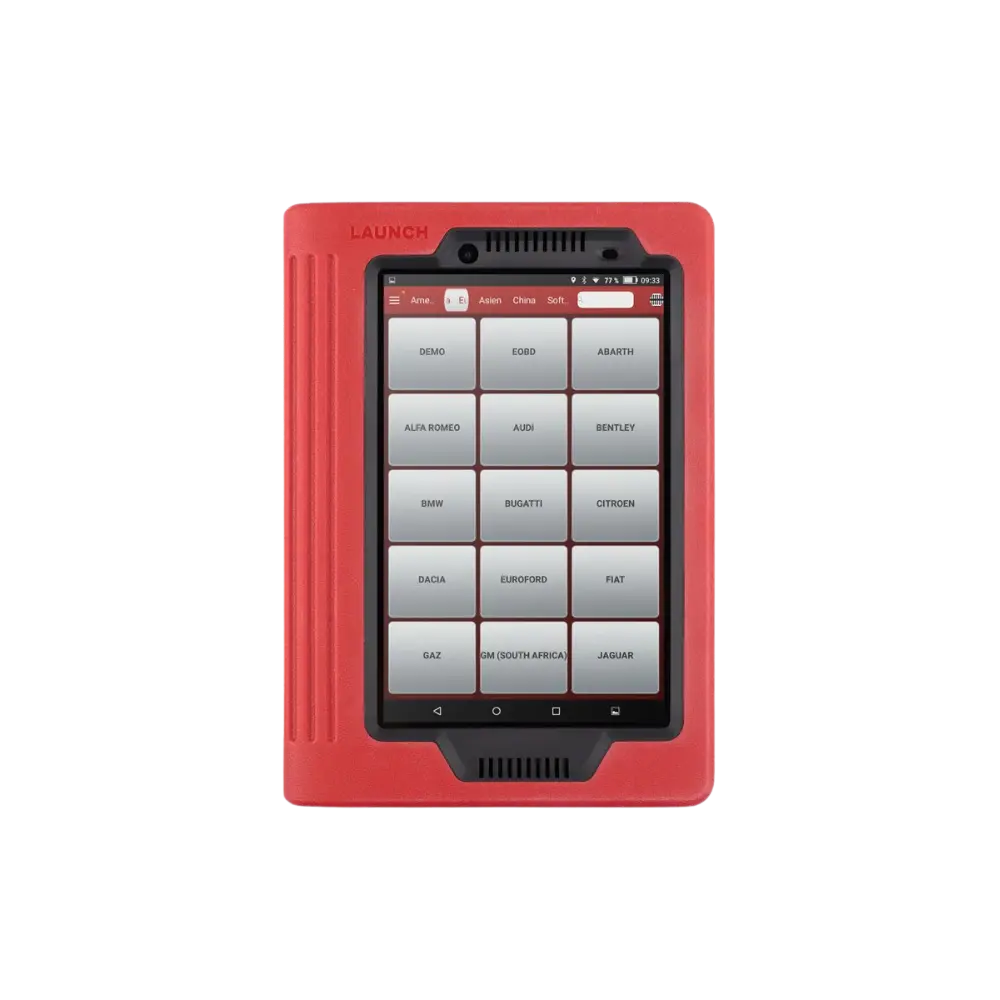
The first-generation Launch X-431 PRO, sold with a red tablet and DBScar/DS201 interface, is no longer offered as a new product; this archive page explains device identification, account, license, and the decision for current alternatives.

  • Verify old device
  • Account and license check
  • Transition to current model
DiscontinuedNot in production
View new model
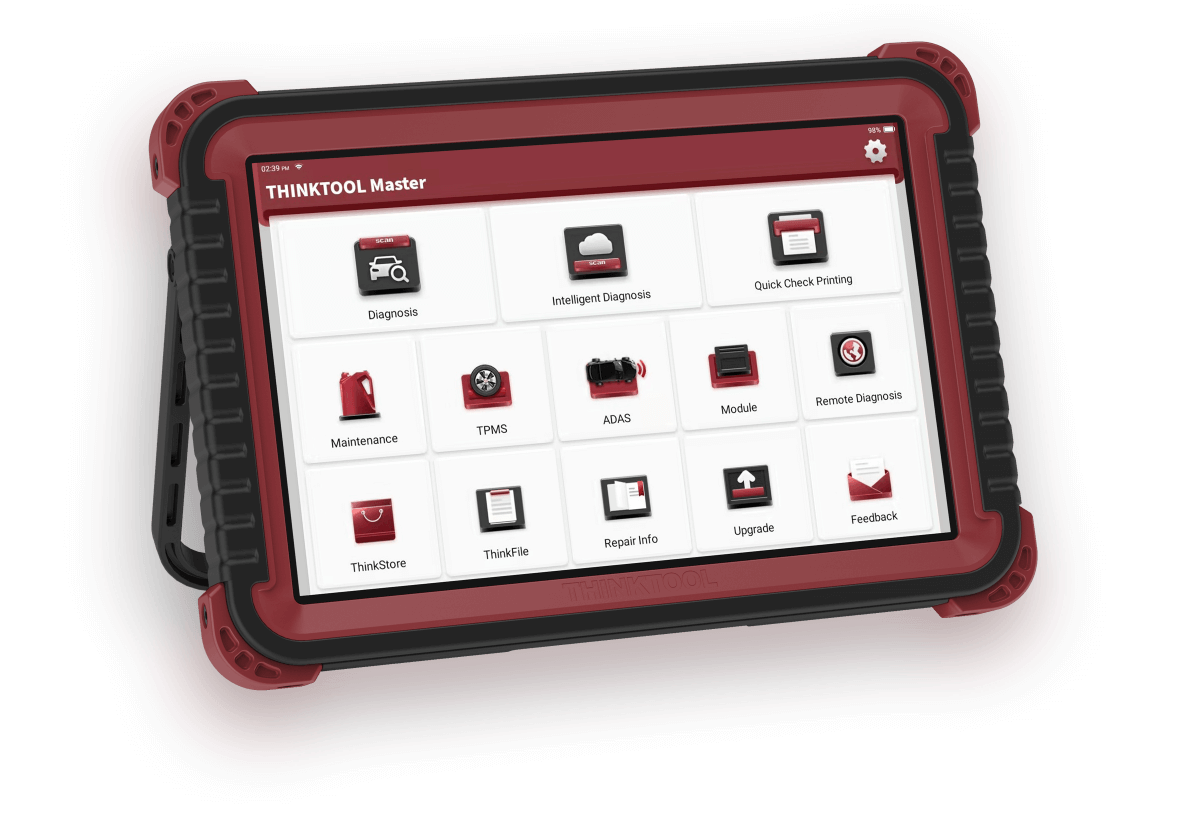
Thinktool Master product image

Thinktool Master

Thinktool Master is a professional diagnostic tablet that supports active tests, coding, online programming, and compatible service modules.

  • Active test
  • Online programming
  • 10-inch tablet
≈ $1,00249,500 TL charged · VAT included · import duties excludedIn stock
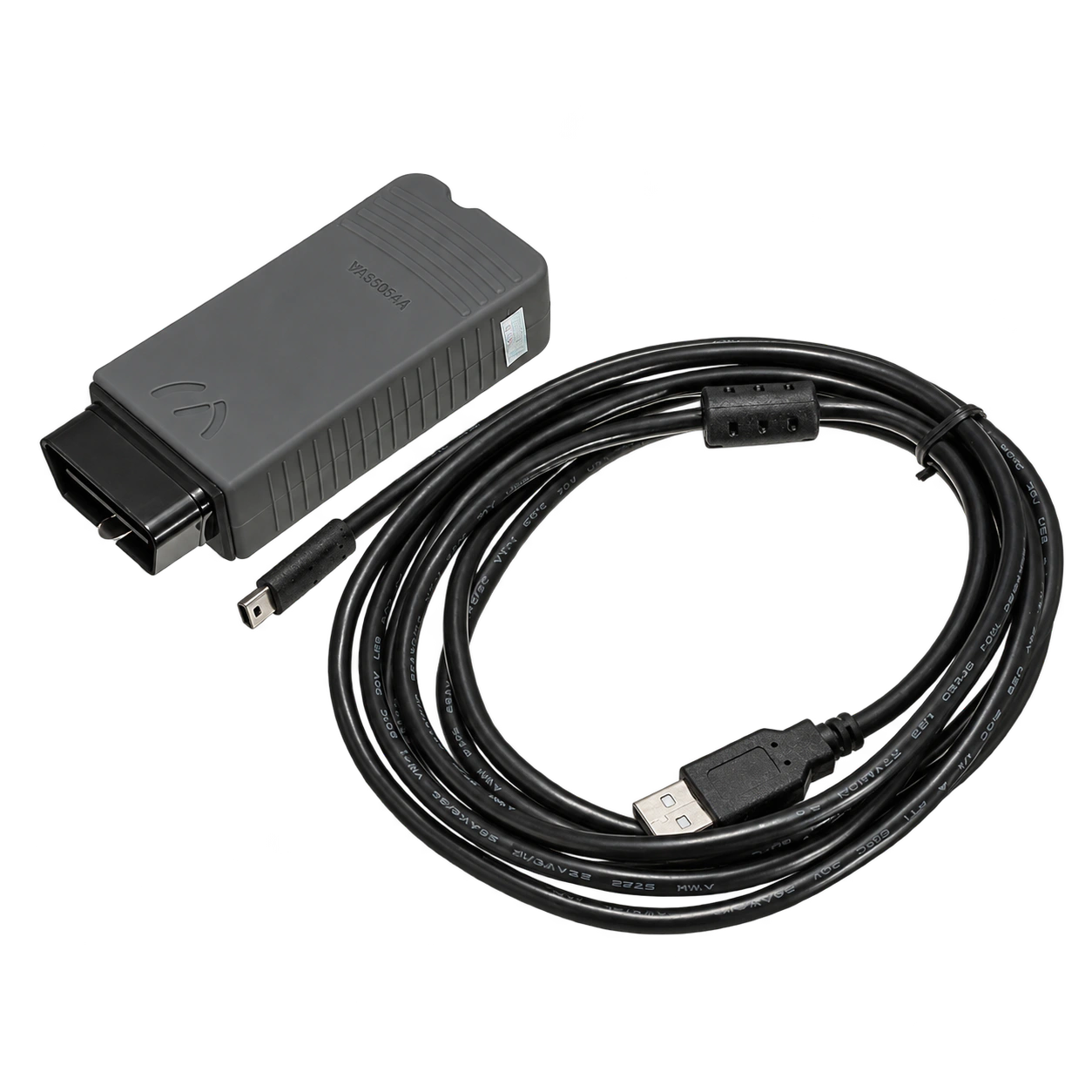
VAS5054A VAG Diagnostic Tool product image
Universal

VAS5054A VAG Diagnostic Tool

VAS5054A is an older generation VAG vehicle communication interface with a USB cable, used with the appropriate VAS-PC or ODIS infrastructure in Volkswagen, Audi, SEAT, and Skoda vehicles.

  • Fault diagnosis in older VAG vehicles
  • PC connection via USB-A to mini USB cable
  • Recognition of existing VAS5054A hardware
≈ $30314,990 TL charged · VAT included · import duties excludedIn stock
VNCI 6154A Volkswagen ODIS Diagnostic and Programming Tool product image
VNCI

VNCI 6154A Volkswagen ODIS Diagnostic and Programming Tool

VNCI 6154A is an aftermarket VAG interface with USB and Wi-Fi connectivity, used for diagnosis and supported programming tasks with the appropriate ODIS setup in Volkswagen, Audi, SEAT/Cupra, and Skoda vehicles.

  • ODIS-based diagnosis in Volkswagen Group vehicles
  • CAN FD and DoIP communication in supported vehicles
  • USB, Wi-Fi AP, and workshop WLAN connection
≈ $32415,990 TL charged · VAT included · import duties excludedIn stock
WhatsApp