P0299 turbo pressure low: how to interpret live data and actuator test?
P0299 is a fault code indicating that turbocharger or mechanical compressor pressure is below the expected level. It does not solely suggest that the turbo needs replacement. In diagnostics, operating conditions, pressure data, air path, and control system are compared. When selecting an Ancel DS600 or Launch, it is important to verify which data and which actuator test are actually supported by the vehicle.
Otobiltek sells the diagnostic tools mentioned herein.
HELLA code definition and technical descriptions were compared with device manufacturer documents. Measured pressure curve or repair result is not included.
Operating condition under which the code occurred.
Meaning of pressure and position data.
Comparison of active test with physical inspection.
Pressure limits and calibration method must be obtained from the current manufacturer document for the relevant engine.
Quick comparison
What information is useful in P0299 research?
Information
The question it answers.
What it does not prove by itself.
Code and fault occurrence.
Under what conditions did the warning occur?
Part that needs replacement.
Target/actual pressure.
How are the desired value and the measurement differentiated?
Mechanical integrity of the turbocharger.
Actuator command/feedback.
Is there a response to the supported command?
Sufficient pressure generated under load.
Air path and connection check.
Is there visible leakage/damage?
All sensors are measuring correctly.
Decision guide
Match the P0299 record with the engine and complaint first.
HELLA's code list defines P0299 as a turbo/compressor low pressure record. If there is a manufacturer sub-code alongside the full code, save it as well. When the power loss started, under what conditions the engine reported the warning, and whether other codes are present guide the initial investigation.
A single screenshot taken at idle may not explain a problem that only occurs during acceleration. Differentiate the customer's description from observed findings. Do not directly convert a complaint of "lacks power on hills" into a report of "turbo failure"; recording and measurement are required first.
Decision guide
Read target and actual pressure under the same conditions.
If supported by the device, monitor the requested pressure and reported pressure together. Record the parameter name, its unit, and the pressure reference. Absolute pressure and pressure above atmospheric are not the same number; juxtaposing two values with different units or references can lead to incorrect conclusions.
Engine speed, load, and temperature should also be recorded during comparison. Do not transfer pressure values found online for one vehicle as normal limits for another engine. No universal bar value or precise deviation percentage is provided here. The expected range is taken from the vehicle manufacturer's test plan.
What to ask for turbo diagnostics when buying DS600?
Ancel's DS600 description includes system diagnostics and bidirectional control. For turbocharger work, a more detailed answer is needed than this general definition: are pressure parameters readable in the relevant engine ECU, is there a requested actuator command, and can the result be recorded? The name and scope of each test must be determined on a vehicle-specific basis.
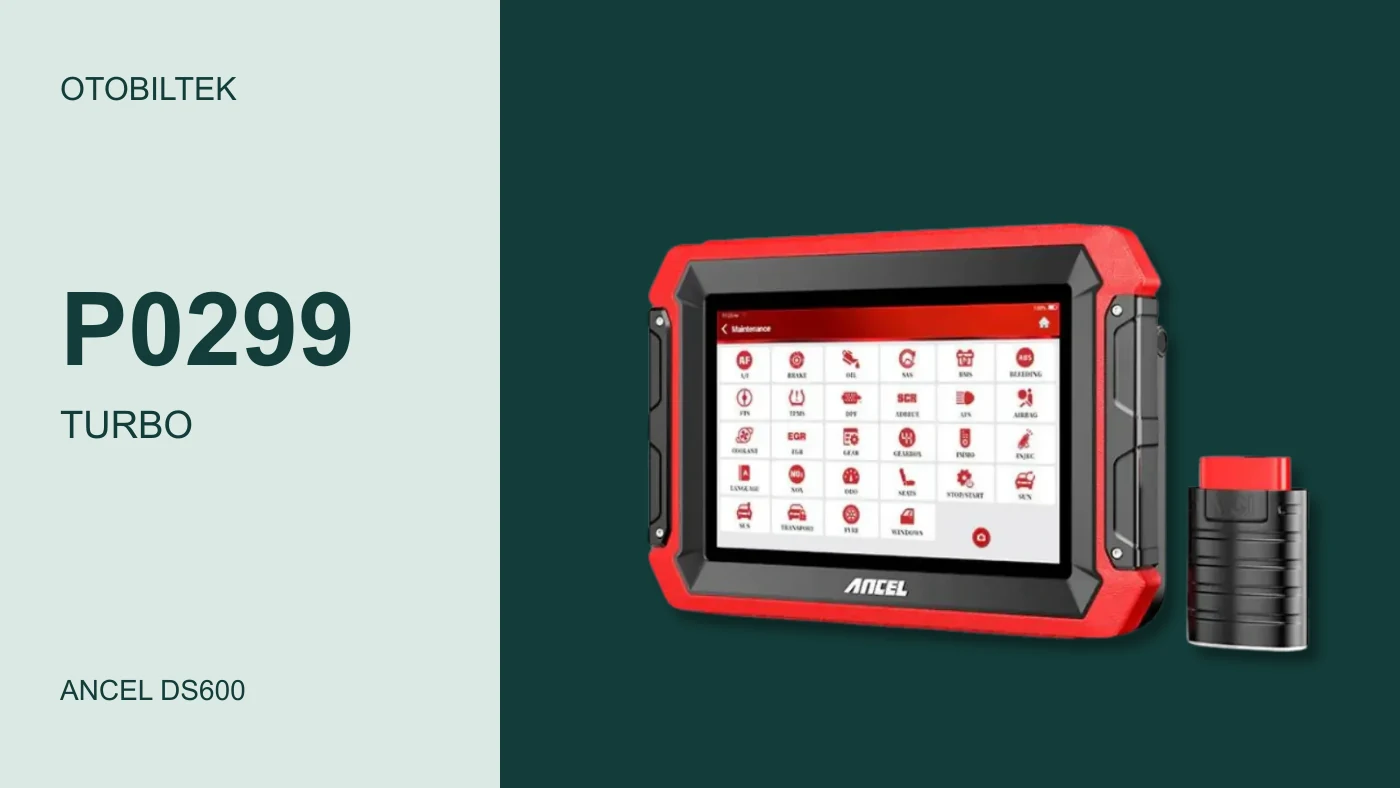
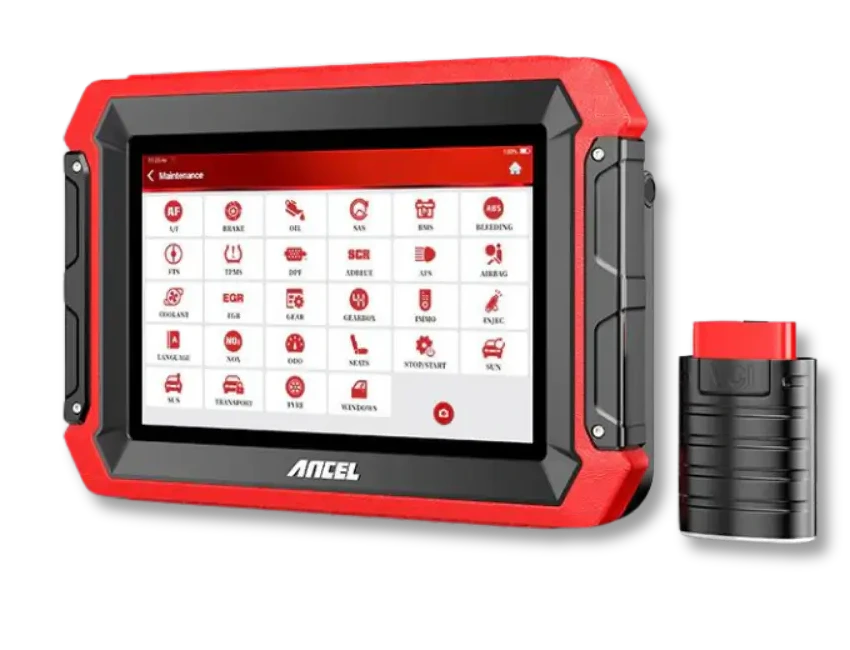
The service menu in the actual product photo does not show the operation of a specific turbo actuator. Request functional verification from the seller with your specific vehicle information. Clearly separate the support needed to read the fault code from the support needed to send commands to the control unit.
Decision guide
Why You Shouldn't Skip Air Path Checks.
HELLA's technical example for Opel Insignia 2.0 CDTI explains that a crack in the charge air hose can be associated with P0299/P2282. This is a concrete example for covered vehicles; it does not mean that all P0299 occurrences are due to the hose. The important conclusion is not to jump directly from the code to turbo replacement.
The air path, connections, and visible damage are inspected according to the vehicle procedure. If separate equipment is required for leak detection, it is not stated that the diagnostic tablet replaces it. The inspection result should be written in the work order as the inspected part and the observed finding, not simply as "inspected."
Decision guide
Actuator test, pressure test, and calibration are different.
HELLA's technical description indicates that parameter reading, actuator command, and basic adjustment may be separate functions in the appropriate vehicle. Sending the command, changing the feedback, and the physical response of the mechanism are separate observations. An actuation test performed with the ignition on does not solely verify pressure production under engine load.
The initial conditions required by the manufacturer for the test must be met. Checks requiring access to the turbo's hot or moving parts are performed by a specialist. Randomly changing a stop screw, turning an adjustment screw, or copying the adjustment from another turbo is not a solution provided by this guide.
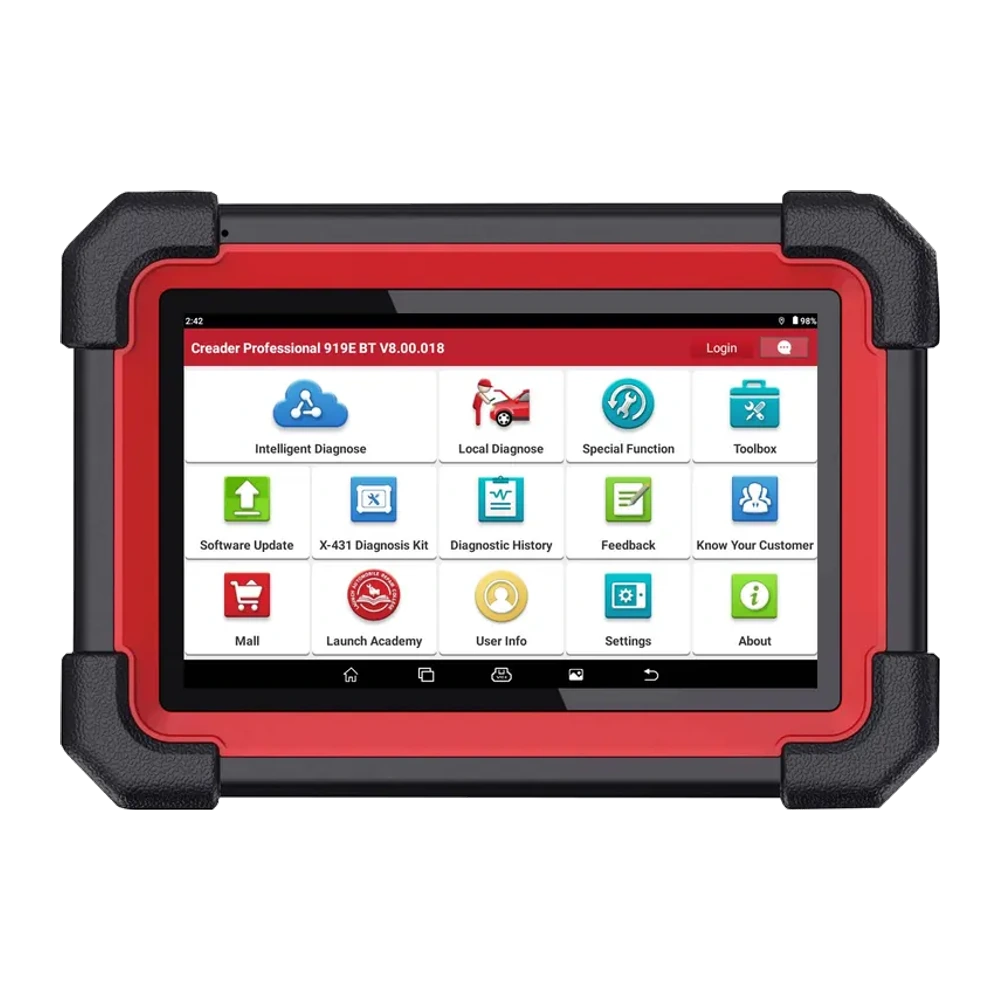
The official specifications for the CRP919E/X BT include actuator testing and graphical data display. Before converting these capabilities into a reason for purchase, verify that the relevant turbo command and pressure parameter are supported for the engine you will be working on. The general term "active test" does not cover all valves and actuators.
Specify the engine code, model year, and required operation to evaluate the device. If a function is not visible on the device you have, do not automatically assume it is an SGW fault; support scope, correct vehicle selection, and software version are also examined. The screen in the photograph is the main menu of the actual product, not a P0299 measurement.
Decision guide
Electronic command and mechanical condition are not interchangeable.
Acceptance of a command does not indicate that the entire system is functioning. Pressure data shows what the sensor is reporting; actuator feedback provides movement/position information in the supported system. Vehicle-specific inspection steps are required to understand the physical condition of the part.
Conversely, lack of movement does not immediately mean the actuator needs replacement. Command conditions, electrical connection, and mechanical arrangement are compared. HELLA explains that some turbos and actuators may require special bench adjustment before installation on the vehicle. Do not substitute the learning function in the tablet menu for all turbo calibrations.
Decision guide
What areas should the before-and-after record include?
For the post-repair comparison to be meaningful, the condition under which the initial complaint occurred must be known. Reading the same parameters under different conditions and stating "it's normal now" is not sufficient. Applicable checks are planned according to the vehicle manufacturer's procedure; measurements are not taken while focusing on the screen during driving.
Vehicle/engine identification, complete DTC, and status of the record.
Condition under which the fault occurred or the complaint arose.
Name, unit, and pressure reference of the monitored parameters.
Name of the supported command, device message, and observed response.
Finding from physical inspection and repair performed.
Final scan, comparison conditions, and points still unverified.
Decision guide
How to make the right device decision for P0299?
First, determine your workshop's need: is it code reading, simultaneous parameter monitoring, or sending commands to a specific actuator? Evaluate the DS600 or Launch based on these operations. Do not make a purchase decision based solely on screen size or the number of service functions without verifying vehicle coverage.
It is not assumed that a device will eliminate the need for turbo disassembly, mechanical repair, or flow bench testing. A good purchasing decision separates the data the device will provide from the checks that will additionally be required. This establishes a realistic relationship between the product's functionality and the expected workshop outcome.
Frequently Asked Questions
Most frequently asked questions by customers
Does P0299 Mean Definitive Turbo Replacement?
No. The code indicates a low pressure condition; the air path, control, measurement, and mechanical condition are investigated on a vehicle-specific basis.
What Should Turbo Pressure Be in Bar?
A single value cannot be given without specifying the engine and operating conditions. The unit, absolute/relative reference, and manufacturer limits must be the same.
Does DS600 Test All Turbo Actuators?
No; the general bidirectional control definition does not create such a guarantee. The relevant test is verified for the specific vehicle and ECU.
If the Launch active test is successful, is the turbo okay?
Completion of the command does not solely verify pressure production under load and the entire mechanical system.
Does Actuator Learning Replace Turbo Bench Adjustment?
Not in all systems. The adjustment/calibration method specified by the vehicle and turbo manufacturer is used.