Quick comparison
Verified Differences Between Reader 7 and DS410 Lite
Reader 7 lines are from the THINKCAR exact-model product document and guide; DS410 Lite lines are from the ANCEL/OBDSPACE exact-model guide and official coverage query.
Decision guide
Short Answer: Reader 7 if seven systems are sufficient, DS410 Lite if full system and active tests are required
Reader 7 is broader than a basic OBD reader; it targets engine along with transmission, ABS, SRS, body, climate control, and instrument cluster systems. However, it is not a full-system device that scans all control units. The DS410 Lite's exact-model guide clearly distinguishes that the DS410 Lite diagnoses all ECUs, unlike the DS400 Lite's four ECUs, and offers actuation tests. This difference directly impacts service acceptance and fault isolation depth.
Vehicle owners who want to read warning lights on their own vehicle, view live data, and use selected maintenance functions can consider Reader 7.
Users who want to scan gateways, comfort modules, parking systems, steering systems, or other supported modules in a vehicle and send commands to components like fans, valves, or relays should look at the DS410 Lite class.
Decision guide
Why is the difference in system scanning central to the purchasing decision?
The mere absence of an engine code on a vehicle does not mean other control units are error-free. Reader 7's seven-system list is clear and limited. The phrase 'all ECUs' in the DS410 Lite guide describes a broader scanning scope; however, the accessed modules still depend on the actual vehicle hardware, model year, market, and software version.
If a 'full system scanned' report is required for automotive inspection or service acceptance, the Reader 7's seven-system limit must be clearly stated in the report.
Although DS410 Lite offers full ECU diagnosis, the number of modules or the menu opened may not be the same on every vehicle. Full vehicle and operation records should be checked in the official ANCEL coverage query.
Decision guide
The real difference between active test and code reading
Code reading shows the condition recorded by the control unit. Active testing, on the other hand, helps send a command to a component via the supported control unit and observe the physical response. Reader 7's exact-model resources do not confirm active testing. The DS410 Lite guide lists actuation tests among diagnostic functions.
Active testing is not a substitute for part replacement decisions. When a command is issued, power, chassis, wiring, and mechanical response must be measured separately.
Testing vehicle movement, fans, valves, locks, or pumps requires a safe working area and manufacturer procedures. The presence of a menu does not imply that the technician can perform the operation unconditionally.
Decision guide
Maintenance Menu: 7 functions out of 28 options on Reader 7
The THINKCAR catalog lists 28 types of maintenance and reset functions for Reader 7 but limits lifetime free access to any seven selected from these. The DS410 Lite guide confirms the existence of a Maintenance menu but does not specify the total number of functions or a selection limit like Reader 7. Therefore, a fixed number of maintenance functions without documentation is not stated for DS410 Lite.
Before making a selection on Reader 7, the service's most frequent oil, BMS, EPB, DPF, SAS, or other operations should be listed per vehicle.
The presence of a menu on DS410 Lite does not mean it supports every maintenance procedure for every vehicle. Vehicle, ECU, and preconditions must still be verified.
Decision guide
Screen, buttons, and usage ergonomics
Reader 7 is a compact device with a 5-inch screen according to the official product document. The DS410 Lite guide lists a 6.2-inch 1024×600 touchscreen, along with confirmation, navigation, and back buttons. A larger screen can provide more space for live data or long module lists; physical buttons can facilitate use with gloves. This ergonomic difference alone is not proof of broader vehicle coverage.
Both devices are used with a cable next to the vehicle. The cable must be kept away from pedals, steering wheel, and door movement.
If the primary need is to move around the vehicle with a wireless VCI, the class of devices using Bluetooth VCI should be examined instead of these two models.
Decision guide
CAN FD and expectation of new vehicles
The DS410 Lite exact-model guide lists SAE J1850, ISO 9141, ISO 14230, ISO 15765 CAN, and CAN FD protocols. The Reader 7 exact-model product document and quick start guide do not mention CAN FD support. If a new vehicle uses CAN FD, the protocol layer may be important; however, protocol support does not guarantee that every function will be unlocked on every control unit.
Vehicle platform, diagnostic software, cables, and secure access conditions must be checked separately.
DoIP, J2534, ECU programming, or online coding are not inferred solely from name similarity for either device. Not verified on Reader 7; there is no exact-model official proof for DS410 Lite in this comparison.
Decision guide
Do not assume the update period is the same
The THINKCAR product document for Reader 7 clearly states lifetime free updates. The DS410 Lite guide confirms Wi-Fi, the Update menu, and downloading new software and applications; however, the free update period is not specified in this document. Commercial promises on the sales page should be kept separate from the technical proof in the guide and verified with written conditions at the time of order.
The term 'lifetime' does not imply a physical warranty period, OEM account, gateway, or a promise that the manufacturer's server will remain operational indefinitely.
When making an update decision, the serial number, region, current license screen, and seller's written conditions should be recorded.
Decision guide
Selection for vehicle owners, dealers, and small workshops
Vehicle owners who want to read seven basic systems on one or a few vehicles, view standard OBD data, and use selected maintenance functions can meet their needs with Reader 7. Dealerships, inspection services, or small workshops more frequently encounter the requirement for full ECU scanning and supported active tests; in this case, DS410 Lite is a more appropriate starting class.
If a dealership uses Reader 7, it must clearly state the unscanned modules in the report and not present the clean seven-system result as a full inspection.
If a small workshop only reads engine, ABS, or SRS codes, it should list its daily work list based on vehicle and transaction data from the last three months and select the device accordingly.
Decision guide
Use the same verification form for both models before purchasing
The decision form should include the vehicle make, full model, production year, engine, market, systems to be inspected, and operations to be performed. Then, connection, screen, update, package, and warranty conditions should be checked from separate sources for both devices. A competitor's claim of 'all vehicles' or percentage coverage is not exact-model function proof.
- Vehicle and ECU to be inspected
- Code reading, live data, or active test
- Required maintenance function
- Suitability for wired operation
- Update and local warranty document
- Actual delivered package contents
Frequently Asked Questions
Most frequently asked questions by customers
Reader 7 or Ancel DS410 Lite: Which is better?
Depends on the need. If seven basic systems and seven selected maintenance functions are sufficient, Reader 7 is suitable; if full ECU scanning and supported active tests are required, DS410 Lite is a more appropriate class.
Do both devices perform full system scans?
No. Reader 7 is officially limited to seven systems. The exact-model guide for DS410 Lite specifies full ECU diagnostics on supported vehicles.
Does Reader 7 perform active tests?
The exact-model THINKCAR product document and guide do not confirm active tests. If active tests are mandatory, a device like DS410 Lite, which clearly states this function in its guide, should be considered.
Does DS410 Lite support CAN FD?
Yes. CAN FD is listed in the protocol list of the ANCEL/OBDSPACE exact-model guide. This does not mean all functions will be unlocked on every new vehicle.
Are all 28 maintenance functions open on Reader 7?
No. The THINKCAR product document specifies lifetime free access to any seven functions selected from 28 types.
Are both devices updated for free for life?
For Reader 7, this promise is clear in the official product document. The DS410 Lite exact-model guide explains the Update menu but does not specify the free period; sales conditions must be verified in writing.
Is Reader 7 sufficient for automotive inspection?
It is not sufficient if full vehicle scanning is required. The Reader 7's seven-system limit must be clearly stated in the report; a full-system device should be used for tasks requiring complete ECU scanning.

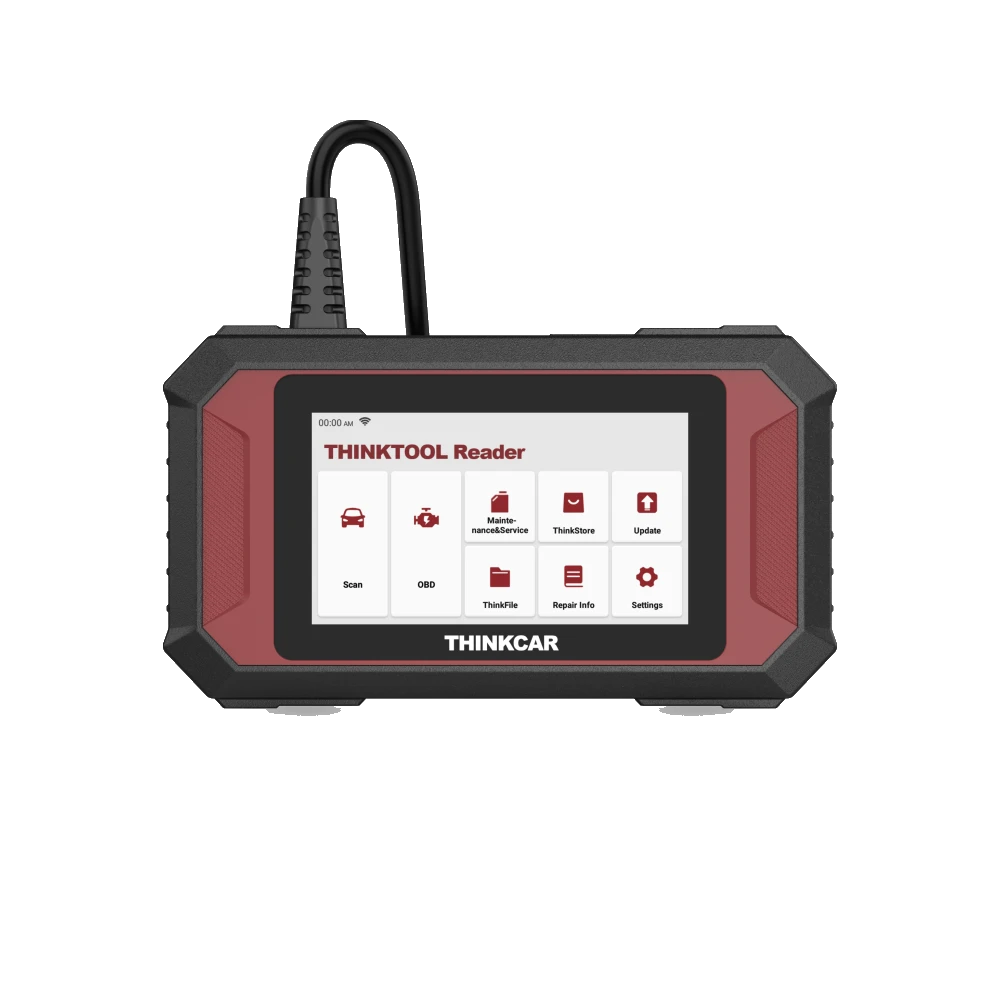 Thinktool Reader 7
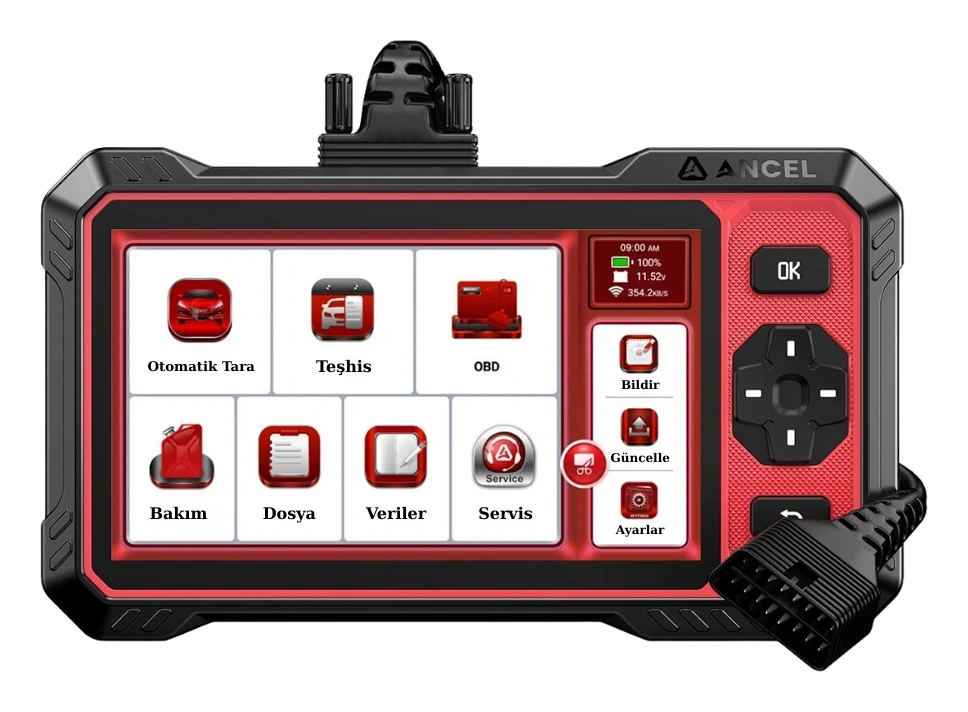 Ancel DS410 Lite
