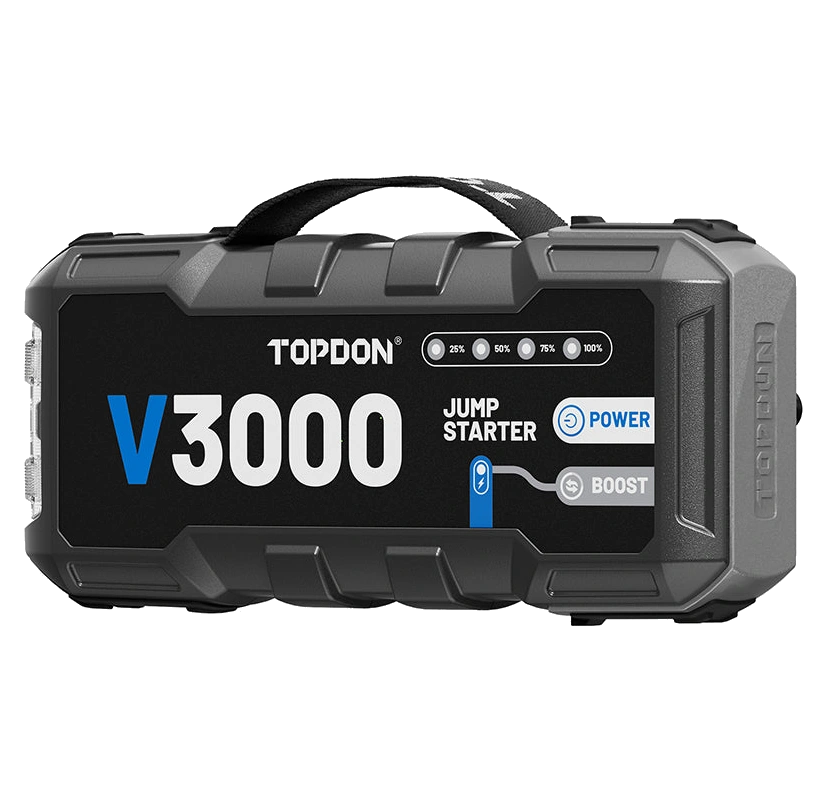
The TOPDON V3000 is a portable power device that provides jump-starting assistance to compatible 12V vehicles unable to start due to a low battery. It also includes USB outputs and an LED light. It is not intended for use as a battery charger, 24V jump starter, or ECU programming power supply.
What would you buy this for?
Roadside assistance and service teams using 12V vehicles
Those who want portable jump-starting support for passenger cars and RVs
Users looking for USB power and a work light in addition to jump-starting
Measurement and maintenance features
Jump-start for 12 V lead-acid batteries
3000 A peak current; 9 L gasoline and 7 L diesel limit
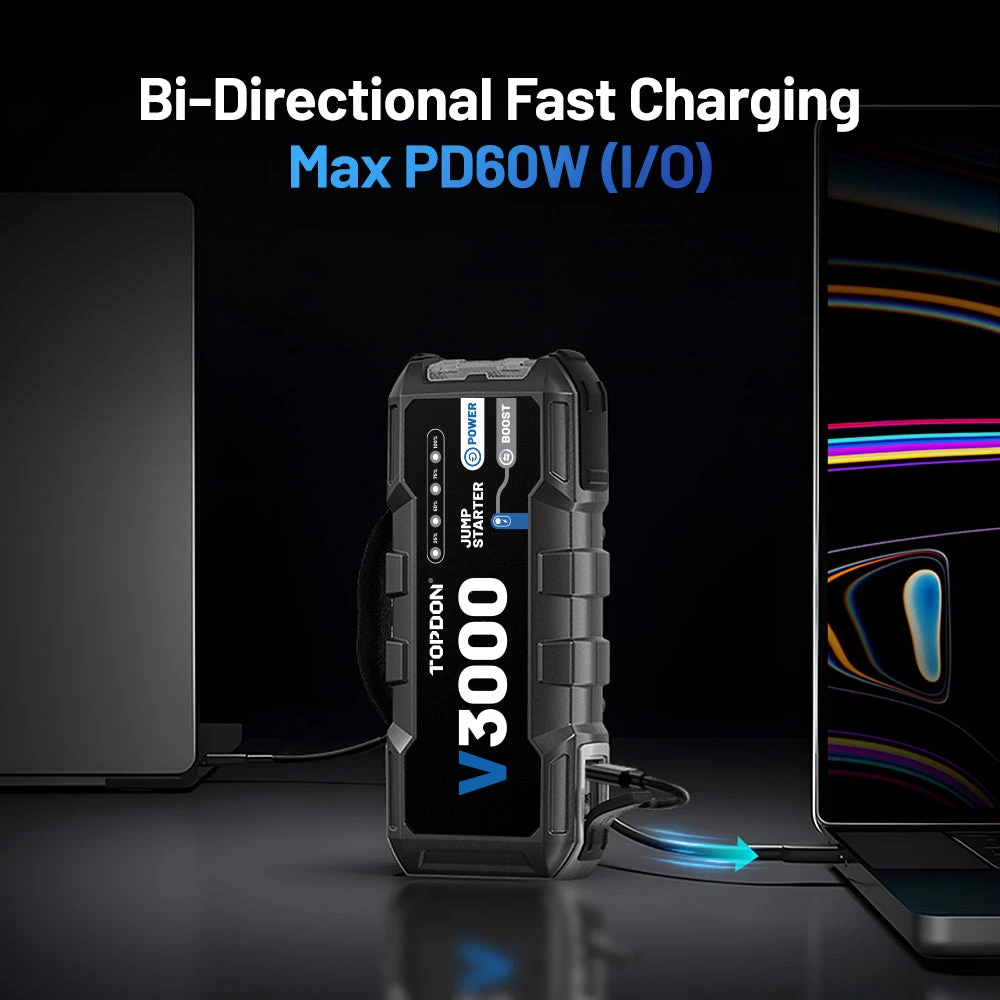
Bi-directional USB-C PD60W and LED lighting
12 V jump-start support
What vehicles is the V3000 used on?
The V3000 is used for jump-starting 12 V lead-acid batteries. Compatibility is determined not by vehicle brand but by battery voltage, battery type, engine displacement, and the manufacturer's safe connection conditions.
Battery system
12 V lead-acid; not for use on 24 V systems.
Engine limit
Up to 9-liter gasoline and up to 7-liter diesel engines.
Current value
3000 A peak current; not a continuous output value.
Duty cycle
Does not provide battery health test, fault code reading, or ECU programming power supply function.
Starting result is affected by battery condition, temperature, and engine conditions. Monitor the charge, standby, and repeat limits in the manual.
Jump-starting, charging, and battery testing are separate tasks
When the starting energy required for the engine to run is insufficient, a portable jump starter can help. The V3000 transfers energy from its internal battery to the vehicle's battery for short-term starting assistance. It does not determine why the battery is discharged; alternator, parasitic drain, or battery wear must be investigated separately.
If the underlying cause is not addressed after the engine starts, the problem may recur. A battery maintenance device designed for continuous charging and a short-term jump starter are not the same task. Similarly, measurements performed by a tester that examines battery CCA or health status should not be expected from this product.
Product details
Power capacity and vehicle limits
The 3000 A value provided by the manufacturer is peak current; it should not be interpreted as continuous operating current or a guarantee that the vehicle will start under all conditions. The supported engine displacement limit is 9.0 liters for gasoline and 7.0 liters for diesel.
Being within these limits is not sufficient on its own: the vehicle must have a 12V lead-acid battery system. Even if a truck or tractor is mentioned in the list, a version with a 24V electrical system is not compatible with this product.
When selecting a device, first check the vehicle voltage, then the fuel type and engine displacement. Battery condition and ambient conditions also affect the actual starting result.
Peak current
3000 A
Vehicle battery
12 V lead-acid
Engine displacement upper limit
9.0 L gasoline / 7.0 L diesel
Internal energy
24,000 mAh / 88.8 Wh
USB-C input and output
PD60W
USB-A outputs
5 V / 2 A and QC18W
DC output
Max 16.8 V / 10 A
Weight
Approx. 1.2 kg
Product details
Charging the device via USB-C and powering USB devices
Manufacturer USB-C PD60W example; the power profile supported by the connected device and cable applies.
The bidirectional USB-C port supports both charging the internal battery and powering compatible external devices. The PD60W value does not mean the connected phone or computer will necessarily draw this power. The profile supported by the cable and connected device is important.
When purchasing a laptop, do not consider the presence of a USB-C port alone sufficient; check the power requirements and USB-C charging support. The power limits of USB-A connections differ. When you want to conserve energy for starting, account for the fact that prolonged external device usage will reduce the internal battery.
Checking the charge level before a trip is therefore important.
Product details
What to check before connection
First, read the manuals for the vehicle and the jump starter. Use only the appropriate clamps provided with this product; do not operate if the cable or housing is damaged. The manufacturer requires the device charge to be above 50% before jump-starting.
Verify the battery type and voltage, clearly identify the polarity, and use the vehicle's recommended jump-starting connection points. If a test fails, follow the waiting interval in the manual instead of making continuous repetitions. The manual specifies a limit of at least 20 seconds waiting and no more than three consecutive attempts within two minutes.
Jump-starting is not used to force-start a mechanically faulty engine.
Product details
Protection functions and LED illumination
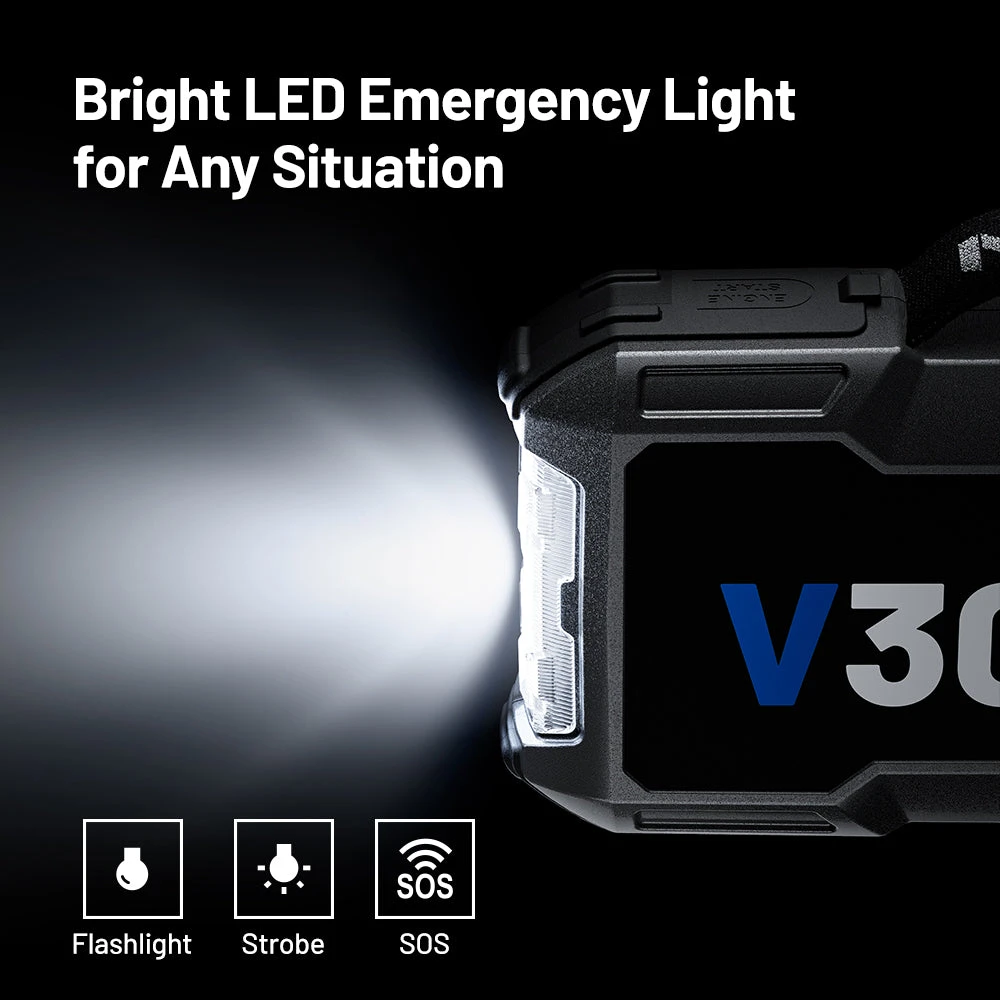
TOPDON LED usage visual: steady light, flashing, and SOS.
TOPDON specifies protections for conditions such as reverse polarity, short circuit, overcurrent, and temperature. Protections do not eliminate the need for correct connection and sound equipment. Do not proceed with an operation if a warning appears without understanding its cause.
The built-in LED can be used with steady light, flashing, and SOS modes to illuminate the surroundings or increase visibility. In a nighttime breakdown, the light helps to see the connection point; it does not replace safe parking and traffic precautions. Do not leave the product on hot engine parts.
Avoid placing the cable near fans, belts, or other moving parts.
Product details
Scenario: 12 V passenger car parked for a long time
After the vehicle has been parked for a long time, the starter may turn slowly. First, inspect the battery's physical condition and the vehicle's jump-starting instructions. If the appropriate conditions are met, the device helps provide starting assistance without needing another vehicle. Connect according to the manual and attempt a short start.
Engine starting does not prove the battery's health. In the subsequent service phase, the charging system and battery condition are measured separately. In this scenario, the value of portability is the ability to bring power to the vehicle's location. It is incorrect to leave the product connected continuously or to use short-term jump-starting as a full charging process.
Product details
Scenario: Jump-starting in the workshop followed by diagnostics
If the vehicle arriving at the service has low battery voltage, the first need may be to start the engine under safe conditions. After providing starting assistance on a compatible vehicle, fault code scanning and electrical measurements are performed with separate devices.
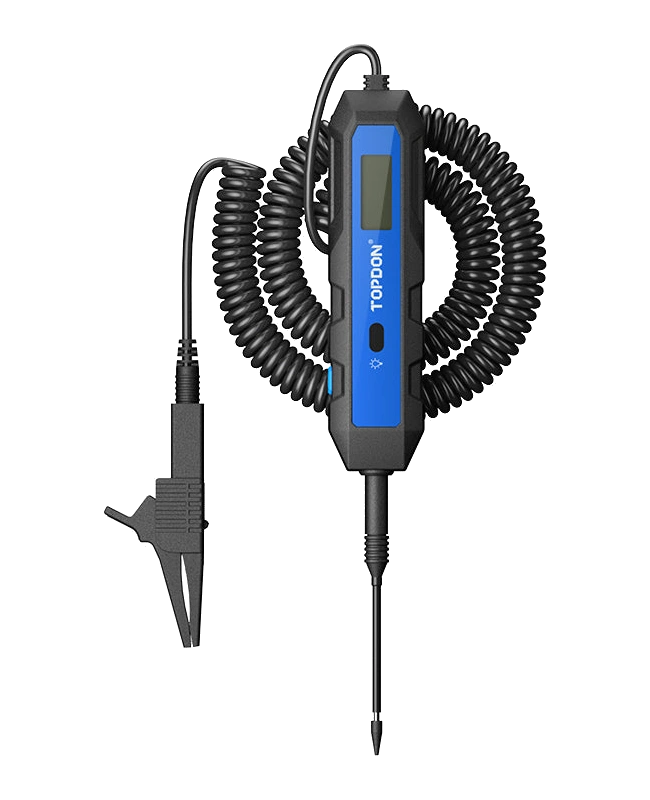
Low voltage may have created records in multiple control units in the past; seeing codes does not mean every module is faulty. A circuit tester like the CT100 is used for power supply investigation, while a diagnostic tablet is used for module data. The V3000 accompanies this equipment with short-term starting assistance.
It cannot replace a programming power supply that maintains stable voltage during a long ECU software installation.
Product details
Scenario: Backup power in an RV or travel bag
On a long journey, phone power and a work light can become as important as jump-starting. While USB outputs power compatible devices, the LED light makes it easier to find equipment in the dark. However, the RV's house battery and the starting battery may not have the same voltage and chemistry.
Do not assume a connection is suitable solely because the vehicle is an RV. For an external DC accessory, the voltage and current ratings of the output must match the accessory. The product's carrying case is for storing equipment together; do not leave jump starter clamps exposed in the same compartment as loose metal parts. Check charge level and cables before traveling.
Product details
Comparison with jumper cables and battery chargers
Classic jumper cables require a separate suitable power source. A portable device carries its own energy; in return, its internal battery requires regular checks. A charger, on the other hand, is selected to charge a compatible battery with a specific charging program or to maintain it.
Distinguish which need is dominant for a vehicle that remains parked continuously: one-time jump-starting on the road, or long-term battery maintenance in the garage? Ranking different devices based solely on peak amperage is a misleading selection criterion.
Vehicle voltage, battery type, operating task, clamp quality, and usage instructions are examined together.
Product details
European package and storage
The European package list includes the main device, jump starter clamps, power adapter, USB cable, user manual, and EVA carrying case. Check the connection parts and charge level before first use. After use, the clamps and cable must be stored in a way that prevents damage.
Do not expose the product to high temperatures or direct sunlight during periods of non-use; refer to the manual in the box for detailed storage and charging conditions. Since manufacturer publications provide different numbers of starts per charge, a fixed number of starts is not promised here. Actual usage depends on engine, temperature, charge level, and battery conditions.
No. Jump-starting support is for 12V lead-acid batteries. Even if the manufacturer shows trucks or tractors in vehicle examples, a vehicle with a 24V electrical system does not fit this description. Check the vehicle voltage before connecting.
Does it fully charge the battery?
The primary function of this product is short-term jump-starting. A suitable charger is required for long-term battery charging or maintenance charging. The engine starting after a jump does not mean the battery is fully charged or not worn out.
Is 3000 A a continuous output?
No, it is the peak current value specified by the manufacturer. It is not used as a continuous current source. Do not assume this figure meets the stable voltage and continuous power requirements, especially for ECU programming.
Can a laptop be charged?
The USB-C output can be used on devices with compatible USB-C Power Delivery support and power profile. The computer's requirements, cable, and the profile supported by the device must be checked separately. Not all USB-C connections support the same charging power.
How many vehicles can it start on a single charge?
Manufacturer publications provide different numbers under different test conditions. Engine displacement, battery condition, charge level, and temperature affect the result. Therefore, a fixed number of starts or a promise of successful starting every time is not provided.
What to do if it still doesn't start after a jump?
Do not attempt long consecutive starts. Adhere to the waiting and testing limits in the manual; the battery connection, starting system, and mechanical condition should be investigated separately. As the device is not a diagnostic system, it does not diagnose the reason for non-starting.
Comparison
Similar models to TOPDON V3000
Compare products in the same class with information on usage level, service tasks, and price.
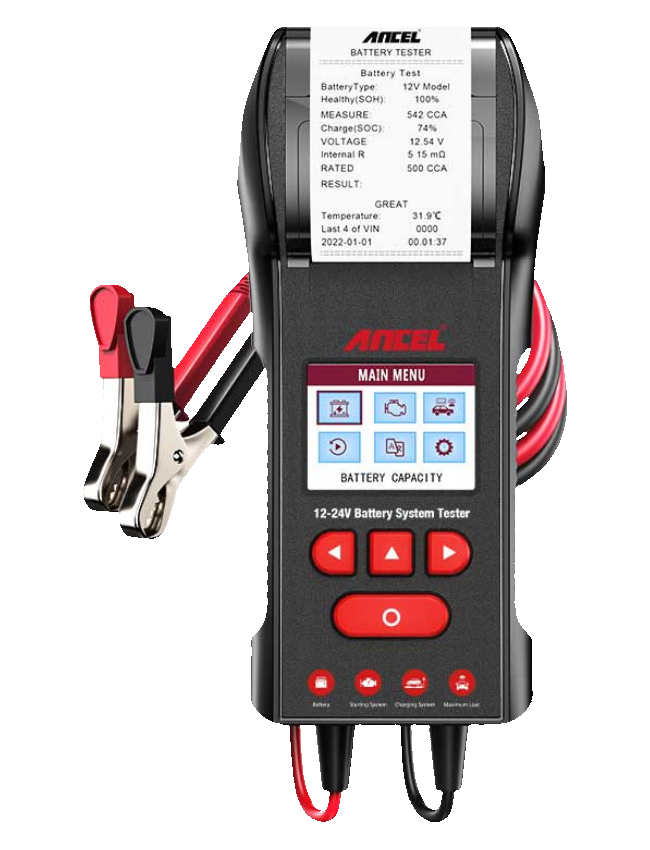
A service-type battery tester that checks battery status, starting, and charging systems in 12V and 24V lead-acid starter batteries, and provides results from its built-in thermal printer.
12V/24V battery test
Starting system check
Charging system check
≈ $1718,490 TL charged · VAT included · import duties excludedOut of stock
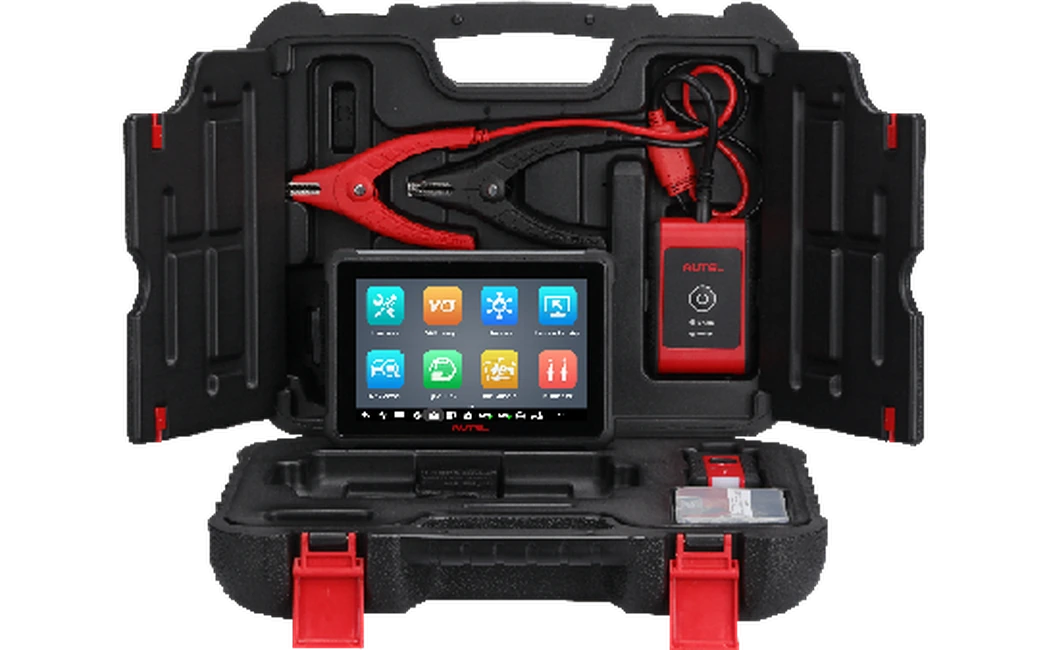
A MaxiBAS solution featuring a 7-inch Android tablet, wireless battery analysis, battery registration, electrical system diagnostics, and a service menu.
Battery health test
Cranking and charging test
Battery registration
≈ $68133,900 TL charged · VAT included · import duties excludedOut of stock