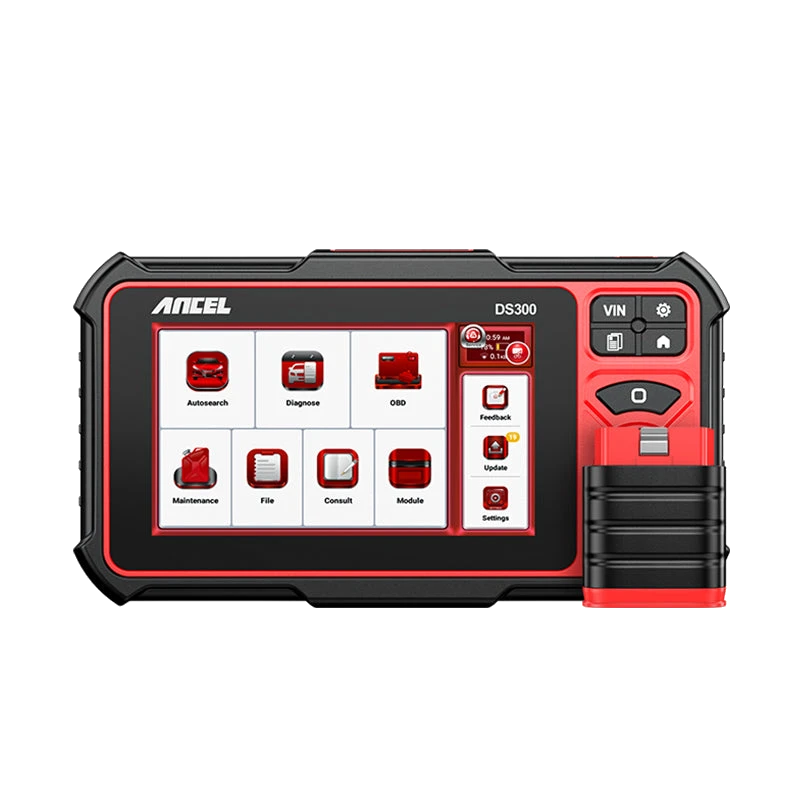
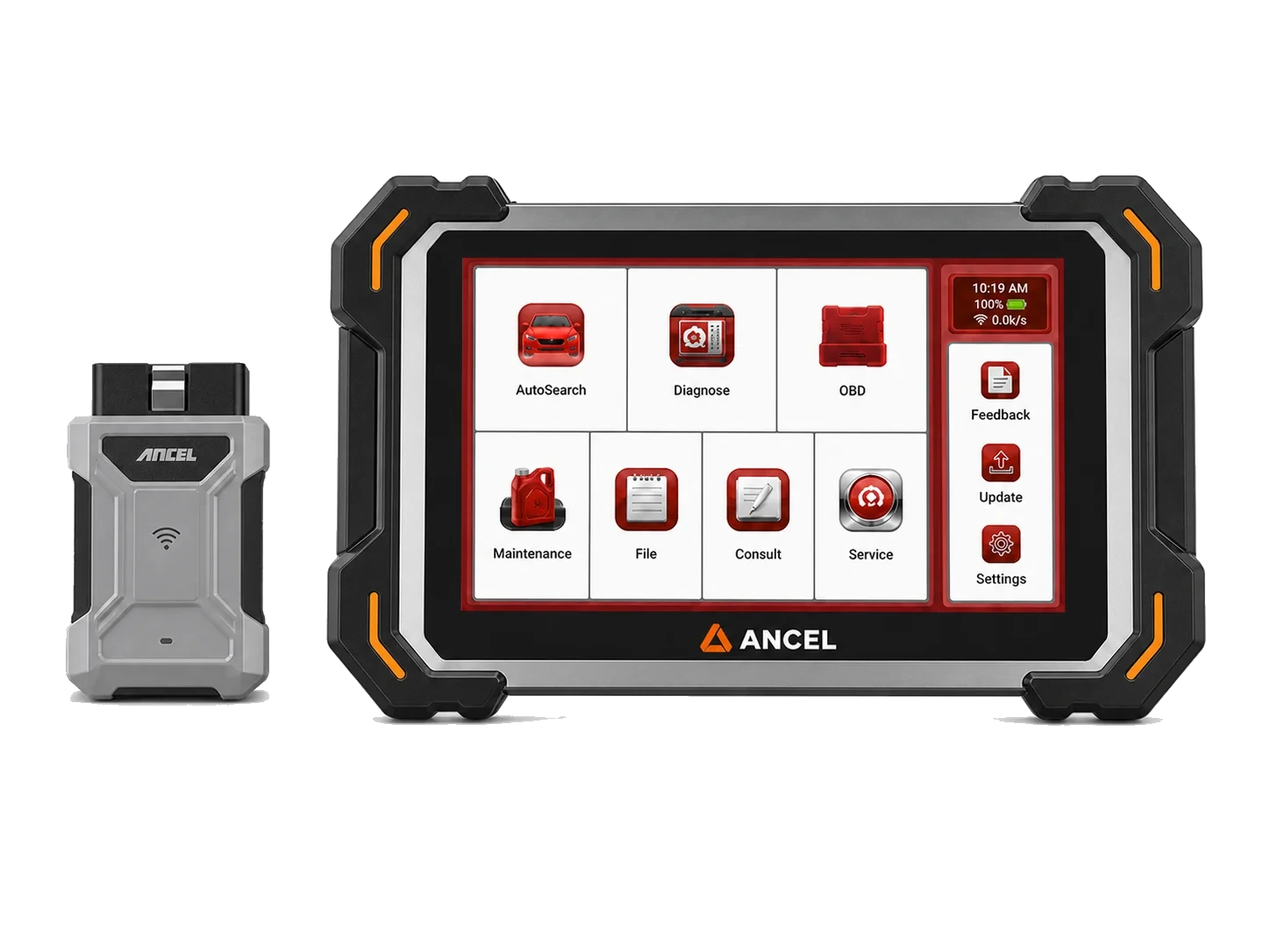
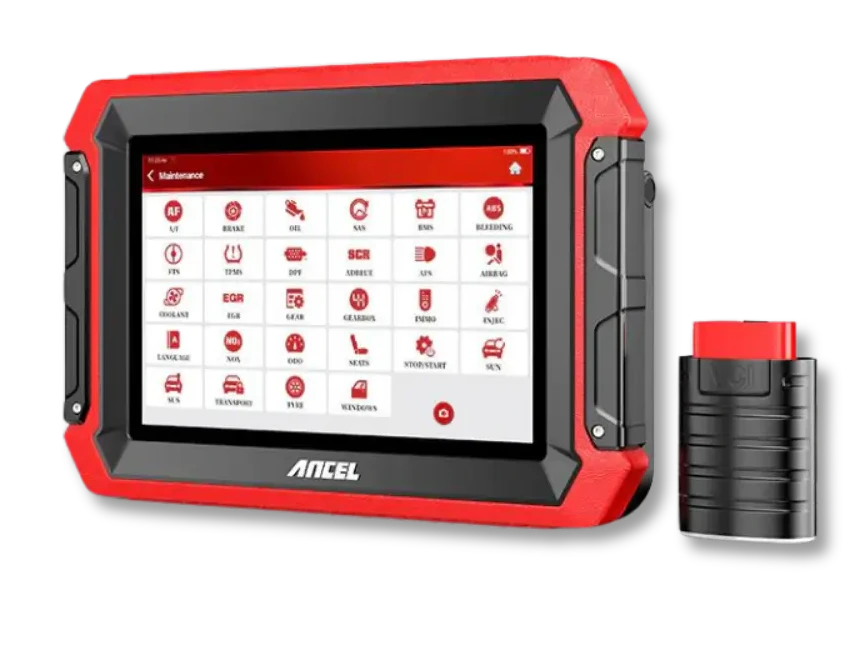
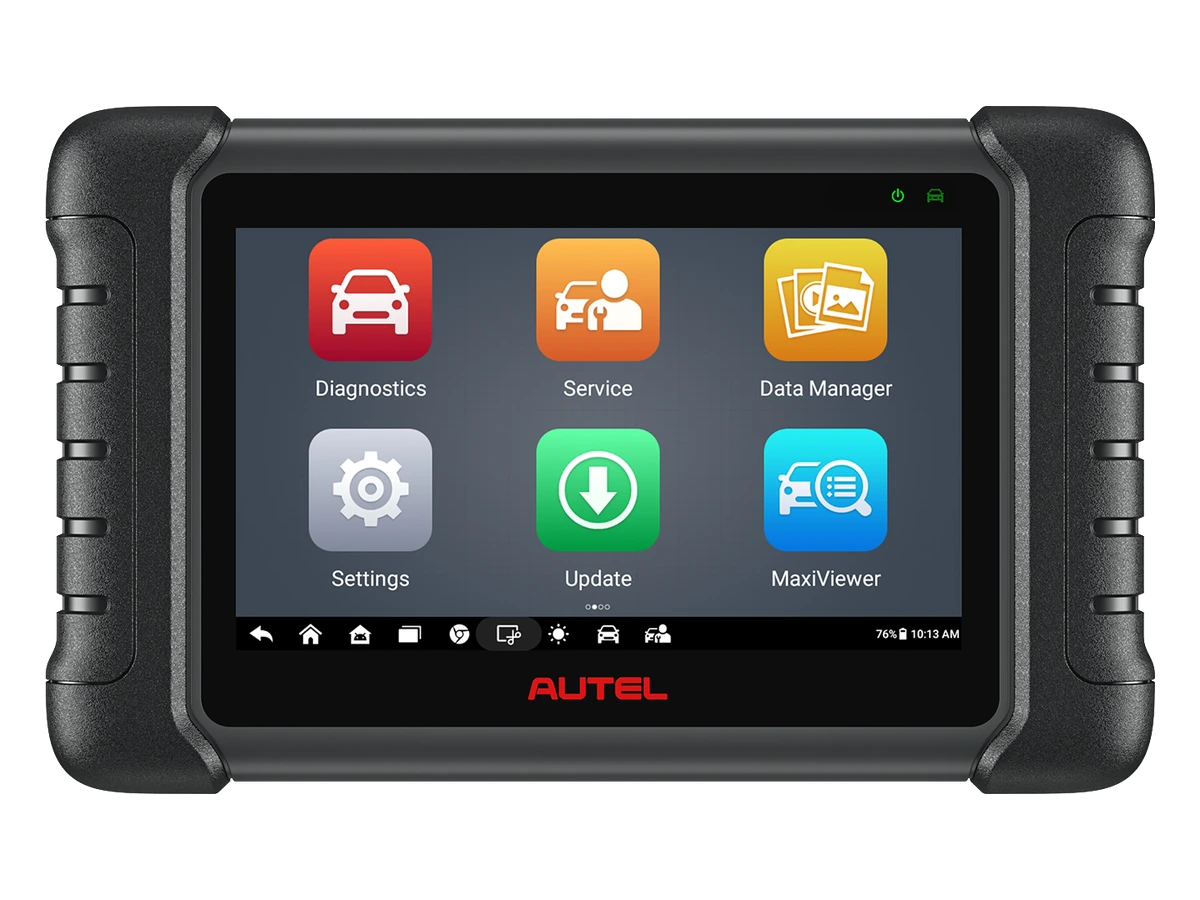
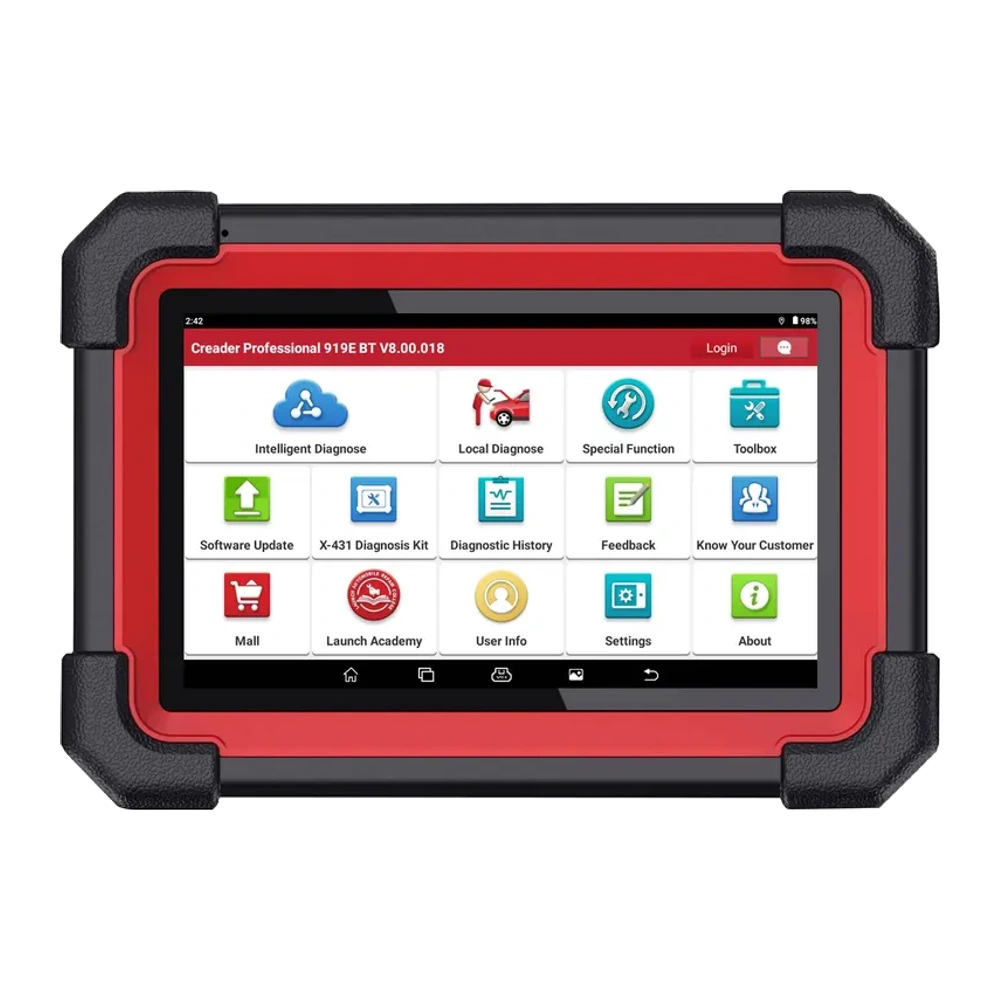
Quick comparison
Initial check by vehicle type
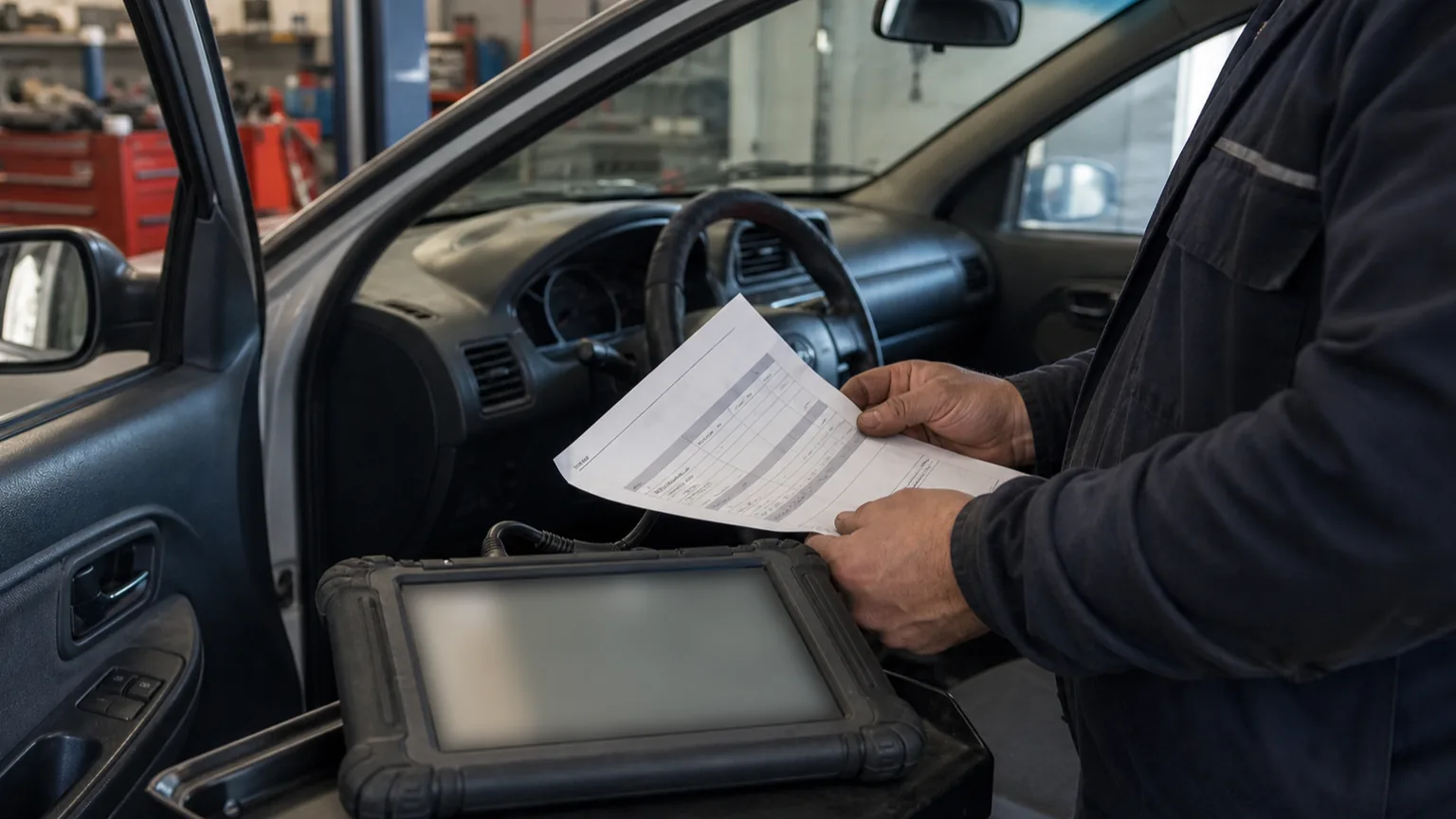
The same 16-pin socket view can represent different diagnostic scopes. Start by selecting the device based on vehicle type and the intended procedure.
Decision guide
Is an OBD device compatible with every vehicle?
No. The presence of an OBD socket in a vehicle does not mean every OBD device will connect to the vehicle or access all ECUs. The vehicle market, model year, communication protocol used, device software, and the intended procedure must be compatible.
OBD refers to the vehicle's self-monitoring diagnostic system; OBD2 refers to the standardized second-generation diagnostic approach. The standard connection provides a common basis for emission-related fault codes and specific engine data. Manufacturer-specific systems and service menus may fall outside this common basis.
This is why a small phone adapter can read a code related to the engine fault light, but may not access the ABS, airbag, or electronic parking brake menus on the same vehicle. A multi-system service tablet may also not be able to access a model year or ECU that is not included in its software. The correct answer is given by vehicle and procedure information, not by the device name.
- Vehicle market and model year
- Device protocol and software
- System to read or procedure to perform
Decision guide
A 16-pin OBD socket does not mean full compatibility
The common 16-pin diagnostic socket in passenger cars indicates the physical connection; it does not solely determine which data the device will read. The socket structure, communication protocol, and software coverage work together.
A device may physically plug into the socket but may not be able to communicate with the vehicle. An incorrect protocol, a power issue on the vehicle side, a damaged pin, an unsuitable cable, or missing vehicle selection in the device software can prevent connection. Even if a connection is established, the visible systems may vary depending on the device class.
Different sockets or adapters may be required for heavy-duty vehicles, motorcycles, older vehicles, and some special connection scenarios. The cable is only a connection component; it does not replace the diagnostic tester and does not expand the software coverage.
- Physical socket
- Communication protocol
- Device software
Decision guide
What systems does a basic OBD2 device read?
The main use of basic OBD2 readers is for emission-related engine fault codes, fault light status, and supported live data. Broader software coverage is required for vehicle manufacturer-specific modules.
Standard OBD access provides a common language for fault codes, fault lights, and some emission-related sensor data. The number of data points visible on the device screen depends on the parameters offered by the vehicle and how the reader displays them.
Systems such as ABS, airbag, transmission, climate control, body electronics, steering, TPMS, or electronic parking brake can be considered separate from standard engine OBD reading. If these modules are targeted, multi-system scanning and relevant vehicle coverage should be sought in the product information.
- Engine fault codes
- Fault light information
- Supported live data
Decision guide
Why are model year and sales market important?
OBD requirements and vehicle equipment have been applied on different dates depending on the sales market, vehicle class, and engine type. It is not correct to draw definitive compatibility conclusions based solely on the model year.
The same model name may have been sold in Europe, America, or another market with different engines, ECUs, and software. For imported vehicles, the registration year and the vehicle's technical production information may not always represent the same thing. Therefore, vehicle chassis information, engine type, and sales market are examined together when necessary.
European Union regulations define OBD systems in the context of emissions control and include separate provisions for different vehicle classes. General date information used for passenger cars should not be directly applied to motorcycles, heavy-duty vehicles, or special-purpose vehicles.
- Production and model year
- Sales market
- Vehicle and engine class
Decision guide
What is required for service functions and active tests?
Oil maintenance reset, electronic parking brake, battery registration, DPF service, adaptation, or active test are different from standard code reading. These functions require the device to support them for the specific vehicle and control unit.
A high number of service functions does not mean every function will be available for every vehicle. The menu display depends on the vehicle's control unit and the device's software. Even changes in production year or hardware within the same model family can alter the scope of functions.
During active testing, the device sends commands to supported components. Therefore, the term "OBD2 compatible" alone is not sufficient for active testing. Vehicle make, model, year, engine or system, and the specific test to be performed must be checked together.
- Service function
- Control unit coverage
- Active test support
Decision guide
Separate devices may be required for heavy-duty vehicles and motorcycles
For trucks, buses, construction machinery, motorcycles, and ATVs, a standard passenger car OBD2 reader may not be sufficient. The socket, operating voltage, adapter, and software scope must be selected according to the vehicle group.
Different connections, protocols, and cable sets may be found in the heavy-duty vehicle sector. Connecting a device designed for passenger cars with a physical adapter does not automatically provide heavy-duty vehicle software and system coverage.
Different adapters may also be used for motorcycles depending on the make and model family. When selecting a motorcycle diagnostic device, consider not only the OBD designation but also the adapters included in the box and whether the software supports the target make.
- Device suitable for vehicle group
- Correct adapter set
- Voltage and protocol information
Decision guide
How to choose the right OBD2 device for your vehicle
First, define the task to be performed; then, compare the device's coverage with the vehicle's make, model, year, engine or system, and sales market information. Do not make a selection based solely on a socket photograph or a general brand list.
Individual users who only want to read engine fault codes can start with a basic OBD2 reader. Users who want system scans including ABS, airbag, and transmission should look for a multi-system device; workshops performing maintenance and active tests should consider diagnostic tablets with service functions.
If the vehicle's make, model, and year are not clearly stated on the product page, consult the device manufacturer's vehicle list. The intended service procedure must also be listed there. This check helps identify the appropriate option among basic readers, service tablets, heavy-duty devices, or motorcycle devices, reducing the risk of purchasing an inadequate device.
- Vehicle make-model-year
- Engine or system to be read
- Process to be Performed
Frequently Asked Questions
Most frequently asked questions by customers
Is an OBD device compatible with every vehicle?
No. The physical socket, the vehicle's sales market, model year, communication protocol, device software, and the systems to be read must be compatible. A device may read engine codes on the same vehicle but not access ABS or airbag systems.
What vehicles can be used with an OBD2 device?
Can be used on OBD2-supported passenger and light commercial vehicles; however, the exact scope varies by vehicle class, sales market, model year, engine, and device software. Heavy-duty vehicles and motorcycles may require separate devices or adapters.
Is a vehicle with an OBD socket definitely OBD2?
No. The 16-pin appearance of the socket alone does not prove the protocol and system scope. Vehicle technical information and the device's support list must be examined together.
Does an OBD2 device read ABS and airbag faults?
Basic OBD2 readers typically focus on emission-related engine diagnostics. For ABS and airbag, the device must offer multi-system scanning and support the relevant vehicle make-model-year.
Does an OBD2 device turn off the check engine light?
Supported engine fault codes can be cleared; however, if the cause of the fault persists, the light may illuminate again. Clearing codes does not resolve mechanical or electrical faults on its own.
Is a Bluetooth OBD device used with a phone sufficient for service?
May be sufficient for basic engine codes and limited live data. For multi-system scanning, service functions, active tests, reporting, and regular workshop use, a service tablet class is more suitable.
Are the same OBD2 devices used in diesel and gasoline vehicles?
The device may support both engine types; however, vehicle market, model year, protocol, and software scope must still be checked. The same device should not be expected to access the same systems in every diesel or gasoline vehicle.
Are OBD2 devices used in electric vehicles?
Some electric and hybrid vehicles have diagnostic connections; however, accessing the battery and high-voltage systems requires the device to support the relevant vehicle platform and EV functions.